Saturday, January 31st 2026
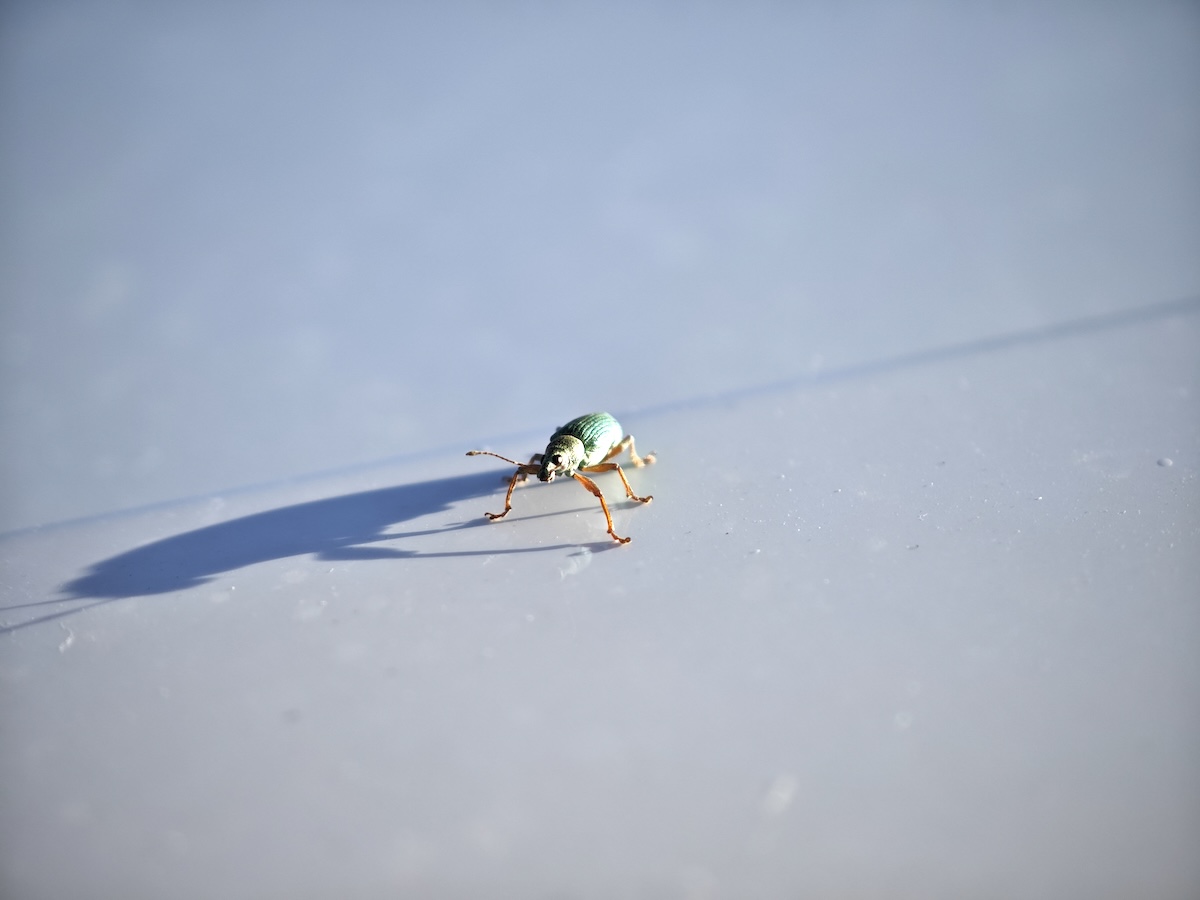
As soon as the cold days arrive, the insect world seems to be completely silent. No more buzzing flies, mosquito bites or butterflies circling night lights. But this relaxation does not mean that they have finally disappeared from the face of the earth.
In fact, insects have developed some of the most fascinating survival strategies on the planet to withstand their most difficult test, which is surviving frost. As ectothermic creatures, insects do not have the ability to regulate their body temperature from the inside like we humans or other mammals do.
To prevent them from turning into ice crystals, many of them produce specialized chemical substances such as glycerol and polyols. These substances act as a true natural antifreeze by lowering the freezing point of body fluids and protecting cells from lethal damage.
The larva of the arctic butterfly remains a real champion of this technique as it manages to survive even when outside temperatures are minus 70 degrees Celsius. Unlike the hibernation we know in large animals, many insects enter a state called diapause.
This is a programmed biological suspension that does not begin when the cold comes, but much earlier. Insects manage to anticipate winter by shortening the hours of the day, which serves as the most accurate signal to stop growth and reduce metabolism to minimum levels.
During this time they look almost dead to the human eye, but in fact they are saving every milligram of energy until the arrival of spring. Of course, not all species choose the same path to survive.
For example, honey bees do not sleep at all during the winter. They gather in a large tangle around the queen and constantly vibrate their wing muscles to produce heat, keeping the interior of the hive warm.
Ants prefer to go deep into their galleries underground, where the cold of the surface cannot penetrate. Meanwhile, monarch butterflies choose a completely different path, undertaking epic migratory journeys of 4,000 kilometers to warmer places.
An interesting and little-known fact is that mild winters are paradoxically more dangerous for insects than harsh winters. If the temperatures rise suddenly, their metabolism wakes up and they begin to use up their fat reserves very quickly.
This false awakening causes them to run out of energy before the first flowers appear, often causing them to starve to death. So the next time you see a bee or a butterfly in the first spring, remember that it has just won a real battle against the laws of physics. com/
Source: prizrenpost