Tuesday, March 3rd 2026
Just as diplomacy appeared to be inching toward a fragile deal, the United States and Israel launched a unilateral attack on Iran, moving the region from tense negotiations to open conflict. The targets included strategic infrastructure and decision-making centers in Tehran. What until yesterday was diplomatic pressure, today turned into a military reality.
Reports of the attack on the highest levels of the Iranian leadership were subsequently confirmed. President Trump announced the assassination of Iran’s supreme leader, Khamenei, as well as dozens of commanders and senior state leaders. This was no mere tactical strike; it was a pure act of war. The goal was not only to weaken Iran militarily, but to touch the core of the regime’s leadership — an attempt to reshape regional balances and impose a new strategic reality on the Middle East.
However, to understand the depth of this clash, one must look beyond the military dimension. The conflict has an ideological layer that makes it more difficult to manage. Iran remains built on the doctrine of revolutionary political Shiism, while in Israel the internal political dynamics — where nationalist forces act in alliance with segments of the extreme right —, coupled with the crimes committed in Gaza and their rhetoric “from the Nile to the Euphrates”, has lost the trust of many peoples and has become an open object of the Criminal Court of The Hague. The State of Israel has full support from the Trump administration, but at the same time from evangelical segments in the US, who interpret the conflict in religious terms.
History has shown that when religious doctrine is combined with politics, it produces dizzying conflicts — what theorists have called the “clash of civilizations” — and at that moment the space for compromise narrows, while the clash risks becoming existential.
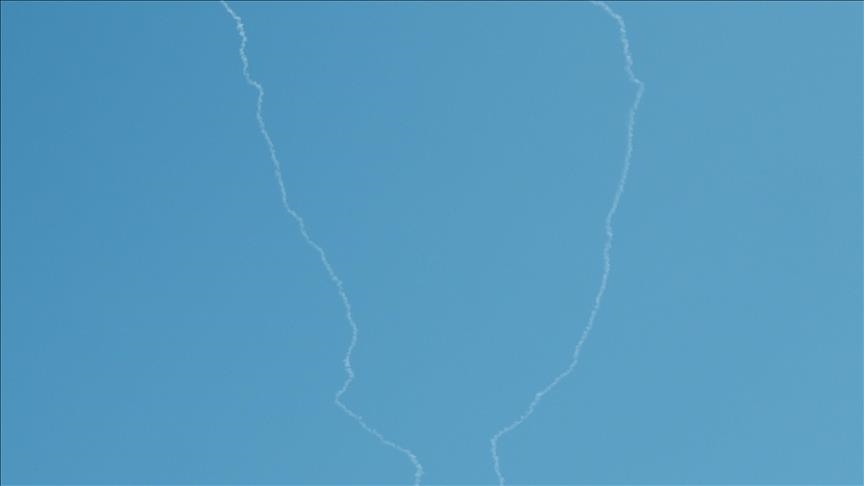
In this climate of tense, the Iranian response was fierce and extended on several fronts simultaneously. Arab Gulf countries with a Sunni character, Western military bases and strategic energy facilities such as Aramco, the port of Dukmit or gas cities in Qatar and Abu Dhabi were hit. Iran also blocked the Strait of Hormuz, immediately shifting the crisis from a regional conflict to a node of global security.
Because Hormuz is not just a dot on the map. It is the artery through which a significant part of the world’s energy passes. While the war in Ukraine has reshaped the European security architecture, an escalation in the Persian Gulf would have a direct impact on global energy and financial stability. Europe, still in the process of recovering from the shocks of recent years, would immediately feel any supply disruption or sudden price increase. Thus, a regional crisis would quickly translate into economic, social and political pressure in European capitals.
Exactly for this reason, for the European Union this situation is not peripheral. It affects energy security, economic cohesion and the credibility of multilateral diplomacy. Germany, France, Great Britain and Italy are trying to negotiate, but are increasingly close to aligning with the United States and Israel in a strategy aimed at weakening or overthrowing the Iranian regime. This shows that the international order is no longer working on the logic of mediation, but on the calculation of strength.
Albania’s position should also be seen in this context. It has severed diplomatic relations with Iran and, after recent developments, Tirana was among the first countries to open up with the USA and Israel. But, unlike in Kosovo, where the Security Council met, in Albania this was a single decision, taken voluntarily by the Prime Minister. In my opinion, such decisions should have a national consensual character, because they include not only foreign policy, but also the country’s long-term security.
Four elements for Albania remain clear:
First, Iran has exerted influence through actors related to it in Lebanon, Yemen, Iraq and Syria, being involved in sectarian conflicts. In fact, Iran was not alone; the problem of the Sunni-Shia division and the exploitation of this division has been clear in international geopolitics.
Secondly, Iran considers Albania as the “little Satan” due to the sheltering of MEK members, accepted by the main Albanian political forces, which has led to the termination of diplomatic relations and mutual perception as possible opponents.
Thirdly, cyber attacks on Albanian institutions have been real. and have exposed the country to a new security front, as rarely in the history of the last decade of the Albanian state.
And fourth, the current conflict is a dangerous mix between geopolitics and religion. Meanwhile, we must understand that with the attack on the English bases in Cyprus, Albania is also perceived by analysts as exposed, although it is currently seen as far from a direct attack by the Iranian regime. However, this can happen, as expert Ilir Kulla says, in the event of a frontal war.
In the end, this confrontation does not have a clear front line. It takes place in the air, at sea, in cyberspace and in the energy markets. Now the international order is fragmented; it is losing its legitimacy bit by bit and we are facing a new world order. Diplomacy is being replaced by unilateral action; strategic containment and de-escalation are no longer options — they are global imperatives.
Because conflicts that expand their borders for security reasons, intertwined with politics, ethnicity and religion, rarely shrink on their own. And Europe must take the right role in mediation, because it knows better than anyone that the price of diplomatic failure is always paid more dearly.
We use cookies to improve the experience and to display ads (Google AdSense).
By clicking “Accept”, you agree to the use of cookies according to
Privacy Policy
and
Cookies Policy.
You can reject non-necessary cookies by clicking “Reject”.
Source: prizrenpost