Monday, January 12th 2026
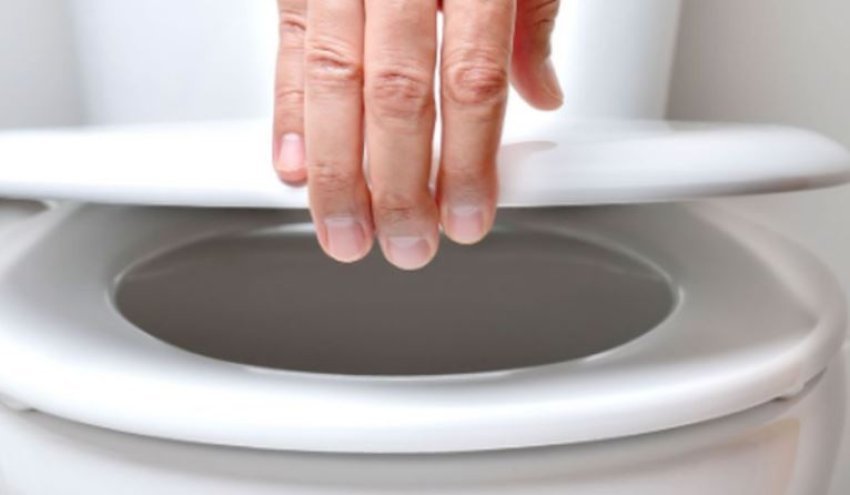
Many people feel bad when they enter a public toilet because of the stench, urine stains or the thought that there are hundreds of people sitting in front of you. Many try not to touch anything, open the door with their elbow, or cover the seat with toilet paper.
BBC has written that there is really a risk of getting infected just from the toilet seat.
What you can’t get (almost never) from the toilet?
“Theoretically, yes, you can get disease from the toilet seat, but the risk is extremely low,” said Jill Roberts, professor of microbiology and public health at the University of South Florida.
Sexually transmitted diseases (STDs) such as gonorrhea or chlamydia do not survive long outside the body and especially not on a cold surface such as the toilet seat.
“Otherwise, if seats were to easily spread sexually transmitted diseases, we would often see them in all age groups, even in people with no history of sexual activity”, he emphasized. Roberts.
Urinary tract infections (UTIs) are also nearly impossible to get from sitting. Much more often, they come as a result of improper cleaning after using the toilet.
Some viruses such as HPV (papilloma virus) can survive up to a week on surfaces.
“HPV has a very resistant envelope that gives it a longer life in the environment,” said Karen Duus, professor of microbiology at Touro University, Nevada.
But even here the risk is minimal: the virus can only enter if you have wounds or irritations on the skin of the genital area.
Genital herpes can also theoretically stay on the seat, but according to doctor Daniel Atkinson, the risk is very small and mainly affects people with weakened immunity.
Many people think that covering the seat with paper or not covering it at all protects them. But, according to experts, this does not have much effect. Paper is a porous material and does not stop germs. Even for women, “improvised” urination or sitting half-sitting without sitting on the seat can cause problems, such as not completely emptying the bladder, which increases the risk of urinary infection.
“The problem is not the seat, but your hands,” said Roberts.
You can touch the seat or other surfaces with your hands and then your face or mouth. This is exactly how bacteria such as E. coli, Salmonella, Shigella, Staphylococcus or viruses such as norovirus, which can live on surfaces for up to two months, are spread.
“It is safer to use a public toilet than a home toilet, because public toilets are cleaned several times a day, while most people only clean their toilets once a week,” said Charles Gerba, professor of virology at the University of Arizona
When the water is released, germs from the shell become airborne and settle throughout the cabin.
“Some call it the ‘toilet sneeze'”, said Gerba. For this very reason, the dirtiest surfaces are lids, faucet handles, door handles and especially the floor.
Use soap and wash your hands for at least 20 seconds after each use of the toilet.
After washing, also use hand sanitizer for extra protection.
Do not take your phone with you into the cabin, as it can easily be contaminated by airborne germs.
If it is possible, leave quickly after flushing.
“The main danger is not the toilet seat. The danger is that you take the germ from your hands to your mouth,” Roberts said at the end.
Source: prizrenpost