Saturday, January 3rd 2026
How Gaza enters 2026 with painful genocidal scars and a never-ending humanitarian crisis
Just three days after her wedding, the dream turned into a painful tragedy for Yafa Akkar, who died after strong winds blew down a dilapidated wall of the tent where she was staying with her husband. Unfortunately, such accommodation was not their choice, but a painful reality of life imposed by the Israeli occupation.
Yafa Akkar is a victim of tragic living conditions that are such because the Israeli occupation prevents the entry of construction materials and does not even allow temporary caravans to protect people from wind and death.
Yafa Akkar’s story is not an isolated incident, it is part of a painful reality. humanitarian. Humanitarian conditions in Gaza remain dire and needs far exceed the humanitarian community’s capacity to respond.
Meanwhile, Adnan Abu Hasna, media adviser at the United Nations Relief and Works Agency for Palestine Refugees (UNRWA), warned that Gaza could be back to square one if this situation continues, especially since conditions have not improved dramatically as expected after the ceasefire.
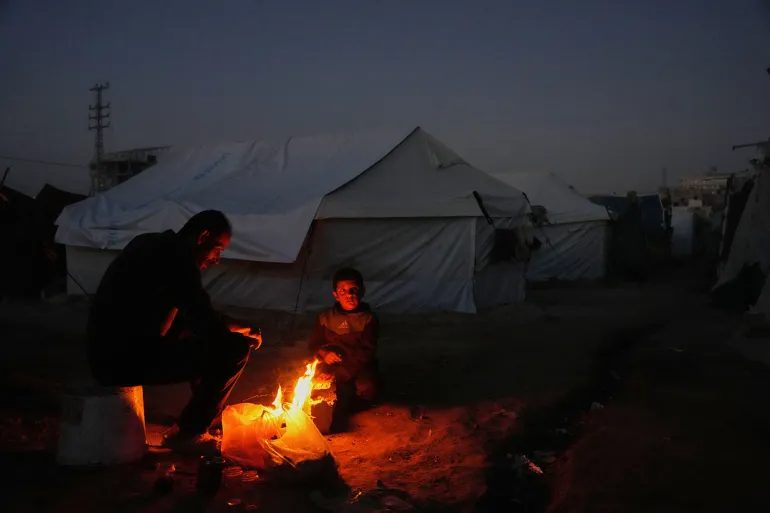
While the world celebrates the beginning of 2026 in an atmosphere of joy, fun and happiness, Gaza entered the new year in an atmosphere of sadness, misery and worries. A mother and her child died in a tent fire at a shelter in central Gaza City, and a girl from the Nuseirat camp in the central Strip died from the freezing cold inside the tent, while several people were injured by Israeli fire in separate attacks in the southern Gaza Strip.
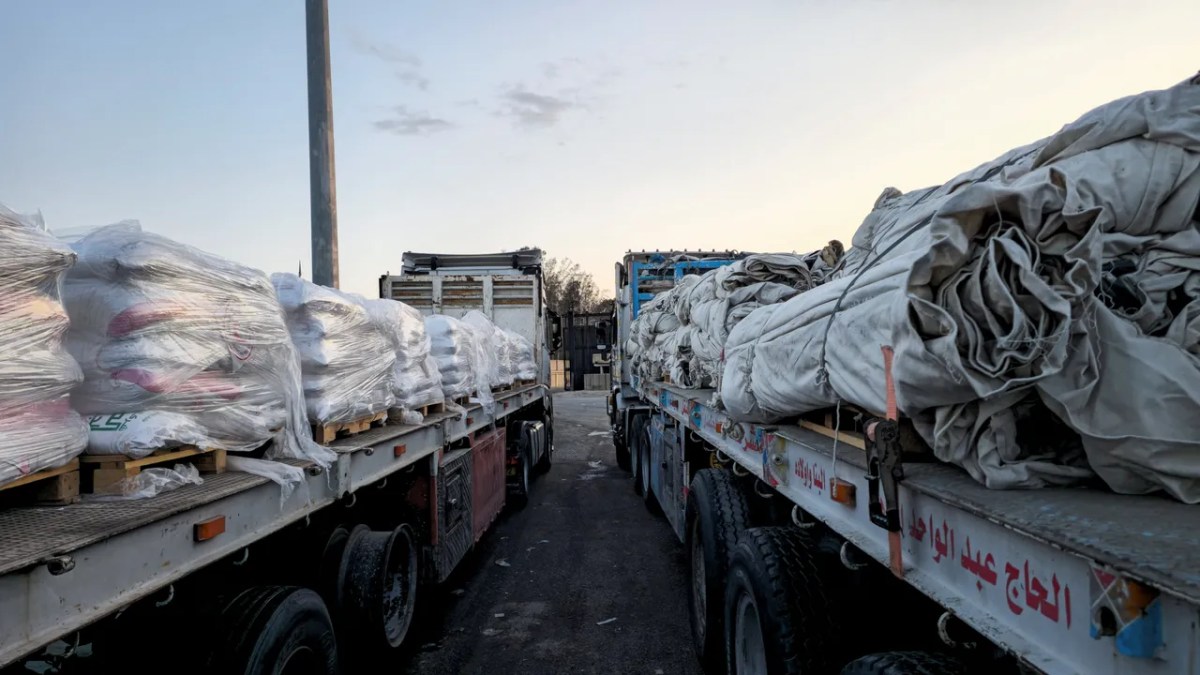
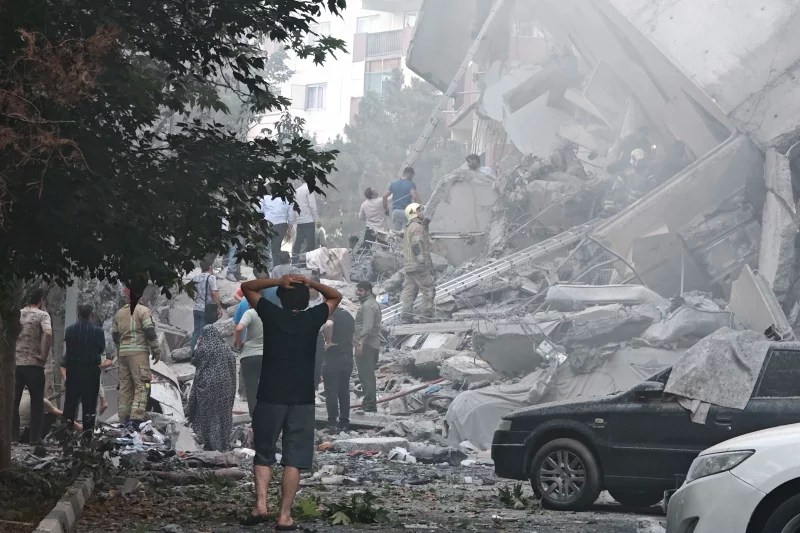
Amid the mass destruction left by the genocidal war, hundreds of thousands of Gazans and their children face the cold, rain and frost, finding only torn tents to protect them, while the occupation forces continue to surround the sector and prevent the entry of medicine, food, fuel, tents and construction materials, in clear violation of the ceasefire agreement, amid international silence and neglect.
Ismail Al-Thawabta, Director of the Government Media Office in Gaza, said that “The Palestinian people in the Gaza Strip enter the 2026 burdened with deep wounds and accumulated pain, left by one of the most terrible crimes of genocide in modern history, carried out by the Israeli occupation for two consecutive years, amid widespread aggression, a suffocating siege, systematic hunger and the complete destruction of the foundations of life.”
Al-Thawabta added that 2025 was one of the most difficult years for the people of the Gaza Strip, as more than 2.4 million people were subjected to policies of systematic killing, ethnic cleansing, and starvation as the occupation reduced Gaza’s cities and towns to rubble, destroyed infrastructure on an unprecedented scale, and destroyed entire neighborhoods, leading to the forced displacement of more than two million Palestinians.
According to Thawabta, last year saw an almost complete collapse of the humanitarian system in the Strip. Gaza, as a result of the direct and deliberate targeting of hospitals, medical staff, educational institutions, shelters, emergency aid and civil defense teams and journalists, together with a systematic policy of preventing the entry of food, medicine and fuel, which led to the deaths of thousands of children, women and the elderly.
Thawabta stresses that the immediate priorities are an immediate and permanent end to Israeli aggression, the removal the complete withdrawal of the occupation forces from the Gaza Strip, the permanent opening of all crossings for humanitarian aid, fuel and medical supplies, and ensuring the freedom of movement of citizens without restrictions.
Despite the worsening humanitarian situation, at the beginning of the new year, Israel imposed a series of illegal restrictions on access to humanitarian aid, with 37 humanitarian organizations facing the threat of suspension of activities of theirs in the Gaza Strip, including Doctors Without Borders, the Norwegian Refugee Council, CARE, World Vision and Oxfam, and a blanket ban on UNRWA.
The Israeli occupation authorities have presented dozens of international humanitarian non-governmental organizations with two options, without a third alternative: either submit to their conditions or have their licenses revoked and banned from working in Jerusalem, the West Bank and the Gaza Strip.
Israeli conditions require organizations to submit full lists of the names of their Palestinian employees to security checks to determine if any of them have called for a boycott of Israel. Some international organizations refused, fearing that their Palestinian workers would be exposed to persecution that would endanger their lives and threaten the security of their families.
The Euro-Mediterranean Human Rights Monitor warned that Israel is using the humanitarian blockade as an enforcement tool for the ongoing crime of genocide and creating a deadly reality of life, preventing and hindering repairs and reconstruction, and preventing entry of materials and equipment needed to remove rubble and repair homes, water, sanitation and electricity networks, while hampering the humanitarian response and undermining the ability of humanitarian agencies to provide a minimum level of protection.
The Euro-Mediterranean Human Rights Monitor warned that Israel is using the blockade of humanitarian aid as an enforcement tool for the ongoing crime of genocide and creating a deadly reality of life, preventing and impeding repairs and reconstruction and preventing the entry of materials and equipment needed to remove rubble and repair homes, water, sanitation and electricity networks, while hampering the humanitarian response and undermining the ability of humanitarian agencies to provide a minimum level of protection.
The Euro-Mediterranean Observatory stressed that the continuation of these catastrophic conditions in the absence of any serious action to find urgent solutions to the crisis is multiplying the health and humanitarian risks and is it kills the most vulnerable groups, especially children, the elderly and the sick, while increasing the likelihood of house collapse and tent destruction, and exposes displaced people to multiple risks, including floods and disease outbreaks linked to water pollution and sewage spills, turning daily life into ongoing suffering that threatens their dignity and lives. /square
Source: prizrenpost
Etiketa: Brief