Monday, April 6th 2026
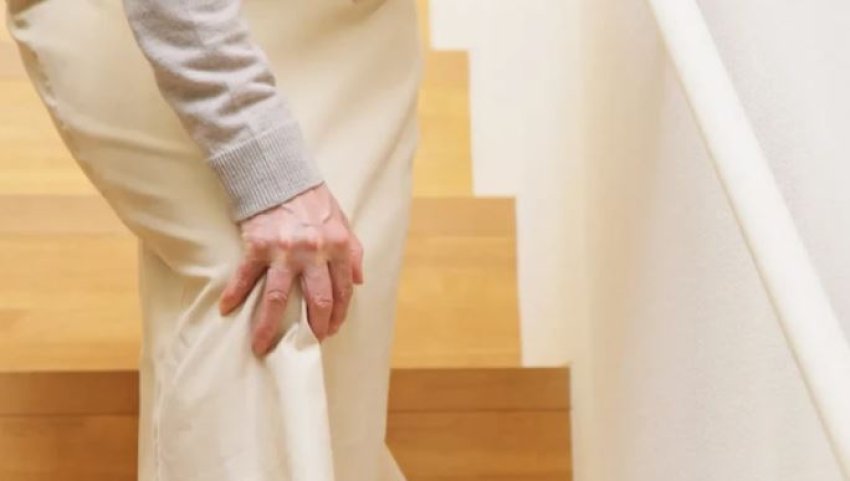
The knee is the largest joint in the body, very complex and carries a large part of the body weight. When climbing stairs, the pressure on the knee cap (patella) increases significantly. This process requires precise coordination of muscles, ligaments and cartilage. If one of these structures is overworked or damaged, pain occurs.
Patelofemoral syndrome (runner’s knee)
This is one of the most common causes of pain when climbing stairs. It is characterized by deep, dull pain in the front of the knee, where the patella connects to the thigh bone (femur).
This condition occurs as a result of irritation and overload of the patellofemoral joint. The cartilage under the patella loses its free movement and begins to rub against the femur, causing pain.
Osteoarthritis is a chronic degenerative joint disease. As a result of cartilage damage, pain, stiffness and reduced mobility appear.
As we age, the protective cartilage of the bones wears away, making walking and using stairs more difficult and painful. Stiffness is more pronounced in the morning and is often accompanied by a “crunching” sensation in the joints.
People with arthrosis often find it more difficult to go down the stairs than to go up them, especially if they have weak thigh muscles that do not handle the load well.
Tendinitis is inflammation of the tendons, structures that connect muscles to bones and help with movement.
Overload or movements of repeated can cause inflammation of the tendons in the knee. Patellar tendinitis affects the tendon that connects the patella to the lower leg and makes climbing stairs painful.
The meniscus is a crescent-shaped cartilaginous structure that acts as a shock absorber in the knee.
It is located between the thigh bone and the cartilage and helps distribute the load and reduce friction. Sudden movements or strong rotations can cause damage to the meniscus.
This condition is accompanied by pain, swelling, stiffness and a feeling of tightness in the knee. Treatment can be conservative (rest, ice, physiotherapy) or surgical, depending on the damage.
Not every case requires intensive treatment. Often, improvement is achieved with home care and lifestyle changes.
Rest – avoid activities that worsen the pain
Ice – apply cold compresses for 15–20 minutes several times a day
Compression – use elastic bandages to reduce swelling
Lift – keep the knee raised above the level of the heart
Strengthening the muscles
Weakness of the thigh muscles is often the cause of pain. Light exercises, such as straight leg raises or swimming, help stabilize the knee.
Body weight control
Being overweight significantly increases the load on the knees. Even moderate weight loss can significantly reduce pain.
Although some discomfort resolves with rest, there are times when medical evaluation is required:
persistent swelling or redness
inability to stand
obvious knee deformity
pain at night
feeling of weakness or instability
In these cases, it is important to consult an orthopedist to avoid long-term damage.
It is recommended to use comfortable shoes with good support, warm up before physical activity, use handrails when climbing stairs and avoid staying in the same position for a long time.
Doctors emphasize that early reaction is key to maintaining an active life. The combination of home care and professional advice helps reduce pain and return to daily activities.
We use cookies to improve the experience and display ads (Google AdSense).
By clicking “Accept”, you agree to the use of cookies according to
Privacy Policy
and
Cookies Policy.
You can reject non-necessary cookies by clicking “Reject”.
Source: prizrenpost