Sunday, April 26th 2026
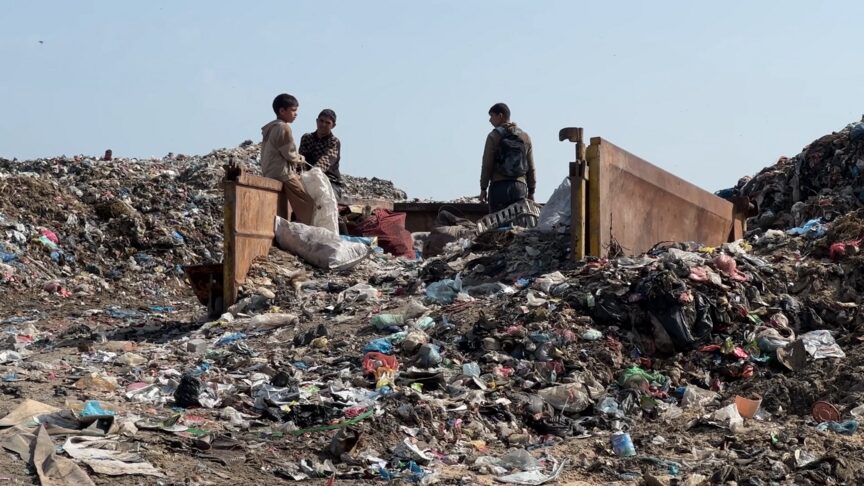
Thousands of Palestinians displaced from their homes in the Gaza Strip, where even the most basic services are limited due to Israel’s heavy destruction and blockade, are forced to live in tents near garbage dumps, facing health and environmental risks, reports Anadolu.
Officials pointed out that the uncollected garbage in the Gaza Strip, due to the Israeli occupation and blockade, is causing a crisis. serious health and environmental risks and called on the international community to take urgent action.
The devastation caused by Israel’s attacks, which have lasted for more than two years, in every area of the Gaza Strip, and the fact that border crossings remain closed and entry and exit are restricted despite the ceasefire reached on October 10, are delaying the healing of the region’s wounds.
Palestinians, struggling to survivors in tents they have erected near the ruins of their destroyed homes or far from their homes, are raising their children under environmental and health risks, lacking even the most basic necessities.
In Gaza, where there are no employment opportunities or sources of income, Palestinians, especially children, wander among the piles of garbage in search of usable materials or food.
Among the dangers they face, uncollected garbage is paramount. Officials point out that the uncollected waste, due to the Israeli occupation and blockade, is causing a serious health and environmental crisis, and are calling on the international community to take urgent action.
Israel also continues its occupation of the “Yellow Line”, which makes up approximately 50 percent of Gaza. As a result, municipalities in Gaza cannot access the large garbage collection areas that remain in the region.
In addition, the lack of fuel and equipment creates major problems in collecting the garbage that accumulates among the tents where forcibly displaced Palestinians live, leading to serious health and environmental problems.
“We have no other alternative”
Atta Marouf, a displaced Palestinian living in the town of Beit Lahiya, said. for Anadolu that living near garbage dumps has become an unavoidable situation for Palestinian families. “We are forced to live near garbage dumps because we have no other alternative,” he said.
Marouf said they need fire to make bread or cook food; since there is no gas or fuel, they collect paper, plastic or pieces of wood.
Marouf pointed out that itching is seen among those living in the area, especially children, and that some diseases are spreading.
Speaking to Anadolu, 13-year-old Samir Wadi said: “Sometimes we get hurt while searching through the garbage, sometimes we eat whatever we find out of hunger.”
Wadi said they continue to do so. because they have no other alternative.
Palestinian families live in tents erected next to piles of garbage due to a lack of health and environmental services.
Suffering of displaced people in the Gaza Strip continues
Shuruk Abdulal, a displaced Palestinian, said her children suffer from illnesses and high fevers due to the environmental conditions.
“There are insects everywhere, and sometimes children bring food from garbage, and we have to cook it,” Abdulal said.
Looking for safer places to live, Abdulal stated: “We want a clean place to live, away from these piles of garbage.”
Health and environmental disaster that awaits Gaza
Ahmed al-Sufi, head of the Joint Services Council for Solid Waste Management, also stressed that they are face a major crisis due to the accumulation of garbage on the streets and their inability to reach the main garbage collection area inside the “Yellow Line”.
“More than 900 days after the war, we still cannot reach the main garbage collection area east of Rafah. This means the collapse of the health and ecological system. This directly threatens human health and, in the long term, the environment,” said he.
Sufi reported that garbage was piling up between the tents where the displaced people were staying and pointed out that this was leading to an increase in rodent and insect populations.
We use cookies to improve the experience and display ads (Google AdSense).
By clicking “Accept”, you agree to the use of cookies according to
Privacy Policy
and
Cookies Policy.
You can reject non-necessary cookies by clicking “Reject”.
Source: prizrenpost
Etiketa: Brief