Thursday, May 28th 2026
The president’s dilemma remains the same: bad deal or open war…?
Nathalie Tocci, La Stampa
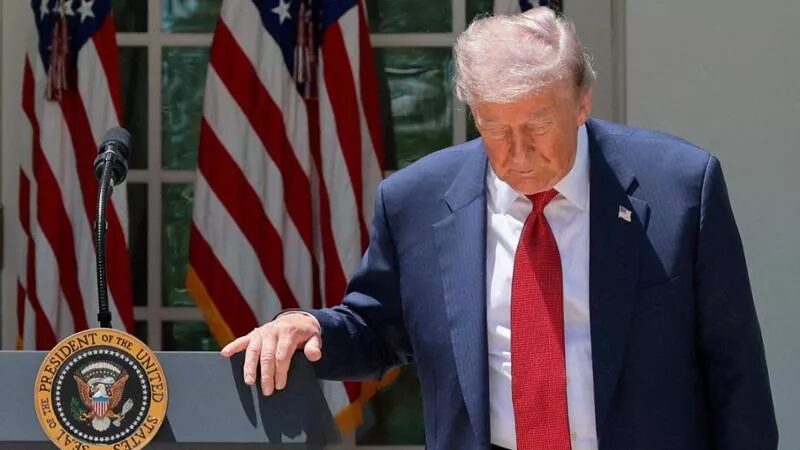
US President Donald Trump’s dilemma in the Middle East remains unresolved: agreement or escalation. The problem is not its unpredictability, but the limitation of options, which hover between a weak deal and a dangerous conflict.
Over the weekend, Trump declared that negotiations with Iran were progressing and a deal was close. But just a few hours later, Tehran denied this and tensions rose as US attacks on military targets in Iran were reported.
Fluctuations in oil markets reflect the uncertainty of the situation. Basically, the problem is that there is no clear stabilization scenario. American options range from a hard deal to military escalation, but none offer a lasting solution.
The potential deal with Iran would have two phases. The first involves the gradual reopening of the Strait of Hormuz and the easing of some US sanctions in exchange for the release of frozen Iranian assets, mainly in Qatar.
The second would continue negotiations on the nuclear program, including the issue of uranium enriched above 60 percent which has no civilian use.
Such a deal would be seen as unfavorable to the US and much more beneficial to Tehran, as would confirm Iran’s strategic benefits after the conflict.
The main criticism is that the US would give concrete concessions for concessions that do not guarantee real change in Iranian behavior. Any attempt at a deal faces strong opposition.
Within the Republican Party, figures such as Ted Cruz, Roger Wicker and Lindsey Graham have expressed strong reservations. Outside the US, Israel is also exerting considerable pressure to prevent any US-Iran rapprochement.
Israeli Prime Minister Benjamin Netanyahu, politically weakened, has an interest in avoiding a deal that would strengthen Iran and limit Israel’s freedom of action in the region. By escalating the Lebanese front, he seeks to change the regional balance and sabotage the negotiation process.
These pressures push Trump to vacillate between options. Every time a deal comes close, it faces domestic criticism and regional tensions that make it politically costly. But any military alternative carries even greater risks, with no guarantee of strategic change.
A return to open conflict would not necessarily bring benefits. Without a long and dangerous ground intervention, airstrikes would not change the balance on the ground. On the contrary, they would further destabilize markets and strengthen Iran’s negotiating position.
In this way, the US is stuck between two unfavorable alternatives. Every step towards an agreement is seen as surrender, while every step towards escalation risks deepening the crisis.
This constant movement between the two options has created a situation without a clear strategic direction. Meanwhile, Iran continues to use time and uncertainty as a diplomatic advantage, strengthening its position in negotiations.
In the absence of a coherent strategy, US policy in the region remains fragmented and reactive. This makes any long-term solution difficult and leaves room for further escalation. square
Source: prizrenpost
Etiketa: Brief