Wednesday, December 24th 2025
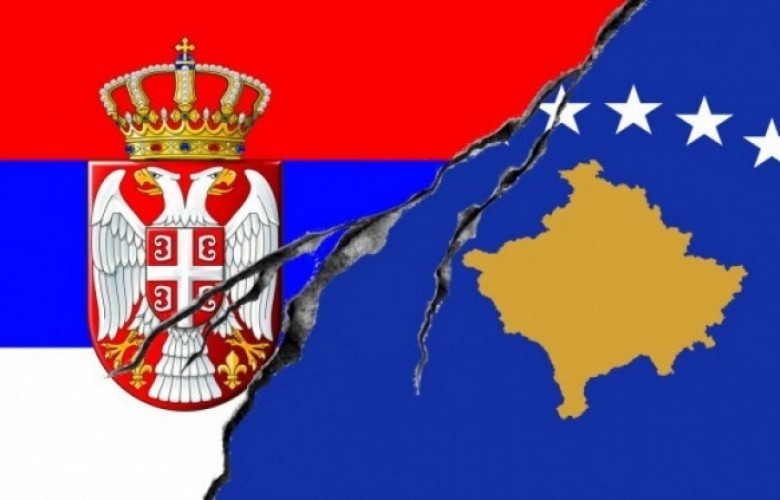
Today, the difference with the situation between Kosovo and Serbia is that the border change being considered would be a negotiated and therefore peaceful change. Consensus changes are in accordance with international law, and such a change has been achieved elsewhere, such as the breakup of Czechoslovakia into two states: the Czech Republic and Slovakia in 1993. Consensus border changes were also discussed (but unsuccessfully) at the conference on Yugoslavia in 1991.
While changing borders can solve a problem such as the dissatisfaction of Kosovo Serbs north of the Iber River, and like the Albanians in the Preševo Valley, there is a possibility that it will cause migration of minorities from these parts of Kosovo and Serbia, as they would not want to live under the authority of a foreign sovereignty. Those who remained would surely feel more vulnerable. Thus, the potential for a further conflict would be reduced if the Kosovar and Serbian authorities would commit to taking measures to protect the rights and promote the interests of these minorities, even though the results so far in this regard have been mixed.
There are different opinions that such an idea of changing the borders could open a ‘Pandora’s Box’ and have consequences in the entire region. However, the two presidents emphasized that if they fail to reach an agreement, the consequences for both countries will be irreversible. In your opinion, what is the path to follow in this new ‘momentum’ for the region?
Richard Caplan: There have been concerns that weather the change of borders in the region could open a ‘Pandora’s Box’. The reluctance to recognize the states that emerged from the former Yugoslavia was done precisely for this reason. “What we have done with Yugoslavia can be applied in other cases”, French Foreign Minister Roland Dumas said in 1991. However, it is still difficult to say that the recognition of new states had an impact in other cases. The disintegration of states everywhere (Soviet Union, Czechoslovakia) has been dominated more by internal logic than by the perspective of recognition.
Similar concerns were also observed with the unilateral declaration of independence of Kosovo in 2008. International authorities were particularly concerned about the consequences it may have on the Bosnian Serbs. However, when Kosovo declared independence, international authorities took pains to emphasize the differences between the two cases, saying that guaranteeing independence for the Republika Srpska would amount to ethnic cleansing, on the basis of which the Serbs dominated the region, and as such would be unacceptable. widespread in the political leadership and the general population in Kosovo and Serbia. It is still not clear if such support exists in both countries, but it is more than clear that it does not exist in Bosnia and Herzegovina or Macedonia.
If the change of borders is achieved amicably, this would allow Serbia and Kosovo to normalize relations. The normalization of relations would enable Serbia and Kosovo to move forward on the path of European integration.
The opposite alternative threatens the continuation with a diplomatic abandonment, which would leave Kosovo without recognition by a large number of countries, including the five states of the European Union. At the same time, it would leave him with the efforts for the integration of the north of Kosovo. We should not underestimate the consequences of a postponement of the deadlines.
The National Security Adviser of the US President, Donald Trump, John Bolton, has said that the United States does not exclude the correction of the borders between Kosovo and Serbia, if the parties agree on this. On the other hand, Germany and Great Britain are more reluctant to this idea. How do you comment on this situation?
Richard Caplan: It is no surprise that the United States is ‘agnostic’ about changing borders in this very case. It is expected that they welcome an agreement that leads to the improvement of relations between Kosovo and Serbia. Also, it is not surprising that Germany and Great Britain, along with several European states, have shown less enthusiasm for this initiative, as they fear the effects that the proposed change of borders may have, despite the specific and consensual way in which these changes can be achieved. communities. “The movement of the borders will not fix the divisions, but will deepen them”, Carld Bild, Paddy Ashdown and Christian Scharz-Schilling, three high representatives for Bosnia and Herzegovina, warned.
This is the first time that these two Balkan countries propose solutions to the problems, while throughout history solutions have been offered to them by other international actors. How can this situation be managed by the international community in this era, when we have boiling tensions in many regions of the world. Could there be similar proposals for solving the problems from other countries?
Richard Caplan: It is very important to emphasize that this solution is coming from local leadership rather than as a result of international diplomacy. Negotiated border regulation can be the basis for resolving conflicts anywhere, as has been the case (not without problems) of Ethiopia and Eritrea and Sudan with South Sudan. It is very rare that a country has the will to give up the sovereignty of a part of the territory. Somaliland, north of Somalia, which has been independent in all but name since 1991, is proof of how difficult such a solution is./REL
Kaynak: prizrenpost