Tuesday, June 23rd 2026
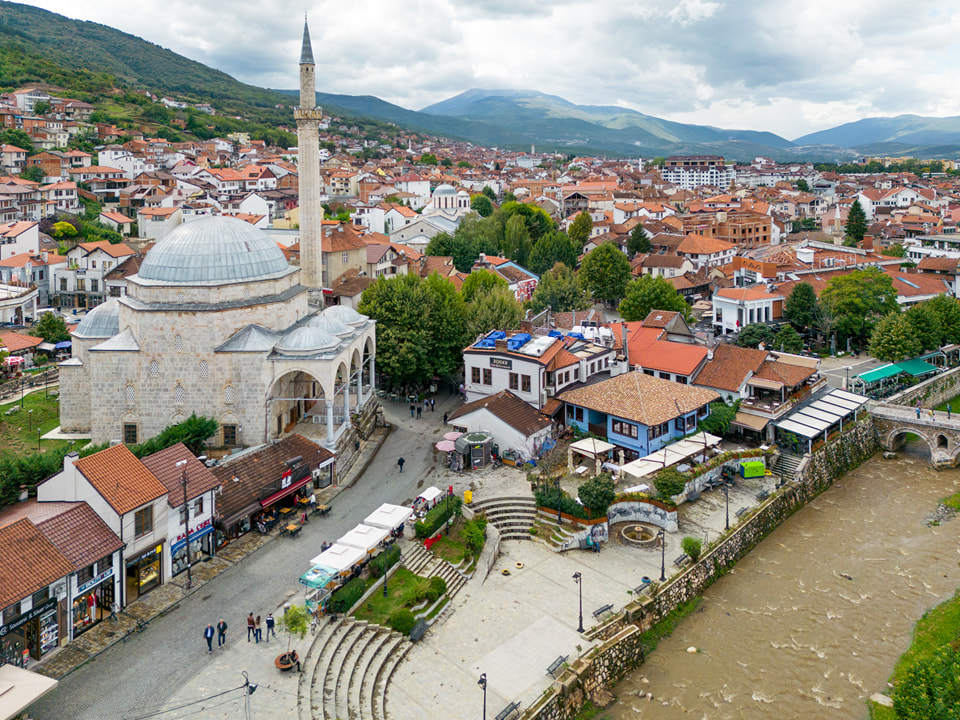
The completion of the counting of votes from the parliamentary elections of June 7 has highlighted one of the most interesting political paradoxes in Kosovo.
Prizreni, the second largest municipality in the country and one of the traditional strongholds of the PDK, has not managed to secure any deputy from the ranks of this party, despite the fact that the PDK continues to govern the municipality and has held the local government for five terms since 2007, writes Gazeta e Prizren.
Once described by the political leaders themselves as the “Jerusalem of the PDK”, Prizren has been the most important electoral center of this party for years. However, the result of the last parliamentary elections proves that the local influence is no longer automatically reflected in the representation in the Assembly of Kosovo.
From Prizren, the Vetëvendosje Movement has managed to secure three deputies: Hajrulla Çekun, Arbër Rexhajn and Artan Abrashin. Meanwhile, the Democratic League of Kosovo will be represented by Anton Quni. On the other hand, neither the PDK nor the AAK have managed to get deputies out of the city, marking a result that few would have predicted just a few years ago.
The fact that Nait Hasani, one of the most popular figures of the PDK in Prizren and a deputy for several consecutive terms, has not managed to secure enough votes for a seat in the Assembly is particularly significant. He was criticized for the vote manipulation affair, in the primary elections, 5 months ago. His absence in the new parliamentary composition symbolizes not only the decline of the influence of the traditional figures of the party, but also the transformation of the political map within the Prizren electorate.
This result proves a phenomenon that has also been observed in recent elections: the increasingly clear division between the local vote and the parliamentary vote.
The result of June 7 places Prizren in an unusual political position. The city, which for decades has been considered the electoral heart of the PDK, will be represented exclusively by LVV and LDK deputies in this legislature. For the PDK, this is a clear signal that the control of the local government is no longer enough to guarantee influence at the central level, while for the rival parties, the result constitutes evidence that the political landscape in Prizren is changing at a faster pace than expected.
It remains to be seen whether this development represents only an electoral moment or the beginning of a deeper transformation of the political balances in one of the most important municipalities of Kosovo.
Another aspect that deserves attention. is the fact that Prizren, in addition to being the second largest municipality in the country, also holds the status of the Historical Capital of Kosovo. However, this time the largest parliamentary representation from this municipality is not the Albanian parties, but the non-majority communities. Of the MPs from Prizren, six belong to community parties, of which two are representatives of the Turkish community, three of the Bosnian community and one of the Roma community. /Gazeta e Prizren
Source: prizrenpost