Wednesday, December 31st 2025
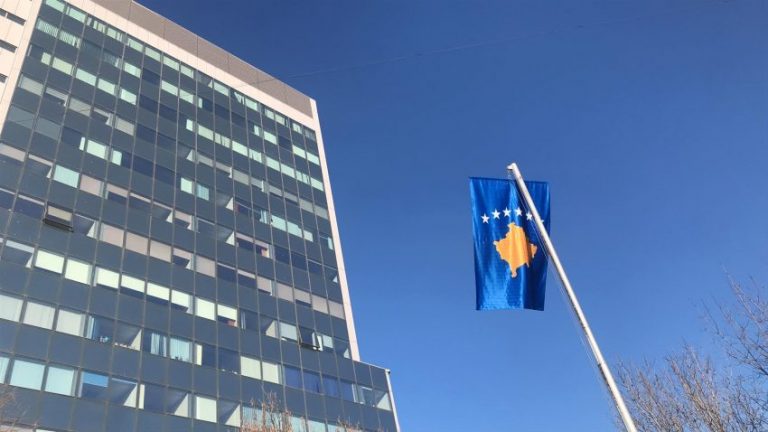
Although during the year 2025, politicians promoted statistics that put Kosovo at the top of global measurements for improving well-being and as one of the safest countries in Europe, other data highlight a completely different reality.
For example, according to statistics collected by the Coverge2EU platform, which follows the situation in the countries of the Western Balkans that aim to integrate into the European Union, Kosovo continues to lag behind most countries. of the region in many areas.
Besides the economy, Kosovo ranks last among all the countries of the Western Balkans, compared to the average of the European Union, also in the fields of education and health. And not only that.
But it is a category where Kosovo leaves behind not only the states of the region, but also the average of the European Union: Internet access.
According to the Kosovo Statistics Agency, 99 percent of households in Kosovo have access to the Internet.
The most frequent Internet users are young people in the age group of 16 to 24 years, writes REL.
The data of published by the office of the Friedrich-Ebert-Stiftung organization in Pristina this year, show that precisely the fields of computer and mathematical sciences are seen as the most promising by the young people of Kosovo.
However, this does not stop the majority of young people from still aiming for a life outside of Kosovo.
In Kosovo, over half (52.8%) of the population aged 15 and over speak only the Albanian language. On the other hand, less than 4% speak three foreign languages or more.
The Kosovo Statistics Agency has continued during 2025 to publish data from the population census, carried out about a year ago.
This census – in which many Kosovo Serbs did not participate – has revealed much more than simple demographic data.
For example, it has shown that about 75% of Kosovo’s residents are connected to the public water supply system.
However, every fourth resident is still forced to find their own solution to be supplied with water.
Just over 85 percent of Kosovo residents are connected to the public sewage system for the discharge of waste water.
However, a significant number are still forced to find other forms, such as connecting to private systems or opening pits septic.
Only about 39% of Kosovo residents are heated through the public heating system, which only works in Pristina and Gjakova.
The majority of citizens use individually installed systems, such as private central heating, stoves and fireplaces.
The main materials for heating remain wood, pellets and appliances that run on electricity, while solar energy is used by only 326 houses in the whole the place.
Source: prizrenpost
Etiketa: Brief