Monday, April 6th 2026
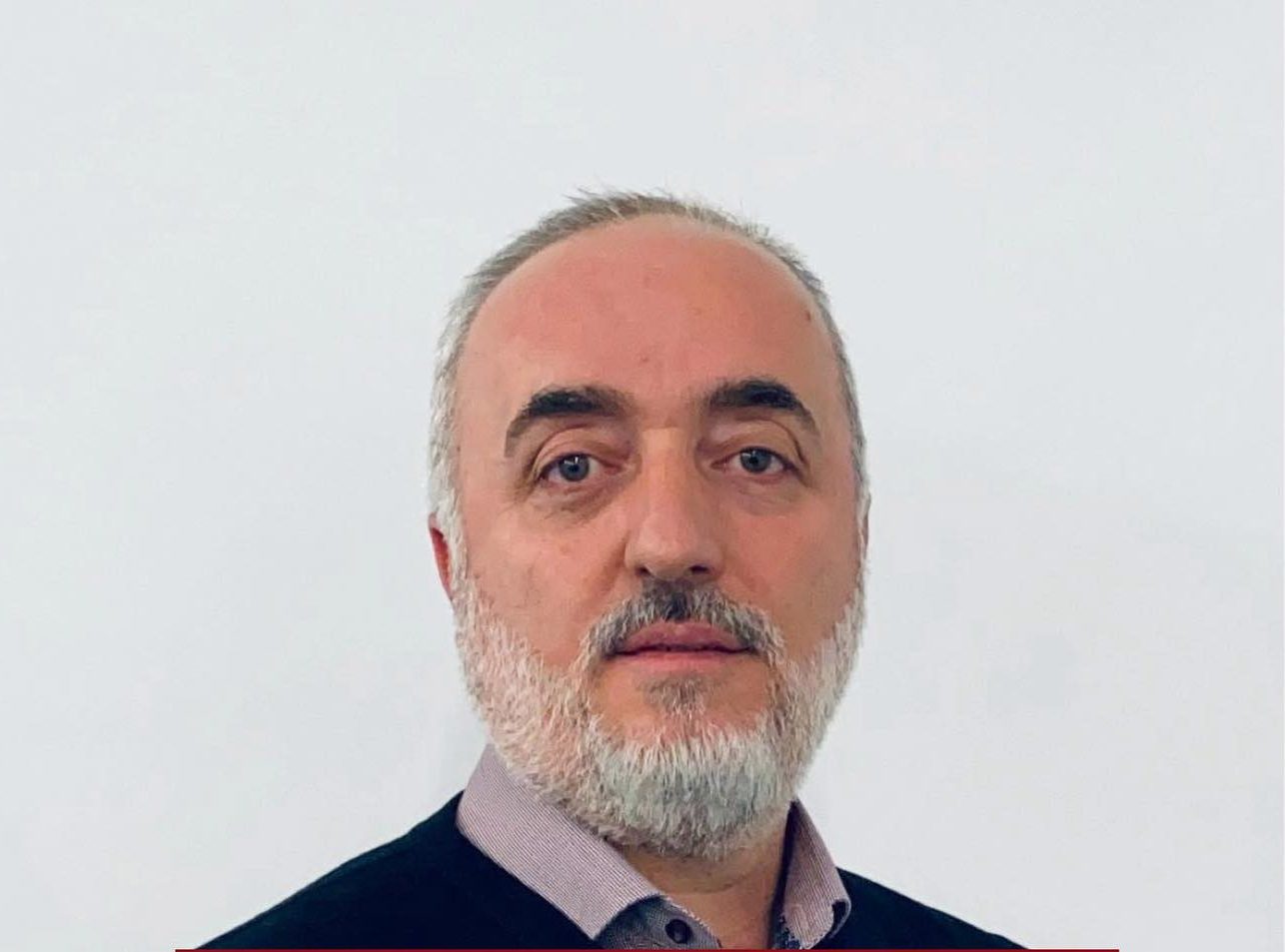
Yesterday’s letter of Mr. Enver Robelli regarding the mosque that is planned to be built in the city of St. Gallen, aims to open a debate on the priorities of the Albanian community in Switzerland, but the way this debate is intended to be built puts it on an incorrect basis: an artificial opposition between the mosque and education and integration, as if these were two paths that exclude each other. Among other things, he claims that “with this money – that is, 15 million francs – 1,000 scholarships of 15,000 francs could be distributed to students.”
This is what Mr. Robelli is not an analysis, but a simplification and deviation from reality.
The reality of the Muslim Albanian community in Switzerland is much wider and more complex than it appears. This community builds dignified mosques with its own contributions, but at the same time bears the burden of supporting families both in Switzerland and in its homeland, maintaining lively social and economic ties with the Albanian lands. He continues to support religious educational institutions in his homeland, such as madrasahs and Islamic faculties, contributing to the formation of new generations and the preservation of a sustainable educational tradition.
This community has not only appeared in times of peace, but also in decisive historical moments, being part of the commitments for the liberation of Albanians from their occupiers. On the social level, it continues to support families in need through the construction of houses, the financing of medical treatments abroad and the implementation of infrastructure projects – especially in cases of natural disasters, often replacing the absence of the state. Even the distribution of scholarships for students is a real and continuous practice, although not always exposed in the media.
All this does not happen in a vacuum. In many cases, they are organized and channeled through mosques, which function as genuine community centers.
Even the figures mentioned in these debates – yesterday, 15 million francs – are presented in a truncated way, because they do not know or do not want to know the reality. Because a very large part of this value is not cash, but contribution in kind. Of the mosques that have been built so far, it is estimated that about two-thirds of these funds consist of voluntary physical labor and services provided by the Albanian Muslims themselves, through their firms and businesses in various fields of construction, installations and maintenance. This means that we are dealing not only with a financial investment, but with a wide professional and community mobilization, where people give their time, knowledge and effort without personal gain.
On the other hand, a large part of Albanian pupils, students, professionals and businessmen in Switzerland have passed through the banks of the mejtebes and attended the lectures of the elders in the Albanian mosques here in Switzerland. These people today hold university degrees and high academic titles, are successfully integrated into Swiss society and at the same time continue to support their mosques. This fact alone demolishes the claim that mosques are an obstacle to education or integration; on the contrary, they have been for many a starting point of formation and discipline.
Another essential element is the trust built within the community. Albanian Muslims in Switzerland trust their imams and mosque heads, and this trust prompts them to contribute not only financially, but, as was said just now, also with voluntary physical work, with moral commitment and with spiritual commitment. This is a social capital built over time, which cannot be easily replaced by external or abstract initiatives.
The claim that mosques produce isolation contradicts the facts. Muslim Albanians are present and active in all areas of life in Switzerland, while mosques contribute to social stability, youth orientation and the cultivation of interreligious dialogue. True integration does not require the stripping of identity, but a mature management of it.
For this reason, the use of the expression that Albanians “pray and shout” in the mosque is not just a linguistic slip, but a contemptuous attitude. This language does not criticize, but belittles; it does not analyze, but stigmatizes. It attempts to reduce a vibrant community reality to an empty caricature, ignoring the thousands of people who work, contribute and build every day.
At this point, the question arises as to what is meant by education in this discourse. From the way it is argued, the impression is created that only a form of education, separated from the religious dimension, is considered valid. But education is not a category reducible only to anti- or affective education; it also includes moral, cultural and spiritual education.
As for the initial idea that the millions of francs should be distributed in the form of scholarships – “God would feel more worshiped if with 15 million francs some 150 young Albanians or more were supported to prepare as economists” – it remains a rhetorical construction, with mocking elements. This makes a question inevitable: why don’t the critics themselves undertake such an initiative to support “marginalized” students with scholarships, but they always expect this from others, mainly from mosques?
In the end, the problem is not the desire for more education, which is legitimate and necessary, but the selective and one-sided way in which reality is read and interpreted. To ignore a community that builds, educates, helps and integrates, and reduces it to a stereotype, is not serious criticism. It is a one-sided point of view that fails to capture the complexity of real life in and around Albanian mosques in Switzerland.
The Muslim Albanian community in Switzerland is not faced with a choice between religion and development. He is trying to build both in parallel. And this is a reality that deserves to be understood and appreciated, not simplified or even despised.
Mr. Robelli, the doors of our mosques are open for you too, come and take a look at what is done and what is not done in and around them? Because the dynamics of the life of our mosques cannot be seen from your office desk. Maybe you learn something new that you didn’t know, maybe we really learn from your honest suggestions and remarks. We are open!
We use cookies to improve the experience and to display ads (Google AdSense).
By clicking “Accept”, you agree to the use of cookies according to
Privacy Policy
and
Cookies Policy.
You can reject non-necessary cookies by clicking “Reject”.
Source: prizrenpost