Thursday, June 4th 2026
The indictment, filed on December 30, 2025 by special prosecutor Ilir Morina, was presented with a proposal for trial in absentia. According to the document provided by “Oath of Justice”, the accused are: Obrad Stevanović, Radomir Marković, Krsman Jelić, Goran Radosavljević, Živko Trajković, Bogoljub Janićević, Milan Lečić, Radomir Mitić, Dragan Gjorgović, Branko Mladenović, Dragan Jasović, Momqilo Sparavalo, Darko Amanović, Srboljub Vujnović, Bozhidar Marinković, Zoran Stanojević, Milan Josanović, Goran Petković, Dragoslav Nikolic, Čedomir Aksić and Zvonimir Janiqijević.
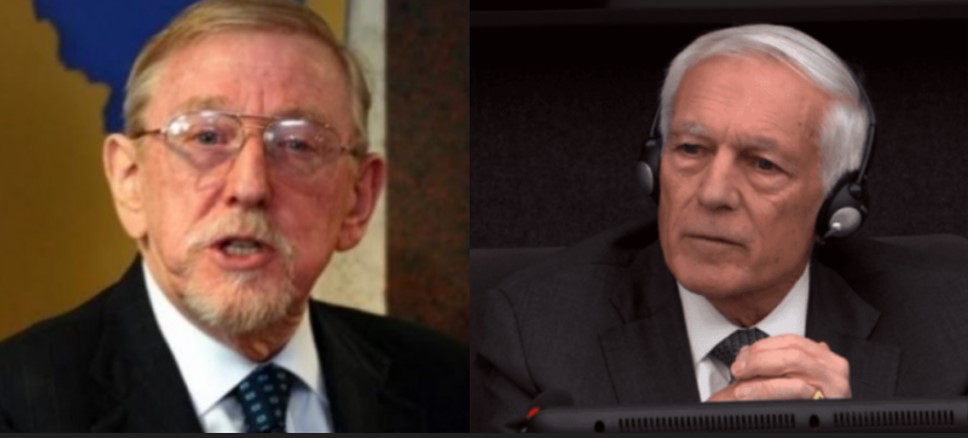
The prosecution has proposed hearing 52 injured persons as witnesses, as well as seven other witnesses, including the former head of the OSCE Verification Mission in Kosovo, William Walker, the former Supreme Commander of NATO, Wesley Clark, the forensic expert Ranta Helena and the Kosovar expert Flamur Blakaj. broadcasts Klankosova.tv.
The indictment describes in detail the event of January 15, 1999, relying on testimonies, material evidence, publications from open sources and documents provided by the former International Criminal Tribunal for the former Yugoslavia (ICTY). According to the Prosecution, these evidences support the well-founded suspicion that the criminal offense was committed and that the 21 accused participated in it.
Also, the Prosecution estimates that the legal conditions for conducting the trial in absentia have been met. She has requested that aggravating and mitigating circumstances be taken into account during the sentencing, as well as that the accused be obliged to compensate the injured for the damages caused.
At the end of the indictment are included the names of the 42 victims of the Reçak massacre and the list of 32 other people who, according to the Prosecution, were tortured and ill-treated during the operation.
The testimony of the former head of the Mission. OSCE verifier in Kosovo, William Walker, included in the indictment for the massacre of Reçak, describes the shocking scenes he saw in the village on January 16, 1999, a day after the killing of Albanian civilians.
According to the indictment, Walker stated that he had gone to Reçak after being informed by General Meizon that more than 15 people had been killed in the village. He has shown that he had met representatives of non-governmental organizations and journalists at the scene, while he had decided to see closely the place where the victims were located.
In his testimony, Walker confessed that he had seen bodies with multiple gunshot wounds, blood and severe head injuries. He has emphasized that the victims were wearing civilian clothes, typical of the residents of the area, and that he had not noticed any signs that would identify them as members of the KLA.
Describing the scenes in the valley above the village, Walker stated that he had seen a large number of dead bodies, which had remained in the positions where they had been killed. According to him, there were bullet wounds on the bodies of the victims, especially on the upper part of the body and on the head.
He said that he had seen about 17 to 19 bodies, mostly young and middle-aged men, while some of the victims were older and wearing pleats. Walker has stated that he did not see weapons or cartridges near them that would suggest that they had participated in the fighting, reports Klankosova.tv.
According to the indictment, the international verifiers who inspected the site concluded that the shots had come from higher positions on two hills around the area where the bodies were found. At the scene, according to them, magazines and cartridges were found.
Walker stated that he had not been able to see all the victims of the massacre, which according to the information he had received were a total of 45, but only about half of them.
The indictment also states that Walker had ordered the OSCE verifiers to document as much evidence as possible, taking photographs of the victims and the scene, in order to preservation of evidence for the event.
Source: prizrenpost