Friday, February 20th 2026
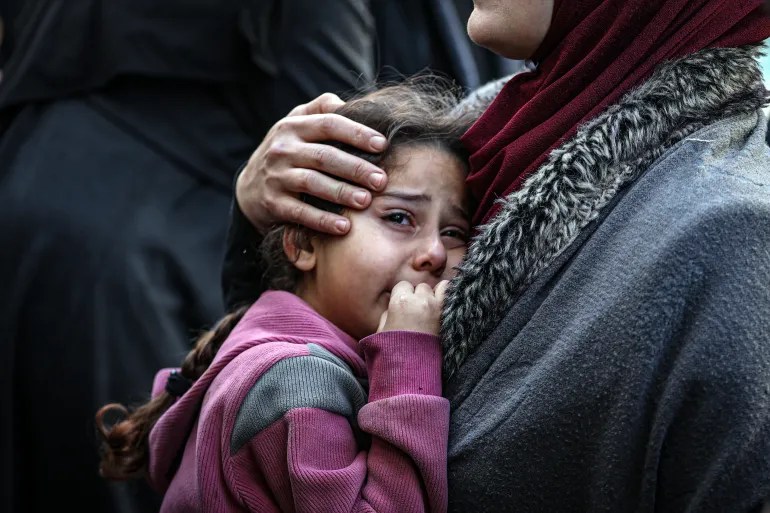
Billions of dollars to wipe a people off the face of the earth, but failed
Since its genocidal war on Gaza began in October 2023, Israel has spent vast sums of money and manpower to flatten Palestinian territory and destroy its institutions.
It has killed more than 72,000 people in achieving this goal, including tens of thousands of children and women – with some independent researchers suggesting the death toll is higher than 75,000.
Of those still alive, many have suffered the effects of deliberately imposed famine: first during Israel’s siege of northern Gaza in late 2024, which United Nations officials described as “apocalyptic”, and later during the man-made famine that Israeli policies created in August 2025, when images of malnourished and starving children became commonplace on news bulletins around the world.
None of this has come cheap. Israel – supported by its main ally, the United States – has poured billions of dollars into waging its genocidal war in Gaza. So what is the cost of killing more than 72,000 Palestinians? How much do you need to spend on ammo to commit genocide? And what is the impact of mass industrialized killing on an economy?
How much money has Israel spent on the war in Gaza?
The Bank of Israel estimated the total economic cost of the war at about 352 billion shekels ($112 billion). This total includes approximately 243 billion shekels ($77 billion) in direct defense costs, 33 billion shekels ($10.5 billion) for the property tax compensation fund, civil expenditures of 57 billion shekels ($18 billion) and interest payments of 19 billion shekels ($6 billion).
In early 2025, taking the war in isolated Gaza, the former top military economic adviser of Israel, Gil Pinchas, estimated that the cost to Israel had been 150 billion shekels ($48 billion), reaching an average cost of 300 million shekels ($96 million) per day. On average, 100 Palestinians were killed in Gaza every day, according to Philippe Lazzarini, commissioner-general of the United Nations Relief and Works Agency for Palestine Refugees (UNRWA).
“Every item that [the Israeli army] uses in combat has a price in shekels, detailed in a separate and very specific price book,” Pinchas told reporters, referring to the price paid by the army. Israelis, and not Palestinians, for every combat ration, liter of fuel, vehicle, bullet and rocket fired at Gaza. “The book is constantly updated, including during the war… We keep our finger on the pulse.”
How much of the war’s spending went on munitions?
Pinchas said Israel had spent 340 billion shekels ($108 billion) on munitions since the war began, but not nearly all of it had been used. A significant portion of this money has also been spent on purchasing weapons from Israeli manufacturers, which has helped offset the wider impact of the war on the Israeli economy.
Line-by-line details for most military budgets are rarely available. But some clues can be gleaned from Israel’s other wars in the region.
According to a mid-war estimate by The Wall Street Journal, Israel’s war against Iran was costing it $200 million a day, with the missiles used to intercept Iranian missiles, sometimes as many as 400 a day, valued at somewhere between $700,000 and four million each.
In addition, Israel’s September 2024 attack on the Lebanese group Hezbollah’s communications equipment, which relied on a plan that had been set in motion years earlier, is reported to have cost the Israeli treasury about one billion shekels ($318 million).
What has been the overall cost to the wider Israeli economy?
Significant, and much of this is due to manpower.
Of the 465,000 of Israel’s military reservists, over 300,000 were stationed in Gaza during the first year of the war. This is in addition to the 170,000 active duty personnel. The cost of maintaining this number of active soldiers, as well as the impact on the wider economy due to the loss of reservist workers, is astronomical.
According to Israel’s treasury, about 70 billion shekels ($22.3 billion) has been spent on its reserve forces alone over the course of the war, while the cost of maintaining its standing army in 2025 was estimated to be 15.37 billion. shekels ($4.9 billion).
The Bank of Israel estimates that the cost of a month of service for a military reservist is about 38,000 shekels ($12,100) in lost production.
With military budgets unlikely to decrease after the genocide and other wars Israel has been embroiled in over the past two years, an article in the liberal Israeli daily Haaretz suggested that over the next decade, the cost of the war could reach, at least, 500 billion shekels ($159 billion).
How much did Israel’s genocide cost the U.S.?
More than many American voters might assume.
According to Brown University’s Costs of War 2025 report, as of October 7, 2023, the U.S. has given Israel about $21.7 billion in aid.
In addition, the U.S. taxpayer has funded U.S. operations in support of Israel in Yemen, Iran, and the Middle East in general at a cost of $9.65 billion to $12.07 billion, meaning a total U.S. investment of somewhere between $31.35 billion and $33.77 billion in Israel’s wars since 2023.
According to the United Nations, rebuilding Gaza – where Israel has destroyed most of the buildings – would take decades and cost somewhere around $70 billion.
In a report, the UN noted that Israel’s military operations had “significantly undermined every pillar of survival” inside the enclave and that the entire population of 2.3 million people faced “extreme and multidimensional poverty” – the term for poverty that extends beyond financial pressure, in areas such as lack of water. clean, proper sanitation and education.
We use cookies to improve the experience and to display ads (Google AdSense).
By clicking “Accept”, you agree to the use of cookies according to
Privacy Policy
and
Cookies Policy.
You can reject non-necessary cookies by clicking “Reject”.
Source: prizrenpost
Etiketa: Brief