Wednesday, December 31st 2025
What is the Southern Transitional Council, why is it supported by the United Arab Emirates?
The conflict in Yemen, a country already devastated by decades of civil war, has taken a new turn. Fighters affiliated with the Southern Transitional Council (STC), which is backed by the United Arab Emirates, overran Hadhramaut province in southern Yemen earlier this month, capturing the city of Seiyun.
STC is part of Yemen’s UN-recognized government, but has called for the breakaway of an independent South Yemen.
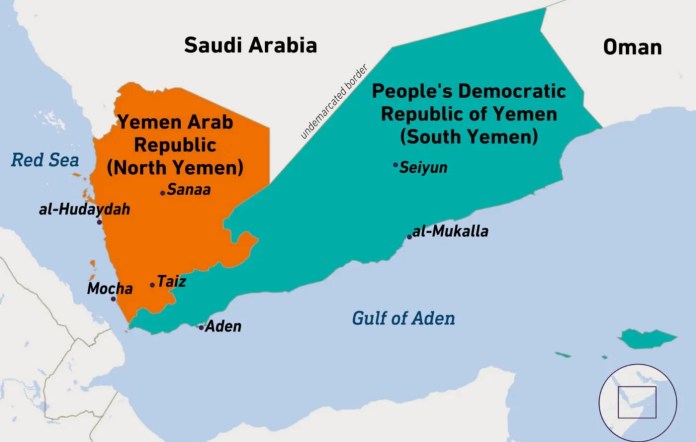
For most of the past two centuries, Yemen has been widely divided in the north. and south, although official borders have not existed.
The British controlled the area, including the strategically important port of Aden, from the mid-19th century until the outbreak of an armed rebellion in 1963.
Yemen gained independence four years later, renamed itself the People’s Republic of South Yemen and made Aden its capital.
In 1969, Marxist-Leninists took control in a bloodless coup. The country was renamed the People’s Democratic Republic of Yemen (PDRY) and became the only communist state in the Arab world, establishing relations with the USSR, Cuba and China.
In contrast, North Yemen gained independence in 1918 and became a monarchy. North Yemen later plunged into civil war and in 1970 became the Republic of Yemen.
During the 1970s, the two Yemens had a tense relationship, including sporadic clashes.
After a series of problems, the two Yemeni states were united in May 1990.
However, divisions remain, mainly due to a secessionist attempt in the south. which was suppressed in 1994. And since 2004, the Zaydi Shiite Houthis have been insurgents in the northwest.
Yemen’s civil war erupted in 2014 when the Houthis captured the capital, Sanaa. The civil war is still ongoing, although it appears to have reached a stalemate. The Houthis remain in power in the north, while various factions within the Presidential Leadership Council are fighting for influence in the south.
Yemen had a population of just under 41 million in 2024, according to the World Bank. Of these, about 70-80 percent live in Houthi-controlled areas, while another ten million live in southern Yemen.
Famine and disease caused by the civil war have been exacerbated by extreme weather and flooding.
According to the IPC in June 2025, more than half of the population of government-controlled southern Yemen faces high levels of food insecurity. More than 1.5 million people are affected by acute hunger and malnutrition at emergency levels. At least 4.5 million people have been displaced.
The Southern Transitional Council (STC) has led the latest push across Hadhramaut province. It emerged in April 2017 from the broader Southern Movement (al-Hirak), which seeks a separate state in “South Arabia,” as the group calls the region.
STC was formed in 2017 with funding from the United Arab Emirates, following the ousting of Aidaroos al-Zubaidi as governor of Aden by then-Yemeni president-in-exile, Mansour Hadi.
In August 2019, The STC took control of Aden, the seat of Hadi’s government. Peace talks between the STC and the government, brokered by Saudi Arabia, followed. Hadi resigned and the STC joined the government in April 2022.
STC says its ultimate goal is southern independence, but that it will represent southerners in government as part of a “coalition with different agendas”.
It now holds three seats in the eight-member presidential council, and Zubaidi has been named vice president.
Hadhramaut is a large, sparsely populated province that stretches from the Gulf of Aden to Yemen’s northern border with Saudi Arabia. It also holds about 80 percent of the country’s soft oil reserves.
Until earlier this month, it was officially under the control of the Yemeni government, although some tribal groups also have influence.
In the past, these groups have worked with the government and STC against Al-Qaeda in the Arabian Peninsula (AQAP), which has a presence in the province. But relations have been strained at times.
In January 2025, the Hadhramaut Tribal Council (HTA), the armed wing of tribal groups, took control of several oil fields.
This led to blackouts across the province, including its capital, al-Mukalla, which sparked protests.
Hadhramaut Tribal Council leader Sheikh Amr bin Habrish, called for greater autonomy for Hadhramaut. And on December 3, the STC announced that the Hadhramaw Elite Forces (HEF) had taken control of Seiyun, a key city in the center of Hadhramaw, in an operation called “Promising Future”.
Since then, the Hadhramaw Elite Forces have advanced further east, capturing most of the province, including oil infrastructure, raising the historic flag of South Yemen.
In a statement released on X Network on December 2, STC said the HEF was advancing to confront “AQAP and the Muslim Brotherhood terrorist groups” and cut off the Houthi-backed smuggling route.
Why are the UAE and Saudi Arabia involved in the Yemen conflict?
In March 2015, six months into Yemen’s civil war, Saudi Arabia led nine countries in bombing the the Houthis, as well as in an air, land and sea blockade that has plunged Yemen into a devastating humanitarian crisis.
Saudi’s top priority is its border and a political settlement with the Houthis.
Riyadh would not be against an STC-dominated south if it were controlled by a stable group on the ground and stopped smuggling missiles and weapons.
Riyadh has little appetite. to reengage in a full-scale conflict in the south after decades of costly intervention.
The Emirates has long been part of the Saudi-led coalition in Yemen, where its strategic objectives have focused on security, politics and trade.
The UAE suffered heavy casualties in September 2015, when it lost 52 soldiers in a Houthi airstrike in the province. Marib.
Since then, it has made limited use of its own ground forces in Yemen, leaving ground operations to proxy groups such as the STC, as well as mercenaries mainly from Latin America and the United States, plus troops from the notorious paramilitary Sudan Rapid Support Force.
Through its ties to the STC, the UAE has built coastal military bases in Mocha and on the islands. Abd al-Kuri and Samhah, which are part of the Socotra archipelago controlled by the STC. These bases form a network with others in the region through which the UAE can expand its influence.
Then there is trade: the UAE now has a base on Mayun, an island in the Bab al-Mandab Strait that connects the Gulf of Aden and Red Sea sea lanes.
STC and its allies in Yemen have proven to be effective tools in marginalizing rivals that the Emirates The United Arab Emirates doesn’t like it.
STC-affiliated fighters reportedly reached Al-Ghaydah, the capital and only major settlement in Yemen’s easternmost Al Mahra province.
In recent months, STC has systematically taken control of key southern provinces, strategic facilities and government symbols: the oil fields in Hadramout, the airports and military bases in Wadi Hadramout, the presidential compound and security infrastructure in Aden, and positions in Mahra.
STC wants to be taken seriously on the international stage, including improving its relations with Israel. This would give him and his partners in Yemen greater recognition from the US and its allies, despite possible resistance in southern Yemen.
STC leaders constantly speak the language of rebuilding the southern state, raise their flag over government buildings and present themselves to foreign diplomats as the only coherent government in the south.
With this morning’s attack on STC positions, Saudi Arabia indicated that it will not allow the creation of a pro-Israel stronghold in the south of its country. After the recognition of Somaliland, the conclusion of an agreement with the Southern Transitional Council would give Israel the opportunity to almost completely encircle Saudi Arabia. /square
Source: prizrenpost
Etiketa: Brief