Friday, April 10th 2026
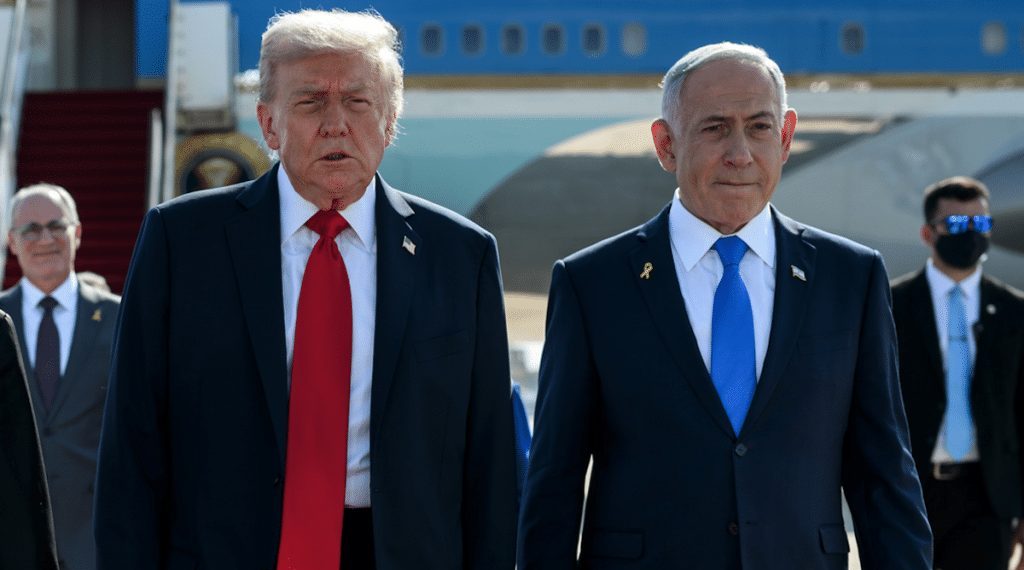
Challenges of a precarious ceasefire in the face of Tel Aviv’s diplomatic isolation and Washington’s new geopolitical calculations
The current ceasefire between the United States and Iran represents a geopolitical turning point, where Donald Trump, faced with the failure of his apocalyptic bluff, was forced to accept a position of strategic weakness to avoid an uncontrollable conflict.
Acceptance of the ten-point Iranian proposal as a basis for talks marks a silent capitulation of the doctrine of “maximum pressure”.
Because this document includes demands that were once considered “red lines” impassable for Washington, such as the withdrawal of US combat forces from the region, full recognition of Iran’s right to nuclear enrichment and compensation for economic losses caused by the war.
This development proves that Iran has emerged from this confrontation as a regional power. consolidated, which has proven that it can dictate its terms through effective control over the Strait of Hormuz, turning this strategic point into a tool of geopolitical and economic pressure, forcing global powers to sit down at the negotiating table with terms dictated by Tehran.
On the other hand, the Israeli government appears as the only actor with a vital interest in the continuation of hostilities, since for Benjamin Netanyahu this ceasefire represents a complete strategic and political defeat that endangers its survival in power.
Israel has not met any of its military objectives. He has failed to eliminate Hamas and remains unable to contain Hezbollah in the north, while the Islamic Republic remains not only intact but politically stronger than ever before.
Israel’s diplomatic isolation has deepened in unprecedented ways, losing public opinion support in the United States, where sixty percent of Americans now view the Israeli state negatively, a stunning reversal that makes unconditional support for Tel It carries a high political cost for any US administration.
In this context, the recent intense Israeli attacks on Lebanese territory, undertaken immediately after the ceasefire announcement, reads as a deliberate and desperate attempt by Netanyahu to sabotage the stabilization process and maintain a state of permanent conflict for domestic political interests.
This aggressive behavior shows that in its current state, Israel sees peace as an existential threat to his current leadership. Therefore, a lasting and real end to the war will only be possible if the United States takes the decision to change its relationship with its main ally and exert the right pressure to curb Israeli aggression.
Without this decisive intervention by Washington, any agreement will remain just a tactical and fragile pause before the next escalation, since peace requires not only the willingness of Iran and the US to negotiate, but above all breaking the cycle of violence fueled by the Israeli government’s need for perpetual war as a means of avoiding moral and legal accountability for its strategic failures. /tesheshi
We use cookies to improve the experience and to display ads (Google AdSense).
By clicking “Accept”, you agree to the use of cookies according to
Privacy Policy
and
Cookies Policy.
You can reject non-necessary cookies by clicking “Reject”.
Source: prizrenpost
Etiketa: Brief