Friday, May 15th 2026
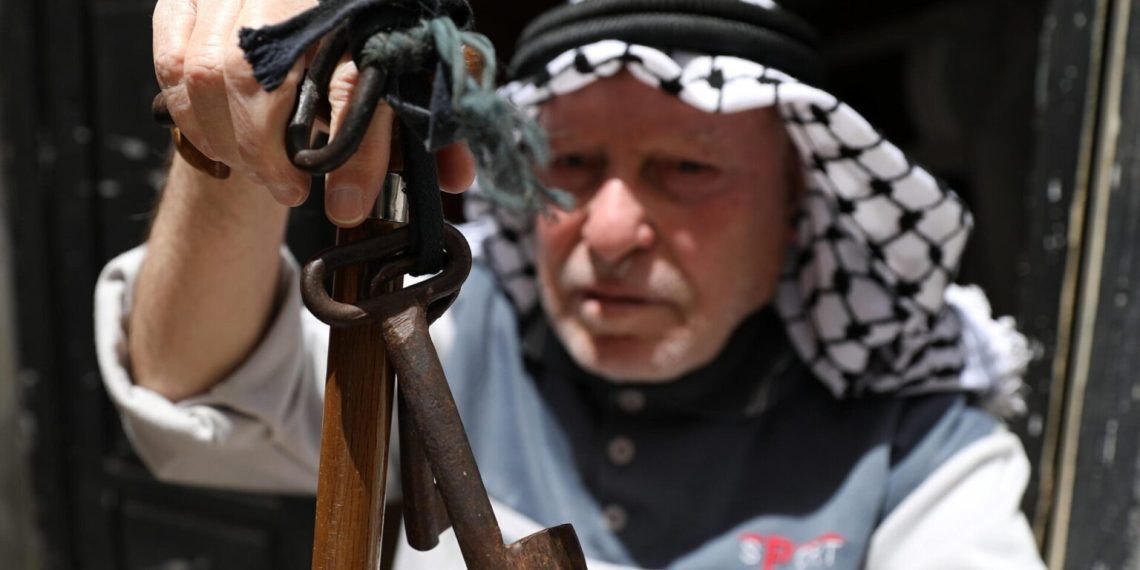
While commemorating the Nakba, every Palestinian family keeps the house keys to return one day
Every year, on May 15, the Palestinian people commemorate the Nakba, which literally means “catastrophe” in Arabic. This date symbolizes the expulsion of approximately 770,000 Palestinians from their homes in 1948, during the creation of the State of Israel.
Although the UN guaranteed the right of return, Israel never accepted it, leaving millions of descendants in refugee camps to this day. Interest in the Palestinian territory increased in the 19th century, when the Zionist movement pointed to it as the place for the creation of a Jewish state.
After the First World War and the fall of the Ottoman Empire, Great Britain took the mandate over Palestine (1920-1948). During this period, increased Jewish migration created strong tensions with the local Arab population.
Between 1936-1939, the Great Uprising broke out against the British presence and the rise of Zionism. Although it was violently suppressed, this uprising forced the British to curb migration. However, Zionist paramilitary organizations such as the Irgun emerged stronger, launching attacks on Palestinian civilians long before statehood was declared.
After World War II and the Holocaust, international pressure for a Jewish state increased. In 1947, the UN proposed a partition plan: 56 percent of the territory would be given to the Jews and the rest to the Palestinians, while Jerusalem would be under international control.
The Palestinians rejected the plan as unfair, since they were the majority of the population. This refusal served as a pretext for the Zionist forces to begin the mass deportation of the local population. On May 14, 1948, David Ben-Gurion declared Israel’s independence.
Soon after, Israeli soldiers surrounded hundreds of Arab villages, forcing residents to flee or face death. Many villages were completely razed to prevent their return.
The war that followed between Israel and the Arab states ended with Israel winning and expanding its control beyond the borders stipulated by the UN.
Today, the number of Palestinian refugees registered with UNRWA exceeds 5 million people, spread across the Gaza Strip, the West Bank and neighboring countries such as Jordan, Syria and Lebanon. One of the most poignant symbols of the Nakba is the key.
Palestinian families still keep the keys to their old homes, passing them down from father to son as a symbol of their inalienable right to return to their properties. In 2023, the UN officially commemorated the Nakba for the first time in its history.
Although in Israel a 2010 law prohibits the commemoration of this day, for Palestinians May 15 remains the starting point of a long journey of suffering. Today, in 2026, a full 78 years later, returning to the homeland remains an unrealized dream and a constant demand for justice. /square
Source: prizrenpost
Etiketa: Brief