Saturday, May 16th 2026
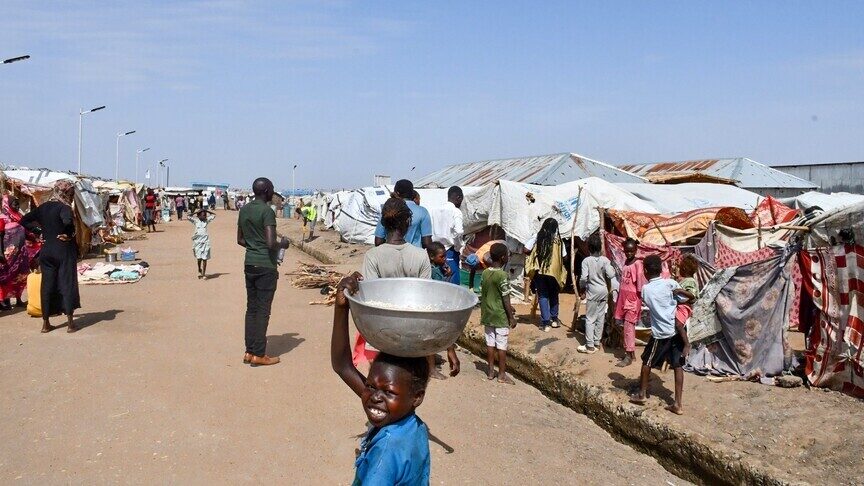
Nearly 19.5 million people in Sudan are facing acute food insecurity as famine risks persist in some conflict-hit areas, three UN agencies warned today, as the country’s civil war enters its fourth year, Anadolu reports.
In a joint statement, the UN Food and Agriculture Organization (FAO), the World Food Program (WFP) and UNICEF said that two out of every five people in Sudan are experiencing crisis levels of hunger or worse, according to the latest Integrated Food Security Phase Classification (IPC) analysis.
Although the latest IPC analysis did not identify areas currently experiencing hunger, some 135,000 people are facing catastrophic food insecurity in 14 hotspots in Darfur and South Kordofan as conditions are expected to worsen during the lean season June-September.
More than five million people are classified under emergency hunger levels while another 14 million are in crisis conditions, the agencies said.
The statement warns of a worsening nutrition crisis, with some 825,000 children under the age of five expected to suffer from severe acute malnutrition in 2026, marking a 7 percent increase from past.
“Hunger continues to threaten the people of Sudan, as hunger and malnutrition are now threatening millions of lives,” said WFP Executive Director Cindy McCain. According to FAO director-general Qu Dongyu, to prevent further loss of life and hunger, an urgent increase in emergency agricultural aid to boost local food production is imperative.
UNICEF executive director Catherine Russell warned that without urgent action and sustained humanitarian access, “more children will die”.
The agencies said humanitarian aid remains “critically insufficient compared to scale of needs,” with only 20 percent of Sudan’s 2026 Humanitarian Needs and Response Plan funded as of April. Between February and May, aid partners aimed to reach 4.8 million people each month, but only about 3.13 million people received aid in February.
They added that conflict, displacement and restrictions on humanitarian access continue to hamper relief operations, while the widespread destruction of infrastructure has severely limited access to health care, clean water and sanitation.
They called for an immediate cessation of hostilities and called on the international community to increase funding and humanitarian access to prevent further loss of life.
Source: prizrenpost
Etiketa: Brief