Tuesday, May 19th 2026
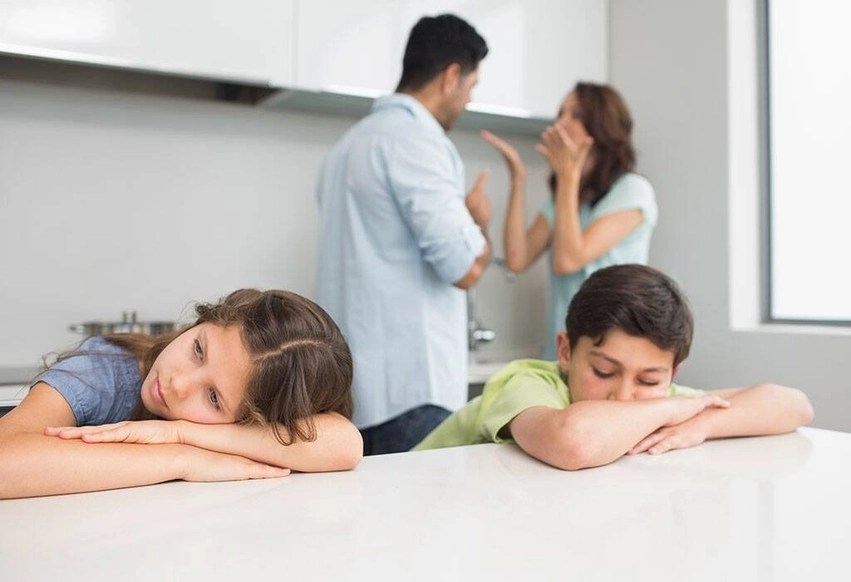
Solving problems calmly is one of the most important life lessons for children
No one likes fights, least of all children who often witness conflicts between their parents. But since a relationship without the occasional disagreement is almost unimaginable, the main question is not whether parents will ever fight, but how they do.
Psychologists say that how parents manage conflicts has a profound effect on children’s well-being. While destructive fights can have long-term emotional consequences, having a healthy problem-solving model is one of the most valuable lessons children can learn.
How do loud and abusive fights affect children?
When conflicts between parents are frequent, loud, and hostile, they become destructive. This includes shouting, serious insults, threats to leave, physical aggression, but also passive-aggressive behavior such as ignoring or being silent for days.
Such an environment violates what is most important for the healthy development of the child: the feeling of emotional security.
Children are very sensitive to the atmosphere at home. Even babies as young as six months old show signs of stress when their parents are in conflict. In the long term, children who grow up in environments with high and constant conflicts have a higher risk of developing anxiety, depression and behavioral problems.
Their anxiety can manifest through aggressiveness, disobedience, withdrawal, sadness and low self-esteem.
In addition to the emotional consequences, chronic stress also affects cognitive functions, causing problems with concentration and success in school.
Particularly harmful are fights that are directly related to the child himself, his behavior, grades or obligations. In these cases, children often blame themselves and shoulder an emotional burden for which they are neither responsible nor ready.
On the other hand, not every fight is necessarily bad, although it would be best to avoid it. When parents manage to resolve disagreements calmly and constructively, they give children a very valuable model for the future.
When a child sees that parents disagree about something, but talk respectfully, listen to each other and finally find a compromise, he learns some essential things.
First, he understands that conflict does not mean the end of love and that it is normal to have different opinions.
Second, he learns healthy communication, negotiation and problem-solving skills, which he will later use in friendly and loving relationships.
And finally, when he sees reconciliation, a hug, a kiss or a joint activity, the sense of security is strengthened, because he understands that the family continues to remain stable.
Rules of a constructive fight in front of children
Being a good example does not mean being perfect, but be aware of your own behavior.
If the disagreement happens in front of the children, some rules can help it remain within constructive limits.
The first step is to control the tone of the voice, shouts and angry voices are perceived by children as a threat.
Talk with empathy and respect, showing your partner that you hear and understand his side of the story, even when you disagree with
If the argument has become more heated than you planned, it is important to address the child.
You don’t need to go into details, but you can say something like:
“Daddy and mom had a little fight because we disagreed about something, but don’t worry, we worked it out. We still love each other and it’s not your fault.”
An explanation like this takes away feelings of guilt from the child and gives him the peace he needs.
Tell the children that the conflict is over and that family harmony is restored.
The goal is not to hide the conflicts, because this is almost impossible. The goal is to learn how to cope with them, so that children’s mental health is preserved and at the same time they learn important skills for healthy and happy relationships in the future.
Source: prizrenpost