Tuesday, June 16th 2026
The war is fundamentally changing the Middle East: with each passing day, the cracks in the balance of power grow deeper. Fear of Iran, which today is perceived as even more dangerous, has been added to mistrust of Trump and Netanyahu.
In this context, Saudi Arabia has taken the lead in a project that could revolutionize the security architecture in the region: the creation of an alliance with Pakistan, Turkey and Egypt.
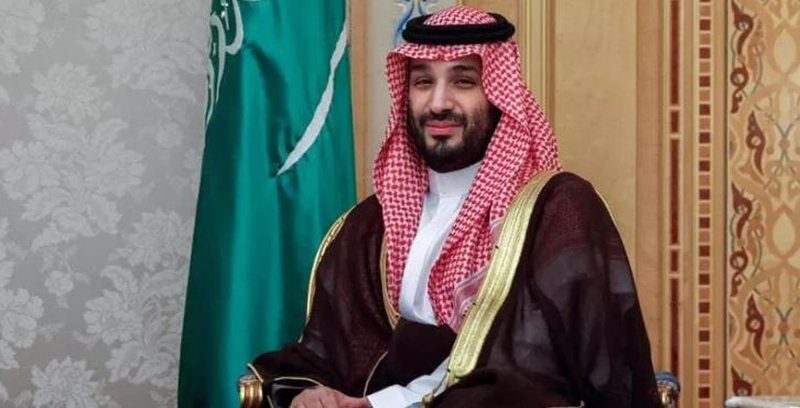
The four countries are designing a military pact with significant economic consequences and strong political influence. The alliance is called STEP, after the initials of the participating states, while some have already baptized it as “Arab NATO”. In Riyadh, however, a more symbolic moniker is gaining ground: “Mohammed’s Accords”.
This name underscores the leadership role of Saudi crown prince Mohammed bin Salman, as well as the bond between the four Sunni nations. At the same time, he hints that the project could mark the end of the Abraham Accords with Israel.
In theory, the Muslim coalition brings together elements that would enable it to operate independently.
As a senior military official from the Persian Gulf sums it up: “The Saudis have the capital, the Pakistanis the nuclear weapons, the Turks the technology and the Egyptians a powerful army.” If these elements were to harmonize, the region could face the birth of a new superpower.
However, the history of the Middle East shows that many similar alliances, whether under the spirit of pan-Arabism, Baathism or other political projects, have proved short-lived. During the time of Gamal Abdel Nasser, Saddam Hussein, Hafez al-Assad or Muammar Gaddafi, federations and unions of states were created that were dissolved within a few months.
Today, the situation is different. Netanyahu’s determination to pursue his goals regardless of White House objections, combined with Trump’s political weakness and his desire to reduce the US military presence abroad, has created a major strategic vacuum. Mohammed bin Salman aims to fill this gap by guaranteeing the security of Saudi Arabia against any threat, including nuclear.
According to reports, the starting point of this process was an Israeli operation that damaged relations with the Arab monarchies: last September’s attack on Qatar to eliminate the leaders of Hamas. This action caused consternation in the region, and just a few weeks later the Saudi prince signed a treaty with Pakistan, which contains a mutual defense clause, similar to Article 5 of NATO.
Pakistan offers the guarantee of its nuclear arsenal and armed forces, while in return it receives financial support for its fragile economy.
The attack on Iran on February 28 constituted the second trauma for Arabia. Saudi. Riyadh had supported Omani mediation and believed a diplomatic compromise was possible. Instead, it found itself drawn into the conflict without warning and without additional support from the US. Since then, the Iranian Revolutionary Guard has made the Gulf monarchies pay the cost of the open conflict between Washington, Tel Aviv and Tehran.
It was precisely the desire to end the war that led the Foreign Ministers of the STEP countries to meet on March 19. From this meeting, the diplomatic initiative was born that contributed to the halting of the American bombings and the start of talks in Islamabad.
Diplomatic meetings have now become a permanent cooperation mechanism. Mohammed bin Salman’s upcoming visit to Turkey is expected to be another important step. On the agenda is the expansion of the Saudi-Pakistani treaty with Ankara, while at the same time major infrastructure projects are being concretized: railways, logistics centers, transport networks, digital systems and even an oil pipeline that will transport Saudi oil to the Mediterranean. Meanwhile, the rapprochement between Egypt and Turkey, two fierce rivals until a few years ago, is turning into a genuine military partnership. The air forces of the two countries are conducting joint exercises and are considering the creation of a joint squadron of F-16 aircraft for the protection of Saudi airspace.
Even Qatar, which has long cooperated closely with Turkey in the military field, has expressed interest in joining the new regional initiative.
If this project is fully realized, the participating countries would have a direct impact on some of the world’s most strategic nodes of trade: the trade channel Suez, the Bosphorus, Bab al-Mandeb and the Strait of Hormuz. Such a development would significantly change the balance of power in the Middle East and beyond.
Source: prizrenpost
Etiketa: Brief