Saturday, July 11th 2026
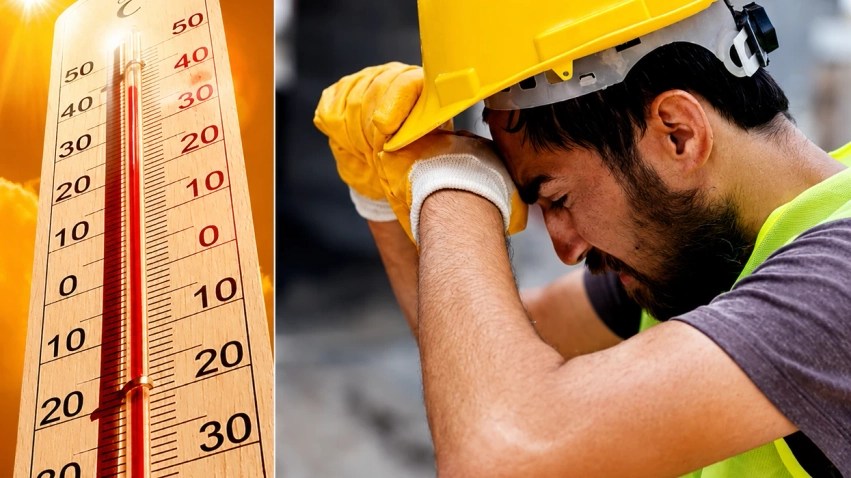
It’s not just about heat stroke, because the body can lose accuracy even without visible symptoms
In addition to the direct health consequences, such as dehydration, heat exhaustion and heat stroke, exposure to high temperatures also has a less obvious but very important effect: it increases the risk of common workplace injuries. However, these are not the only possible health consequences of tropical temperature conditions for daily life and functioning.
What science says about occupational injuries during excessive heat: more than mortality
In the conclusions of the study conducted by Jaswal and colleagues (2026), referring to data from the scientific literature, it is said that excessive heat contributes to almost 23 million occupational injuries every year worldwide the world.
According to the professor, this fact shows that the burden of extreme heat is not only measured by mortality and hospitalizations, but also by the decrease in the ability to work, the increase of mistakes, injuries and the load on the protection system at work.
The risk of injuries starts much earlier, before extreme temperatures
The study of Alahmad and colleagues (2025) shows that these injuries, in evidence, are not usually attributed to heat exposure but are recorded as common occupational injuries. The authors analyzed 845,014 injuries reported to the OSHA system during 2023, while for a broader national estimate they used data on a total of 2,368,900 injuries in the US private sector during the same year.
It was shown that the risk of injuries begins to increase already at a heat index of 29.4 °C, while it increases significantly above 32.2 °C. In this context, the heat index is more important than the air temperature itself, because in addition to temperature it also includes humidity, reflecting more accurately the real thermal load for the organism.
Compared to the reference value of 26.7 °C, the risk of injury was higher by 3 percent at 32.2 °C, by 6 percent at 35.0 °C, by 10 percent at 37.8 °C, by 15 percent at 40.6 °C and for 20 percent at 43.3 °C. In other words, the risk does not start only in extreme, almost unbearable temperatures, but also increases in the interval that during the summer is often part of the usual work environment.
Which people are most at risk of injuries?
According to her, an important finding of this study is that the increased risk is not limited to working in open spaces. As expected, the most affected are the workers in agriculture, construction, transport, storage and waste management, but a significant increase in the risk has also been registered in the production departments, where work mainly takes place in closed premises. In this group, the risk of injuries was higher for 17 percent at 37.8 °C, for 25 percent at 40.6 °C and even for 34 percent at 43.3 °C.
This, according to prof. dr. Stanišić, questions the common assumption that workers who work in the sun are mainly exposed to the risk of heat. Overheated halls, warehouses, workshops, kitchens, transport spaces and facilities with poor ventilation can also constitute high-risk work environments.
Disruption of body functions begins before heat stroke occurs
The explanation of this phenomenon is not only related to physiological overheating of the body. Long before heatstroke occurs, high temperatures can impair movement coordination, balance, muscle endurance, reaction speed, attention, memory, information processing, and risk assessment.
The worker may not have symptoms of heatstroke, but may react more slowly, assess risk worse, lose precision of movements, or make mistakes while using equipment. The consequence of this are falls, cuts, crushes, muscle injuries, collisions with objects and mistakes while working with machinery, which are formally registered as common injuries, even though the thermal load has significantly contributed to their occurrence.
The importance of preventive measures and what the frequency of injuries shows
Preventive measures are not complicated, but they must be systematic. They, according to her, include the gradual acclimatization of workers, provision of drinking water, regular breaks, access to shade or cool spaces, adaptation of the work rhythm, training to recognize the early symptoms of heat stress and predetermined procedures for periods of extreme heat.
Their importance is not only in preventing heat stroke, but also in maintaining concentration, coordination, reaction speed and the ability to use equipment safely.
Another interesting finding is that the relationship between temperature and the frequency of injuries has the shape of the letter U. This means that the number of injuries increases not only during extreme heat, but also during very cold days. However, given the increasingly frequent, longer and more intense heat waves, high summer temperatures are becoming an increasingly important factor of occupational risk, especially in sectors where physical fatigue, protective clothing, poor ventilation, heat radiation from equipment and lack of rest intertwine.
In these circumstances, protection from high temperatures is not a matter of comfort, but part of injury prevention, preservation ability to work and health protection of employees. From here the next question opens: how much can the space where we live and work increase or mitigate the heat risk, from the materials and ventilation to the building density?
The risk from high temperatures cannot be assessed only according to the absolute value on the thermometer. The same temperature does not have the same effect in a dry environment and in a humid environment, in a green area and in a part of the city covered with concrete, nor in a house with air conditioning and in an overheated apartment without the possibility of efficient cooling.
Therefore, the risk from heat should be seen as a combination of outdoor temperature, air humidity, local adaptation, age of the population, urbanization, quality of housing and access to fresh spaces. On an individual level, air conditioning remains the most effective protection measure, but it cannot be the only answer to extreme heat.
In what conditions can a fan help?
Less than a third of households in the world have air conditioning equipment, which means that a large part of the population must rely on simpler and cheaper cooling measures.
These measures include fluid intake, reduced physical activity, staying in the shade or in cool spaces, using a fan in appropriate conditions, wetting the skin, wearing wet clothes and immersing the feet in water.
Fan can be useful up to about 40 °C in young and healthy people and up to about 38 °C in healthy old people, but it is not recommended in very hot and dry conditions, especially when the temperature is above 40 °C and the humidity is below 10 percent, because in that case it can further increase the thermal and cardiovascular stress.
Wetting the skin with water at a temperature of about 20 °C is especially useful, because it can reduce the cardiovascular load, the subjective feeling of discomfort and dehydration. In these conditions, dehydration can be reduced by up to 65 percent.
Insulating walls and roofs is another key measure, because it reduces the transfer of heat from the outside to the inside of the building. It is especially important in old buildings, with poor energy efficiency, as well as in neighborhoods where residents do not have access to air conditioning.
Quality windows, protective foils, external awnings, blinds, shutters and curtains reduce the direct entry of solar radiation, especially on facades that are more exposed to the sun during the summer. Natural indirect ventilation is also an important element of passive cooling.
When the openings in the building are placed in order to use the dominant summer winds, the circulation of air through the space is increased. However, even building materials do not act in isolation from the surrounding environment. Reflective coatings on facades and streets, in dense urban areas, can reflect solar radiation towards neighboring buildings or pedestrians, so they are not always as useful as on roofs.
Green walls and vegetation on buildings can reduce the temperature of surfaces and the amount of radiation that penetrates the building, but they require maintenance, water and careful design. For this reason, buildings should be seen as part of a wider urban system, not as separate units that are invited separately.
Source: prizrenpost