Saturday, July 11th 2026
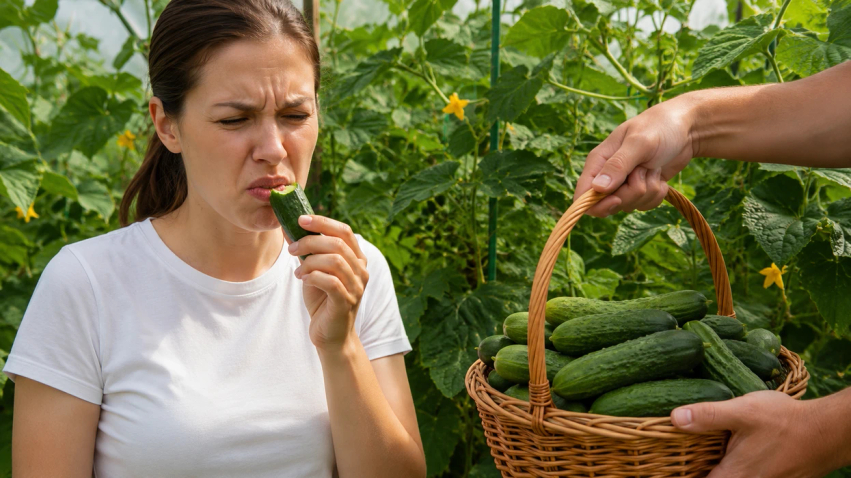
A small detail in the care of the plant can completely change the taste of the fruit
Many people immediately attribute the bitter taste of cucumbers at this time of the year to high temperatures, but the real cause is more often the combination of several factors that expose the plant to stress.
During July, the atmospheric conditions can be very variable. Tropical days, cool nights and torrential rains alternate frequently, and these very conditions can affect the quality of the fruits and their taste. The good news is that the problem, in most cases, can be prevented or solved if the cause is known in time.
Irregular watering is the most frequent cause of bitterness
Cucumbers do not cope well with large fluctuations in soil moisture, therefore regular watering is one of the main factors for the quality of the fruit. If you do not water the plant for several days, and then suddenly water it with a lot of cold water, the root experiences stress, which is quickly reflected in the taste of the cucumbers.
It is especially important that, during the summer heat, the soil never dries out completely.
To prevent the cucumbers from becoming bitter, follow some simple rules:
• Water them regularly, with smaller amounts of water.
• Use lukewarm water.
• Water early in the morning or in the evening.
• Regularly check the moisture of the soil at a depth of about five centimeters.
Cold water can spoil the taste of the fruit
Watering cucumbers with cold water from the well or water supply can be one of the reasons why the fruits become bitter. During the summer, the water is often significantly colder than the warmed soil, so the sudden change in temperature causes stress to the root.
Because of this, the plant absorbs nutrients more poorly, growth slows down, the leaves may turn yellow, while the quality and taste of the fruits deteriorate.
Experts advise that before watering, let the water stand for several hours or heat it in a barrel placed in the sun. If you cover the barrel with black foil, the water will heat up faster and keep the appropriate temperature longer.
In the middle of summer, cucumbers need more nutrients
July is a period of intense fruiting, so cucumbers spend a lot of energy. When the soil lacks nutrients, the quality of the fruits decreases, while the bitterness becomes more pronounced.
In this period, plants often lack potassium and magnesium, which can be observed by pale leaves and dried edges.
One of the simple ways to feed them is to use wood ash. Mix a glass of ash with a bucket of water, let it stand for about 12 hours, then pour about a liter of solution under each plant.
Be careful not to overdo it with nitrogen fertilizers. They promote vigorous leaf growth, while potassium and magnesium are much more important for the quality, taste and crispiness of the fruit.
Even with regular watering, the root of cucumbers can suffer from overheated soil, especially if the soil is dark and not protected by mulch.
A mulch layer of seedless grass, straw or hay, five to seven centimeters thick, protects the root from overheating, reduces water evaporation and helps the soil retain moisture longer.
Experienced gardeners point out that cucumbers, often only a few days after placing the mulch, again acquire a more pleasant taste and lose their characteristic bitterness.
Large temperature fluctuations burden the plant even more
Sudden temperature changes represent great stress for cucumbers. When the daily temperature exceeds 30 degrees, while at night it drops significantly, the plant grows more difficult and develops fruits more poorly. Cold summer rains, windy weather and longer cold spells have a similar effect.
If you grow cucumbers in a greenhouse, too high a temperature can be a problem, especially when it exceeds 35 degrees.
To protect the plants and reduce stress, follow these tips:
• Close the greenhouse earlier in the evening, to preserve the heat.
• Provide shade during extreme heat.
• Ventilate the greenhouse regularly.
• Keep the temperature as stable as possible.
When the cultivation conditions stabilize, the young fruits usually become tasty again, sweet and crunchy, without pronounced bitterness.
Source: prizrenpost