Saturday, April 25th 2026
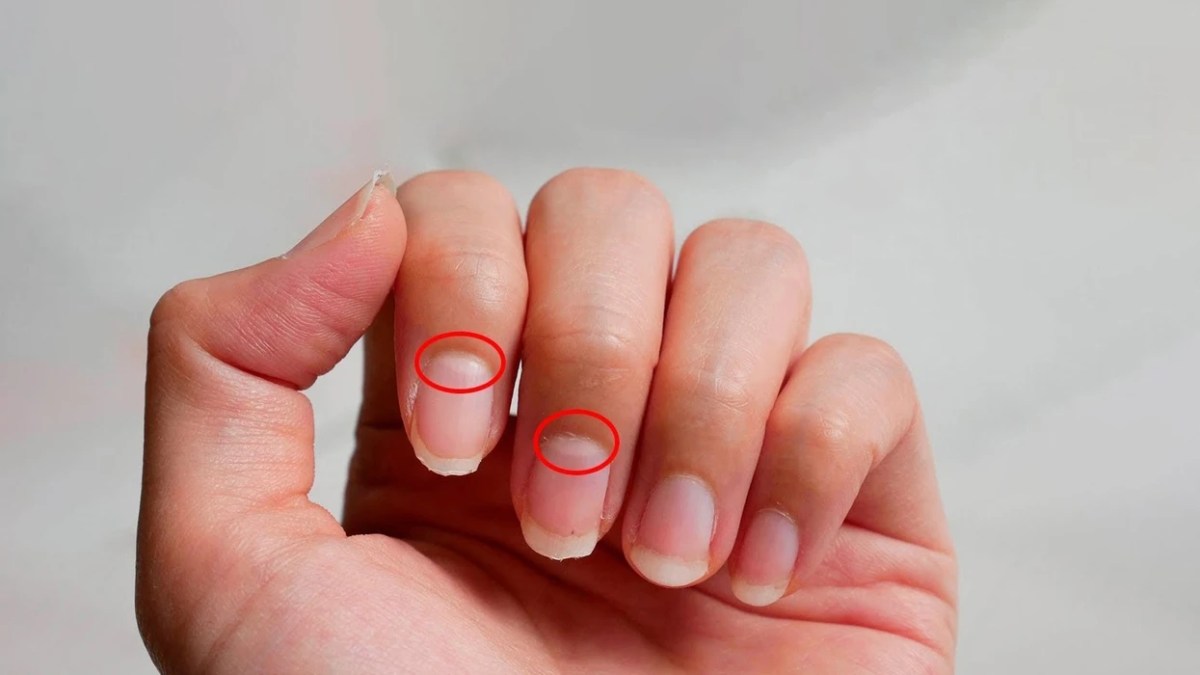
Change in color, size, or disappearance of nail crescents is often harmless, but can sometimes signal problems with the blood, heart, lungs, or kidneys
The nail crescent, the lunula, is the visible part of the nail matrix where new nail growth takes place. If the crescent isn’t visible, it doesn’t always have a cause, but it can sometimes be a sign of a health condition, especially when it’s accompanied by other symptoms.
Internal medicine doctor Manjaree Daw explains that lunulae usually look translucent or white and can be more pronounced on some fingers and less so on others. For example, crescents are usually larger on the big toe or big toe.
They are most visible in youth and diminish with age. It is possible that they are simply hidden under the cuticle or have diminished due to age.
As well as age, genetics or skin tone can cause some people to have less visible lunulae, without any underlying disease.
However, since the crescent on the nail represents the youngest part of the nail, it can give signals of health, especially when it disappears suddenly or when it occurs along with symptoms of others.
Nails can reveal important information about blood circulation, nutritional status and the function of various organs in the body. They can also be an early warning sign of potential medical problems, the Telegraph reports.
Since lunulae are located where the newest cells of the nail are formed, certain characteristics of them can sometimes give clues about general health.
Dr. Manjaree Daw compares this to other seemingly harmless features that appear when the body undergoes physiological changes.
She points out that systemic diseases can appear in different parts. of the body, so everything must be seen as a whole to make informed decisions.
What the unusual color of the lunula can indicate
According to her, the color of the crescent on the nail depends on what the living tissue deposits in the nail matrix. If toxins are circulating in the body, they can accumulate in this area and affect its appearance.
Some colors may be associated with certain conditions:
Red – cirrhosis, lung disease or heart failure
Blue – Wilson’s disease, diabetes or silver poisoning
Coffee – chronic kidney disease or kidney failure
White – kidney disease or Terry’s nails
Yellow – tetracycline therapy or yellow nail syndrome.
However, these changes should not be taken as a diagnosis without the presence of other symptoms. Just looking at them is not enough to determine a disease.
In some cases, lunulae can be reduced in the presence of anemia or malnutrition. Here again, without other symptoms, there is usually no cause for alarm.
Conditions that can make lunulae disappear or become less visible
Nutritional deficiency
Changes in the nails can be caused by nutritional deficiencies due to extreme diets, diseases that affect the absorption of nutrients or eating disorders. In rare cases, vitamin B12 deficiency can affect the appearance of crescents on the nails.
Anemia
Anemia occurs when red blood cells do not carry oxygen properly or when the body does not produce enough of them. This can cause pallor, making even the crescent on the nail less visible.
The most common cause is iron deficiency, but anemia can also be related to sickle cell anemia, exposure to toxic chemicals, or kidney failure.
Kidney failure
People undergoing dialysis often do not have visible lunulae. This is often associated with anemia. In some patients, a brown band can also be seen on the tip of the finger, where the white edge joins the nail bed.
Diseases of the heart and lungs
Lunules may redden or, less commonly, disappear in certain heart and lung diseases, such as:
chronic obstructive pulmonary disease
heart failure
connective tissue disorders.
Nails may also change shape or texture, while other symptoms may include shortness of breath, cough and chest pain.
Cirrhosis.
Cirrhosis is a chronic condition that damages the liver and leaves scars on it, affecting its function. In people with cirrhosis, red lunulae may appear, while rarely the nails may turn white, making the lunula less visible.
Yellow nail syndrome
This is a rare condition that causes thick, yellow nails, making the lunula hard to see. The nails may bend, while the cuticle may change shape or disappear.
The most common cause is the accumulation of fluid around the lungs, but poor circulation or swelling can also cause the nails to turn yellow and disappear.
In most cases, the disappearance of half-moons on the nails is not a cause for concern. However, you should consult your doctor if you notice other changes in your body or symptoms that concern you.
It could be something completely harmless, but it could also be a sign of a more serious problem. If there are other symptoms or the lunulae disappear suddenly, it’s a good idea to talk to your doctor to rule out possible medical conditions.
Disappearing crescent moons can signal a serious health problem if you also experience:
difficulty breathing.
chest pain
temperature
unusual swelling
We use cookies to improve the experience and to display ads (Google AdSense).
By clicking “Accept”, you agree to the use of cookies according to
Privacy Policy
and
Cookies Policy.
You can reject non-necessary cookies by clicking “Reject”.
Source: prizrenpost