Tuesday, May 26th 2026
From economic engine to military power: the rearmament that is changing Europe
Germany’s rearmament is marking one of the biggest strategic changes in post-Cold War Europe. For decades, European security has relied almost entirely on the military power of the United States, while EU countries focused primarily on economic development and social stability.
Today, this architecture is being seriously questioned. The Russia-Ukraine war, the US pressure for more European contribution to NATO, as well as the uncertainties created by Donald Trump’s statements about the alliance, have forced Europe to review its role in security.
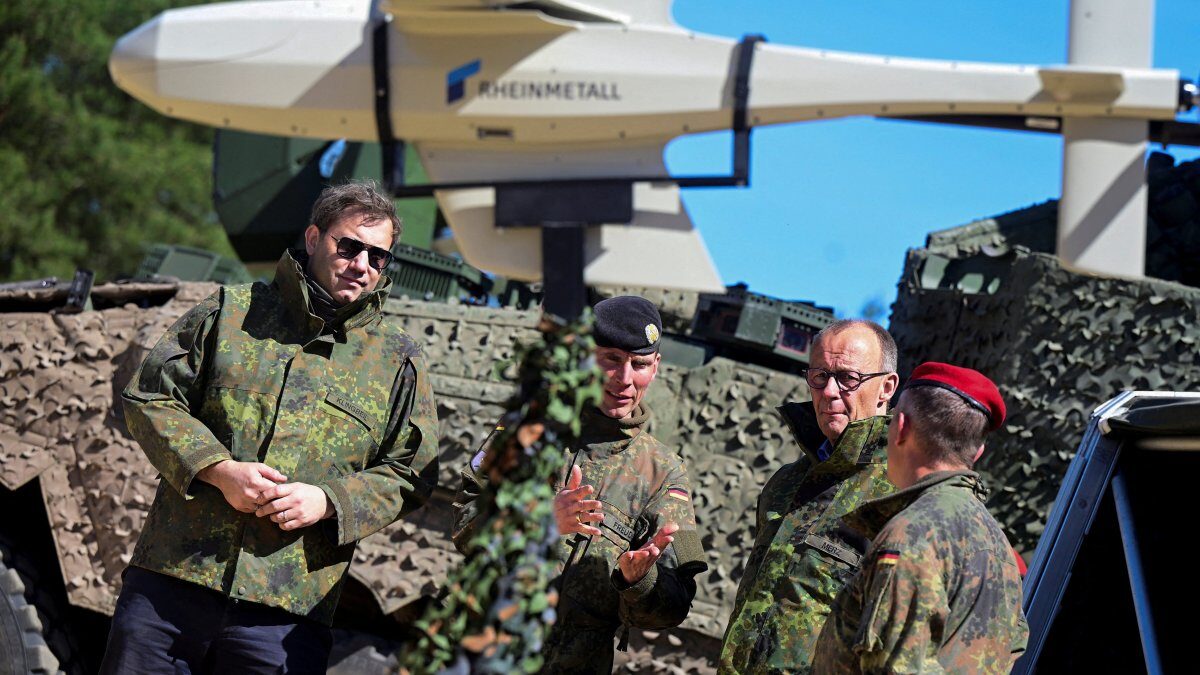
In this context, Germany is increasingly emerging as the central actor of a new military transformation. The Berlin government has announced a new defense strategy that aims to transform the Bundeswehr into the most powerful conventional army in Europe.
This is no longer a symbolic project, but a long-term structured process, which aims to significantly increase military capabilities by 2035-2039. Defense strategic documents and the concept of the “Army of the Future” indicate a major doctrinal shift.
Germany is investing in new military technologies such as drones, command systems based on artificial intelligence and high-intensity war scenarios. This signals the transition from an army focused on territorial defense, to a more dynamic force prepared for modern conflicts.
Declarations by German leaders, including expressions such as “fight tonight”, show a clear change in the security mentality. The message is that Germany must be ready for immediate conflict and not just for theoretical scenarios.
This reflects a new doctrine based on active deterrence. However, Berlin’s ambition to take a leading role in European security faces significant constraints.
The main problem is not just the size of the army or equipment, but Europe’s structural dependence on the US. Vital NATO infrastructure, including nuclear defenses, strategic intelligence and advanced missile systems, remains largely under American control.
This puts Germany in a strategic dilemma. On the one hand, it aims for more European autonomy in defense, but on the other hand it cannot be detached from American security guarantees.
Currently, Berlin’s objective is not to replace the USA, but to strengthen the European pillar within NATO. Tensions with Washington and debates over the withdrawal of US troops from Europe have highlighted this dependence.
Although a partial reduction of the US military presence is possible, a full withdrawal remains unlikely due to the strategic importance of bases such as Ramstein, which serves as a key hub for global operations.
At the same time, fear of Russia remains a strong factor in European security politics. For many countries in Eastern and Central Europe, Russia is seen as a long-term threat, strengthening the case for rearmament and closer cooperation within NATO.
Germany is not just returning as an economic power with political influence, but is aiming to take on a greater military role in Europe. However, this does not mean that Europe is breaking away from the US. Instead, a new model is taking shape where Germany strengthens its capabilities within an alliance still dominated by Washington.
German rearmament may change Europe’s internal balances, but the full transformation into an independent military power remains a long and uncertain process. /square
Source: prizrenpost
Etiketa: Brief