Wednesday, December 24th 2025
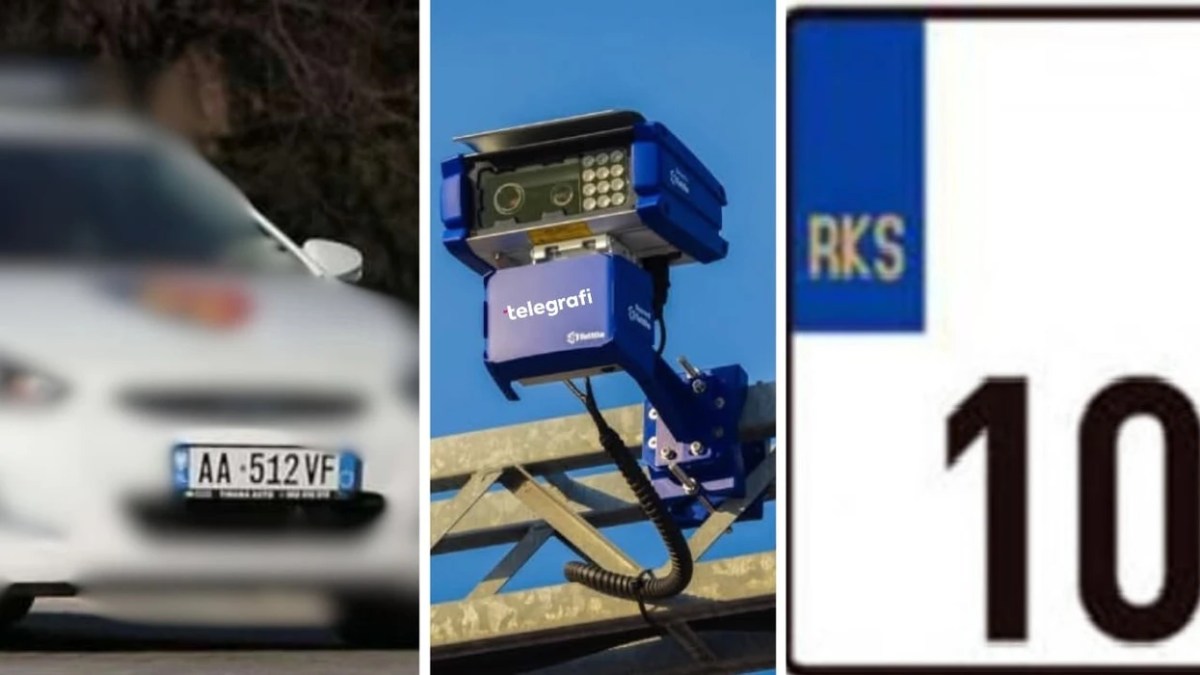
Since December 1, “Safe City” cameras have been put into use in North Macedonia, which will record violations of traffic rules. During the month of December, citizens who break traffic rules will only receive warnings, while starting from January 1, 2026, there will also be fines.
This project is conceived as a major technological transition in police patrolling and traffic control. The goal of the system, as stated by the Ministry of Internal Affairs, is “more regular and safer traffic, improving traffic culture, reducing accidents, damage and casualties on the road”.
In the first 24 hours of camera operation, a large number of violations were recorded. In the territory of Skopje alone, the cameras caught about 110,000 violations, most of which were speeding.
“I’m not saying that ‘Safe City’ is perfect, of course there will be some elements that we will have to improve and we will see that it can be made even better. We are open to work towards improving the system. 110,000 violations in Skopje were registered in 24 hours, 5,000 violations for running a red light, and 90% of the violations are speeding,” said Toshkovski.
He added that in the next period it will be decided what the tolerance for speeding will be.
“There are countries in Europe where there is no tolerance at all, there are countries where the tolerance is 10% above the allowed speed. We will discuss in the next period and decide,” he declared Toshkovski.
The Safe City system automatically records traffic violations through a network of cameras, sensors and recording devices, which were initially installed in Skopje, Tetovo, Kumanovo and on the main highways. In the first phase, the system will monitor four categories of offences: speeding, running red lights, driving with expired registration and improper parking, while in the next phase other types of offenses will be added.
This requires changes to the Law on Road Safety, as well as five or six other laws that are already in the parliamentary process and whose changes are necessary for the new system to work smoothly, in order to minimizing human impact.
Once the camera detects a violation, the software automatically identifies the license plate and connects the vehicle to the owner, and then the MIA sends SMS and email with a report and payment order. Meanwhile, the members of the Ministry of Internal Affairs, who will play the role of controller, will check the system and every message it sends to assess whether the violation recorded by the system is valid and technically correct.
After that, the owner has a period of eight days to pay half of the fine, after the expiration of this period, the full amount must be paid within the next eight days, before the procedure of taking by force begins. For violations for which a driving ban is foreseen, the Ministry of Internal Affairs also submits a request to the competent court.
The payment can be made electronically, while the system will immediately notify the Ministry of Internal Affairs that the fine has been paid. In the second phase of the project, it is planned to expand the range of criminal offenses that the system will register.
How will the owners of cars with foreign registration be punished?
Foreign vehicles will not be spared from fines either. The Minister of Internal Affairs, Pançe Toshkovski, one day after putting the “Safe City” cameras into operation, said that the system of this project also recognizes vehicles with foreign registrations and will fine the owners of those vehicles that commit violations.
Drivers of vehicles with foreign registrations that commit violations in North Macedonia will not be banned from leaving the country as this is regulated by law, but they will be banned from entering the RMV in case they have unpaid fines.
“Foreign vehicles will not be exempt from the registration of violations either. We have established rules and procedures on how the violation will be ascertained. Foreign vehicles cannot be banned from leaving Macedonia, but they will be informed that they will not be able to re-enter Macedonia if they do not pay the fine. We have taken this into account and I think we have offered an appropriate response,” he said. Toshkovski.
The idea of “Safe City” is not new, in many European cities and countries automatic traffic control systems (cameras, ANPR, infringement recognition software) have long been part of the “intelligent infrastructure”. For example, in countries such as Sweden and Belgium, numerous studies show that automatic sanctioning leads to significant reductions in road accidents, especially those related to speeding and incorrect manoeuvring.
In Cyprus, the deployment of mobile license plate recognition cameras resulted in a 39% reduction in road accident deaths in the 18 months since launch.
Research shows that systems such as Safe City, where cameras, software of analysis and automatic sanctioning are integrated, they can improve safety, reduce traffic uncertainty and stimulate drivers to drive responsibly, especially in countries where knowledge from traditional control was insufficient.
This means that Macedonia, with the launch of Safe City, is joining a broad European trend, but the real success will depend on how the system will be maintained, how transparent it will be and how they will react. citizens.
Kaynak: prizrenpost