Tuesday, June 23rd 2026

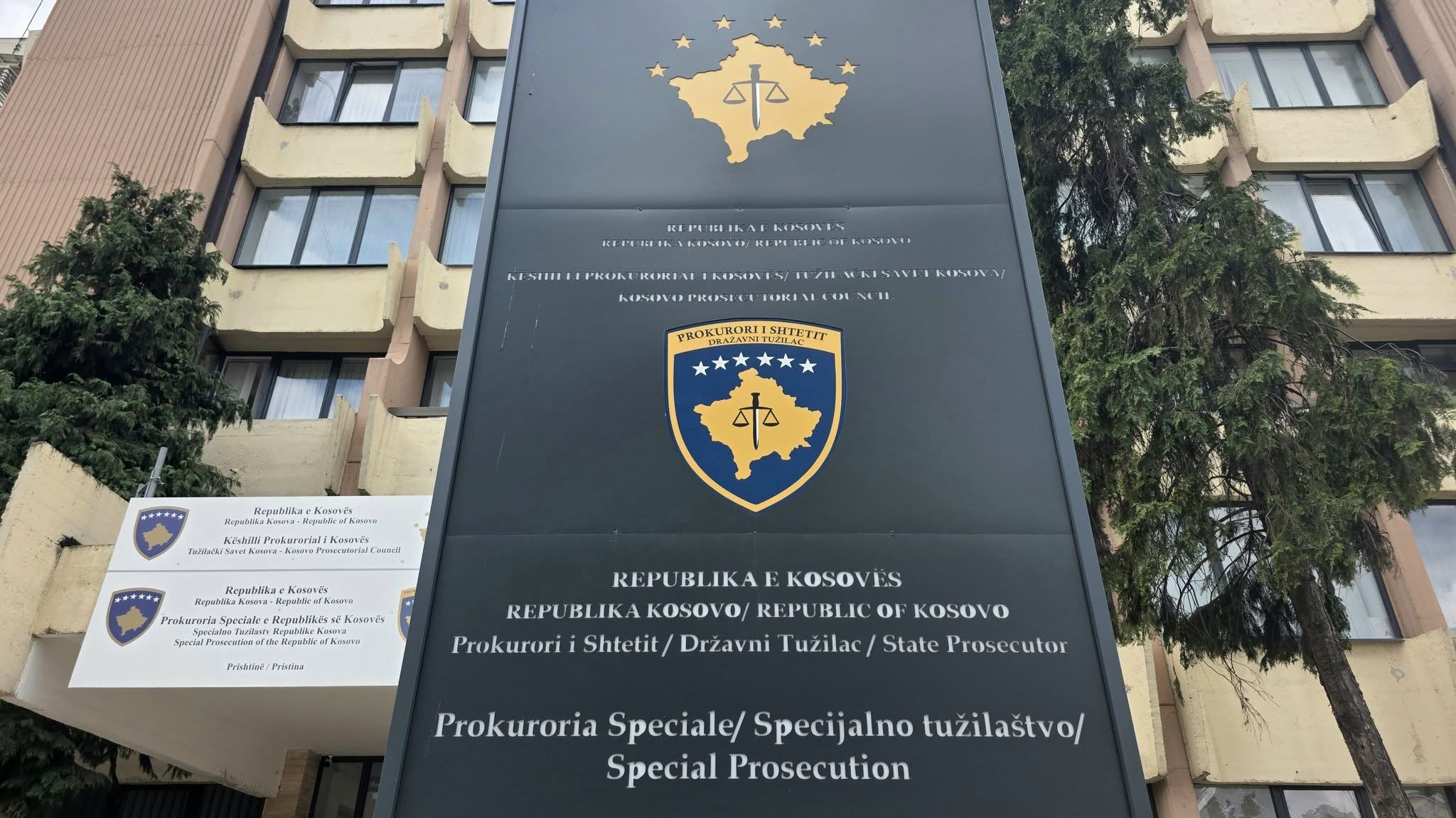
The Constitutional Court of Kosovo has declared invalid a judgment of the Supreme Court that overturned the changes made by the Kosovo Prosecutorial Council (KPK) in the regulation for the National Coordinator for Combating Economic Crime, finding that the Supreme Court violated the right to a fair trial and the institutional independence of the KPK.
The decision was taken in case KI331/25, after the request of the Kosovo Prosecutorial Council for the evaluation of the constitutionality of the verdict of the Supreme Court of July 14, 2025. The Constitutional Court decided unanimously that there had been a violation of Article 31 of the Constitution, which guarantees the right to a fair and impartial trial, as well as Article 110, which guarantees the independence of the KPK.
As a result, she annulled the decision of the Supreme Court and returned the case for reconsideration.
The dispute was related to the position of National Coordinator for the Fight against Economic Crime, a position held by prosecutor Shqipdon Fazliu since 2013.
In April 2025, the KPK changed the existing regulation, determining that the mandate of the National Coordinator is three years with the possibility of re-election for another term.
After the entry into force of the new regulation, Fazliu sued the KPK in the Supreme Court, claiming that the changes had a retroactive effect. and violated his position.
The Supreme Court had accepted the lawsuit, assessing that the KPK could not unilaterally change the status of the Coordinator without coordination with the signatory institutions of the Memorandum of Cooperation and that the limitation of the mandate was done without sufficient legal basis.
However, the Constitutional Court reached the opposite conclusion. According to her, the Constitution and the Law on the KPK do not oblige this institution to consult with other parties on matters of internal organization, including the appointment of prosecutors to special positions. The Court emphasized that the KPK enjoys institutional independence in its internal organization, as long as it acts in accordance with the Constitution and the laws in force.
The Constitutional Court also assessed that the case cannot be compared with previous decisions that had to do with limiting the mandates of the members of the KPK, since the position of the National Coordinator did not have a mandate clearly defined by law or the 2013 regulation. According to the Court, Fazli’s permanent mandate was that of the prosecutor, while the function of the Coordinator was a task assigned by the KPK.
Source: prizrenpost
Etiketa: Brief