Saturday, February 14th 2026
Dozens of tunnels in Raqqa, even for a fight against the new government of Damascus
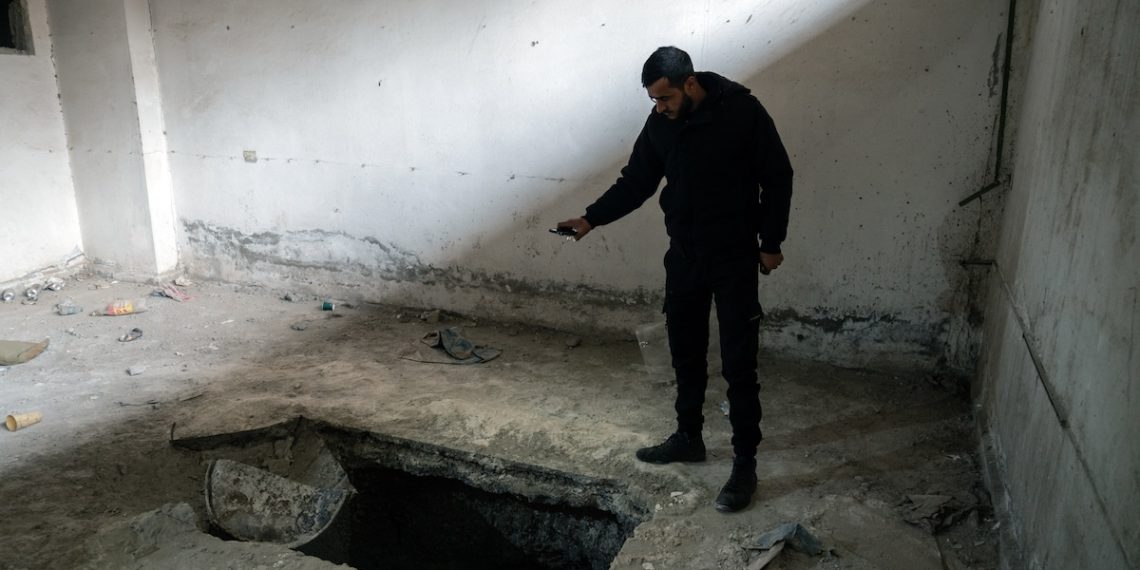
In the large oval stadium of Raqqa, the history of the war in Syria is also written underground. Beneath the ruins of the soccer field, where ISIS once held its main torture base, Kurdish SDF forces have left behind another legacy: a giant network of tunnels designed for a guerrilla resistance that never materialized.
Today, the stadium is guarded by General Security forces loyal to President Ahmed Al-Shara. Inside the basements, where ISIS had once improvised terrible cells like “dog cages”, there are secret entrances to another “Raka”.
This underground city consists of kilometers of tunnels, dug with technical precision and covered with metal covers. According to the testimonies of Syrian soldiers, these tunnels were intended as a strategic asset to withstand two threats: the offensive of the regular Syrian army from the southwest and the Turkish bombardment from the north.
The Kurds, not having mountains as a natural shelter in this region, tried to create them artificially underground. The aim was to create hiding places for weapons and the movement of troops without being dictated by the surface.
However, this plan failed as soon as the political balances changed. Arab tribes, which formed the backbone of Kurdish forces in the region, switched sides and joined the new administration. This change of alliances caused the expensive network of tunnels to be abandoned without being used for its combat purpose.
Currently, in cities such as Raqqa and Tabka, these excavations pose a danger to the civilian population. Sudden landslides in the neighborhood and the presence of mines left behind by the Kurdish retreat have forced the Syrian army to block the entrances.
What should have been the impregnable fortress of the Kurdish resistance, today only serves as a testimony of military investments that neglected the vital infrastructure for the war-torn citizens./tesheshi
We use cookies to improve the experience and display ads (Google AdSense).
By clicking “Accept”, you agree to the use of cookies according to
Privacy Policy
and
Cookies Policy.
You can reject non-necessary cookies by clicking “Reject”.
Source: prizrenpost
Etiketa: Brief