Wednesday, April 22nd 2026
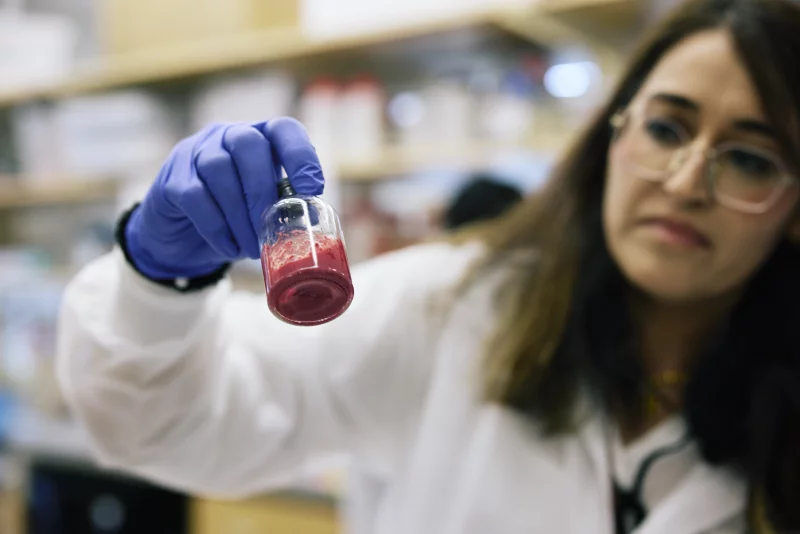
New DARPA technology promises to transform emergency medicine by providing a blood substitute that can be stored at room temperature and prepared immediately.
This innovation aims to eliminate deaths from hemorrhage on the battlefield and revolutionize rapid aid in civilian areas without medical infrastructure.
The agency announces the success of animal experiments and sets the path for sustainable production of the compound. synthetic.
The transfer of military technologies to the civilian realm is a well-known trend, and yesterday’s announcement from DARPA goes in that direction. Powdered blood has proven effective in animals, but large-scale production remains a challenge.
The project, launched after the wars in Iraq and Afghanistan, has created a liquid substitute that is stored as a powder. The goal is for this technology to be fully validated by 2029, becoming an emergency supply in every theater of war.
Blood supply has become a strategic issue for the Pentagon. In the civilian realm, artificial blood can eliminate the risk of disease, reduce incompatibilities as a universal pool, and solve donation shortages.
Although British and Japanese researchers have made strides with in vitro cells and universal blood, production remains expensive and synthetic substitutes have often had side effects.
Today’s combat scenarios, like the one in Ukraine, present new challenges. Where rapid air evacuation is impossible due to drones and helicopter hazards, immediate access to blood becomes vital.
DARPA’s FSHARP product offers a solution: a durable, easily transportable substitute. Robert Murray, the Navy doctor overseeing the project, says the program is entering a critical phase of moving from the lab to practice.
Hemorrhaging patients need large amounts of blood within minutes. FSHARP is stored in two-chamber bags, separated from sterile water, and mixed only before use.
These bags are durable enough to be carried in soldiers’ personal equipment. According to DARPA, this artificial blood is more efficient than mixing traditional components, a process that takes too long for frontline needs.
The statistics are alarming. Col. Jeremy W. Cannon warned that in a potential high-intensity conflict, the current system may fail to save soldiers with non-fatal wounds.
Therefore, DARPA is rushing toward FDA approval. Before testing on humans, conditions must be guaranteed for synthetic blood to be financially viable for hospitals and manufacturing companies.
As the technology develops, the military is using “mobile banks” and direct transfusions between soldiers as temporary solutions. Once the experimental phase is over, the scenarios in the civilian realm will be extraordinary.
A blood that does not require refrigeration would be a lifesaver in disaster zones or isolated regions. However, experts point out that strict production control will be essential to prevent unsafe versions in the future. /tesheshi.com/
We use cookies to improve the experience and to display ads (Google AdSense).
By clicking “Accept”, you agree to the use of cookies according to
Privacy Policy
and
Cookies Policy.
You can reject non-necessary cookies by clicking “Reject”.
Source: prizrenpost