Friday, March 20th 2026
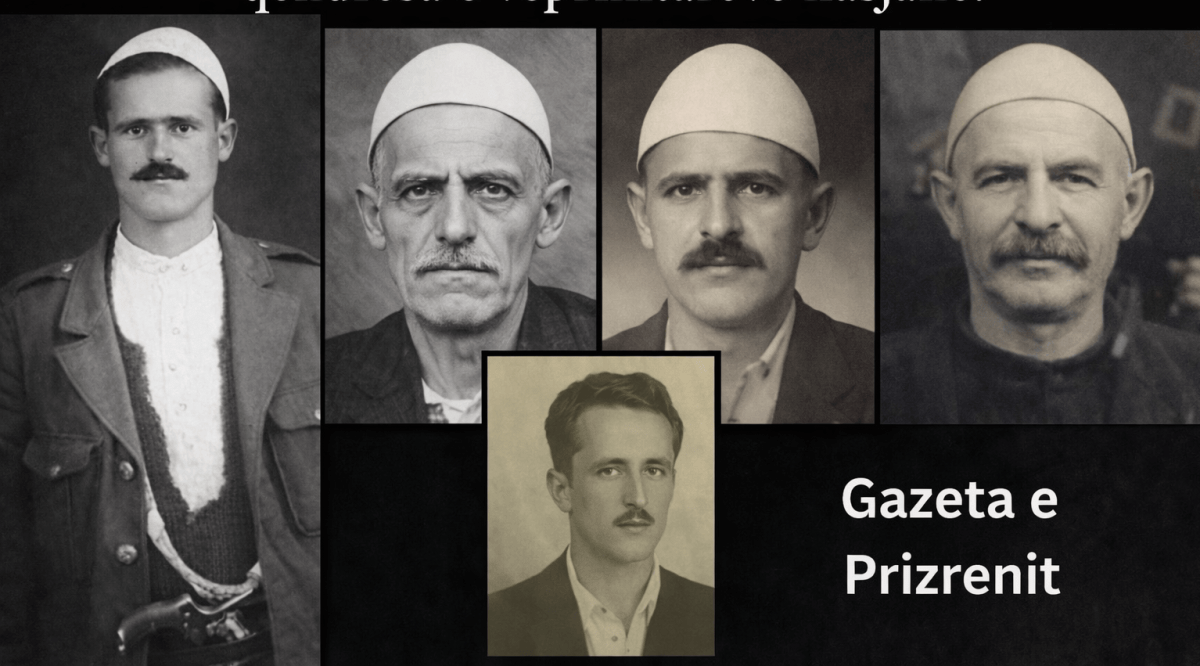
MUHAMET EMINI (1922-1979) – THE SILENT TESTIMONY OF REPRESSION AND STANDING
Among the convicts of this trial was Muhamet (Emin) Morina from Kushnini i Has, who was tried and sentenced to two years of hard prison. At the time when he was imprisoned and then sentenced, he held the position of secretary of the Basic Organization of LK in Rogovë i Hasi. The accusation of “agitation and propaganda”, often used as a repressive tool, was a suitable legal formula to punish critical thinking and to curb any attempt to articulate Albanian national demands. This clearly shows that the system did not only target the individual, but also any idea that could be perceived as a threat to the imposed political order.
The figure of Muhamet Emini represents one of the links in the long chain of sacrifices that the Albanian society of Kosovo experienced during the decades of Yugoslav rule. Through his suffering, it becomes clearer that any individual who dared to defend his dignity, articulate free thought or demand national rights, became the object of systematic oppression. His experience within the prison walls is not just an individual episode; it is evidence of the wide scale of repression, of the countless links of a chain that affected thousands of Albanians and that left deep moral and social wounds.
The story of Muhamet Emini stands as a symbol of resistance and sacrifice, remembering that freedom of thought and personal dignity are often paid with the high price of suffering and political punishment. He is one of the names that connects the memory of the collective with the sacrifices of individuals, becoming a powerful example of moral resistance within the history of confrontations with injustice.
The Prizren trial of 1956 remains a bitter warning of that period and one of the clearest examples of the instrumentalization of justice for political purposes in Kosovo at that time. It was not just a trial against individuals, but a deliberate act of power to intimidate Albanian society, to punish free thought and to prevent any form of political articulation that could challenge the existing order.
Through this process, many prominent individuals in the community became victims of a structured repressive mechanism, which aimed to strike at their moral integrity and social influence.
However, the history of later showed that these efforts to extinguish aspirations for freedom and equality did not succeed. In 1968, the trial was annulled and the convicts were rehabilitated, implicitly acknowledging the rigged nature and injustice of this trial. This later act does not erase the suffering experienced, but proves that violated justice can be restored and that historical truth can break out beyond violence and repression.
Today, the memory of figures such as Demush Cahani, Hasan Bajrami, Rexhep Muhadri, Ibrahim Moni and Muhamet Emini, etc., is part of the legacy of the moral and civic resistance of Kosovo Albanians. They represent a generation of people who, in the face of political repression and the violence of the system, preserved their dignity, convictions and unshakable faith in the right to freedom and national equality. Their story, in addition to suffering, is also a testament to the power of moral resistance and personal sacrifice, inspiring generations who continue to fight for justice and freedom. End / Gazeta e Prizren /
We use cookies to improve the experience and to display ads (Google AdSense).
By clicking “Accept”, you agree to the use of cookies according to
Privacy Policy
and
Cookies Policy.
You can reject non-necessary cookies by clicking “Reject”.
Source: prizrenpost