Tuesday, March 3rd 2026
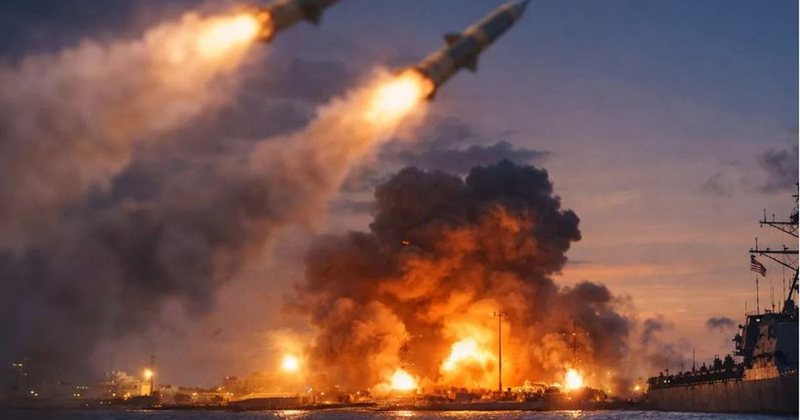
Amid rising tensions in the Middle East, the media reports that Iran is considering the possibility of an Iranian attack on the Ashraf-3 base in Manza, Albania, where the headquarters of the Iranian opposition organization known as the MEK (People’s Mujahideen) is located.
According to announcements published on Telegram by the service of the Islamic Revolutionary Guard Corps (IRGC), the possible object of the actions could be a structure that Tehran considered to be related to hostile activities.
Sources cited by foreign media claim that after the recent Iranian strikes on targets in Cyprus, Iran is not only limiting itself within the region when targeting its adversaries, but is expanding the scope of its operational capabilities beyond the region
The online page of the Azeri portal also explains what is the Mujahideen Organization of Iran?
A complex of fortified village of Manzë, near Tirana, is home to around 3,000 members of the People’s Mujahideen Organization of Iran (PMOI), also known as Mujahedin-e-Khalq (MEK), marking a new chapter in the controversial group’s six-decade history.
The opposition movement has been based in Albania since 2013, when the government in Tirana agreed to accept its members at the request of the United States. and the United Nations. The move came after years of uncertainty for the group’s cadres in Iraq, where they were previously based.
Founded in 1965, the MEK emerged as an Islamist political movement with socialist leanings against the rule of Shah Mohammad Reza Pahlavi. During the 1970s, it carried out armed attacks against the monarchy and targeted American interests in Iran.
The organization initially supported Ruhollah Khomeini and the Islamic Revolution of 1978-1979. However, relations with the new clerical leadership soon deteriorated. The group was banned and many of its members were arrested or fled the country as the group moved into exile and continued opposition activities abroad.
In the 1980s, the MEK moved to Iraq, where it operated from bases provided by Saddam Hussein’s government. From Iraqi territory, it launched military operations against Iran during the Iran-Iraq war, a move that remains deeply controversial among many Iranians and fueled early resentment toward the group.
The United States designated the MEK as a foreign terrorist organization in 1997, citing its past involvement in violence. However, after years of legal and political lobbying, the US State Department removed the group from its terrorism list in 2012, declaring that it had renounced violence and cooperated in closing down its paramilitary camps in Iraq.
The MEK revived international attention in 2002 when it publicly disclosed the existence of a previously undeclared uranium enrichment plant in Iran, prompting global scrutiny. largest of Tehran’s nuclear program.
After the fall of Saddam Hussein in 2003, the group’s position in Iraq became increasingly precarious. Under pressure from the Iraqi government and due to security concerns, its members were gradually moved abroad, culminating in their relocation to Albania.
We use cookies to improve the experience and display ads (Google AdSense).
By clicking “Accept”, you agree to the use of cookies according to
Privacy Policy
and
Cookies Policy.
You can reject non-necessary cookies by clicking “Reject”.
Source: prizrenpost
Etiketa: Brief