Saturday, March 14th 2026
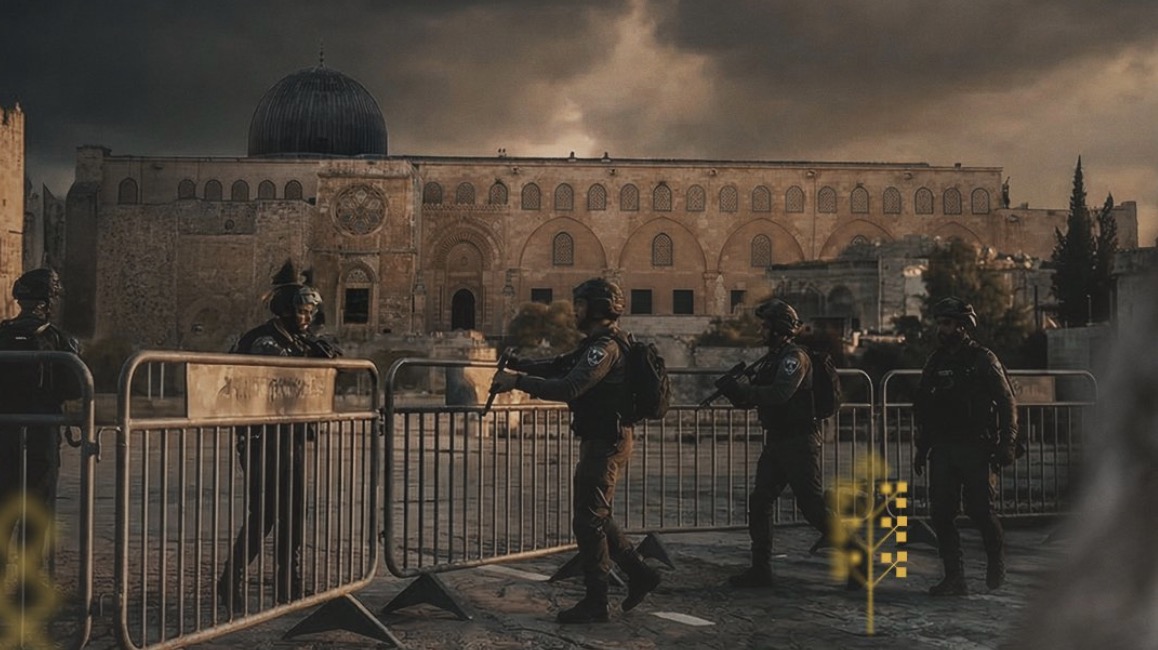
How this famous mosque has been targeted by the most wicked in the history of mankind
For the 14th day in a row, the Israeli occupation authorities have blocked the entrance to the Al-Aqsa Mosque in occupied Jerusalem, amid experts’ warnings of a sensitive and dangerous phase that the mosque is going through in the light of efforts to impose hegemony on it and strip the authority of the Islamic Department. Waqf.
The Israeli occupying authorities have closed the Al-Aqsa Mosque since the start of the US-Israeli attack on Iran on February 28, under the pretext of declaring a state of emergency and preventing gatherings.
Experts and researchers warn of the “dangerous situation” in which the Al-Aqsa Mosque has found itself due to the continuous closure to worshipers, especially during the month of Ramadan.
Before closing the mosque, the occupation authorities issued hundreds of orders barring people from entering, as well as strict conditions for Palestinians from the West Bank to enter it for two Fridays before the closing. Access to Al-Aqsa was limited to about 10,000 elderly people.
Hisham Yaqoub, a scholar of Jerusalem and Al-Aqsa affairs, warns that closing the mosque “undermines the rules of the historical status quo, by which authority over the affairs of the Al-Aqsa Mosque was given to the Islamic administration since the time of the Ottoman Empire”.
He added that “with this decision, the Israeli occupation wants to set new rules – that it is the sovereign and sole authority over the affairs of the Al-Aqsa Mosque”.
Jordan has maintained a historic role in overseeing religious affairs in Jerusalem since Jerusalem dignitaries and the Islamic Supreme Council swore allegiance in 1924 to Sharif Hussein bin Ali as custodian of the holy places to protect them. This was confirmed in the Wadi Araba Peace Agreement between Jordan and Israel in 1994, and then in the agreement signed in 2013 by the Jordanian monarch, King Abdullah, and the Palestinian President, Mahmoud Abbas.
On a political level, Yaakov explains that religious Zionist and far-right parties are using the decision to close Al-Aqsa for electoral purposes and to gain the support of the voting population of settlers.
This Palestinian researcher emphasized that by closing Al-Aqsa, the occupation is “testing the positions of the Arab and Islamic nation at the official level and how they will respond to this”.
He concludes that closing the Al-Aqsa Mosque is a “dangerous decision” because it “violates the rights of Muslims, their freedom of religion and their guaranteed right to worship in the Mosque.” Al-Aqsa”.
For his part, the expert on Jerusalem affairs, Hassan Khater, says that the closure of the Al-Aqsa Mosque is equivalent to a “declaration of war”.
He added that the prevention of prayers in the mosque, especially during the last ten days of Ramadan, “casts a shadow on the state of mind and the emotional connection with the blessed Al-Aqsa Mosque”. Khater warns that attacks on Al-Aqsa Mosque did not stop even during the month of Ramadan before it was closed, but Jewish religious slogans and rituals continued to be practiced there, and attempts were made to bring animal sacrifices.
Khater believes that “the closure of Al-Aqsa Mosque is proof that control over the mosque is now completely in the hands of the Israeli authorities” and that the laws to which Al-Aqsa was subject even before Jerusalem and the Palestinian territories fell under Israeli occupation “they are now changing”.
Khatir noted Israel’s continued efforts to bring Al-Aqsa Mosque under the control of the Israeli Ministry of Religious Affairs and to change all the details related to the management of the holy mosque.
The director of the Jerusalem Center for Israel Studies, Imad Abu Awad, agrees with his predecessors. that closing the Al-Aqsa Mosque and preventing Palestinians from entering it and praying there is a “very dangerous” measure.
He stressed that the occupation began to change the status quo at the Al-Aqsa Mosque many years ago. He added that this is an announcement of what will happen in the coming years, because all of the above “brings them closer to the third step, which is to set aside the Al-Aqsa Mosque site to build a Jewish synagogue, and then move on to the fourth goal, which is to demolish the Dome of the Rock and build a supposed temple in its place.”
Abu Awad explains: “So we are talking for a dangerous tipping point: changing the status quo and eliminating the role of the Palestinians and then the role of the Jordanian Waqf inside the Al-Aqsa Mosque compound will pave the way for something more dangerous.”
He said that an internal Israeli interpretation – in light of the existence of dozens of settlement associations working to embody Israeli control over the Al-Aqsa Mosque under the government – indicates that the time has come to erect monuments. Jewish inside the Al-Aqsa Mosque.
He added: “We are approaching a very dangerous moment and one day they are advised to demolish the Dome of the Rock or parts of the Al-Aqsa Mosque” for several reasons:
Israel sees the regional reality as weak, and the international reality as even weaker.
A sense of Israeli euphoria and arrogance that this government and all its poles embrace.
Therefore, according to Abu Awad, the current situation has been gradually changing for about three decades and may “reach the moment of truth if stakeholders do not take action”. /tesheshi
We use cookies to improve the experience and to display ads (Google AdSense).
By clicking “Accept”, you agree to the use of cookies according to
Privacy Policy
and
Cookies Policy.
You can reject non-necessary cookies by clicking “Reject”.
Source: prizrenpost
Etiketa: Brief