Saturday, March 21st 2026
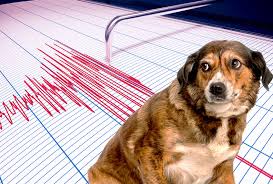
For centuries, reports of strange animal behavior before earthquakes have been considered mere folklore. However, recent systematic research is exploring whether these responses to environmental change could serve as an early warning system for humanity.
A study prompted by observations at Lake San Ruffino in Italy documented that 96 percent of common frogs left their breeding grounds five days before the devastating L’Aquila earthquake in 2009.
This research was among the first to quantify behavioral change in wild amphibians. Their skin sensitive to the chemical composition of water was identified as a key factor that makes them natural detectors of seismic activity.
Similarly, a multi-species study conducted in Yanachaga National Park in Peru analyzed camera data before a major earthquake in 2011. The results showed a drastic drop in activity.
Of 15 daily recordings of the animals, the number dropped in less than 5 in the previous weeks, while in the last 24 hours the movements stopped completely. This “silence” affected all species, from small rodents to larger animals such as armadillos.
Research suggests that pets and livestock are also affected. Thus Japanese studies of dairy cows reported reduced milk yield and signs of distress days before local earthquakes.
After the great 2011 earthquake in Japan, a survey of over 1,900 cat and dog owners found that about 16-19 percent of the animals had exhibited reluctance or unusual behavior within 24 hours before the impact.
NASA scientist, Friedemann Freund, has proposed a hypothesis related to rock stress. According to him, shifting tectonic plates release electrically charged particles (positive ions) into the air and water, which increase stress levels in living things.
Other possible factors include infra-sonic vibrations, changes in the electromagnetic field or sounds that humans cannot hear. Currently, the Animal Alerts trial is underway in Lima, Peru, where dogs are fitted with smart collars to monitor heart rates in real time.
Also, studies on red ants are continuing to investigate their response to magnetic fluctuations. Although the scientific community remains cautious, combining biological and environmental data is seen as the path to more reliable seismic hazard predictions. /tesheshi.com/
We use cookies to improve the experience and display ads (Google AdSense).
By clicking “Accept”, you agree to the use of cookies according to
Privacy Policy
and
Cookies Policy.
You can reject non-necessary cookies by clicking “Reject”.
Source: prizrenpost