Sunday, April 26th 2026
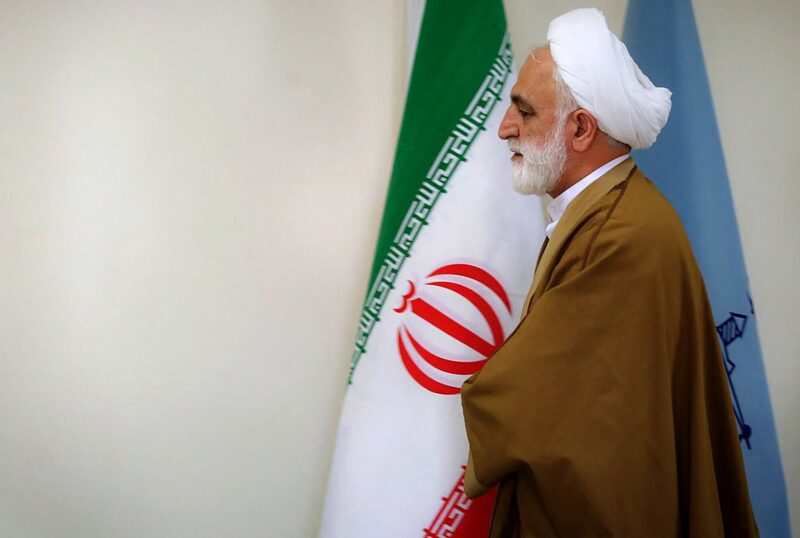
Iran’s head of justice, Mohsen Ejei, has clearly stated that spies and traitors will be tried under martial law, applying measures he considers justified by the war phase. This has been accompanied by widespread arrests and executions, as a harsh and deterrent message to dissent or those suspected of collaborating with the US-Israel axis.
Most recently, a court decision has led to the execution of Mehdi Farid, a member of Iran’s National Atomic Agency. He was arrested in 2023 and initially sentenced to 10 years in prison, but then his sentence was changed to execution. According to judicial authorities, he was accused of collaborating with the Israeli secret service Mossad, providing information and infecting digital systems.
These are some of the most common charges against people arrested before and during the conflict.
On April 20, two members of Mujahedin-e Khalq, an internal opposition group, were executed. Meanwhile, in the August-October period, a technician and a scientist from the nuclear sector were also executed, suspected of collaborating with the “enemy”.
According to the authorities, these executions and arrests are related to the response to the infiltrations of rival intelligence agencies. During the June crisis and Operation Epic Fury, foreign services, including Israeli and American ones, are said to have managed to penetrate high levels of the Iranian system. The elimination of scientists associated with research programs and the killing of several military figures are considered serious blows to the regime, but not decisive.
For this reason, the security apparatuses have intensified the pursuit of infiltration suspects, looking for collaborators of foreign services and increasing the protection of strategic facilities.
According to the analysis of the authorities, this hard line serves not only as a countermeasure, but also to curb criticism of interior. In the past, targeted killings such as that of renowned scientist Mohsen Fakhrizadeh have sparked debate over security failures and Mossad infiltration of Iranian structures.
Another front of repression has been domestic opposition, which includes both unorganized protesters and political groups. The courts have pursued people involved in last winter’s protests, who have been accused of violence and attacks on state institutions. Also, there have been strong campaigns against ethnic minorities, such as Kurds and Arabs, suspected of being collaborators of foreign services. Recently, the Fars agency announced the destruction of a network in the provinces of Kurdistan and Kermanshah, with the arrest of over 250 people described as “counter-revolutionaries”, suspected of action plans with the support of the US and Israel. Similar operations have also been carried out in the Khuzestan region, where Arab separatist groups operate.
According to reports, this wave of repression serves both as a warning, a punishment for rebellions and an attempt to close any space for new protests, in an Iran that is under great internal and external pressure, while its own leadership remains divided in attitudes.
We use cookies to improve the experience and display advertisements (Google AdSense).
By clicking “Accept”, you agree to the use of cookies according to
Privacy Policy
and
Cookies Policy.
You can reject non-necessary cookies by clicking “Reject”.
Source: prizrenpost
Etiketa: Brief