Wednesday, July 8th 2026
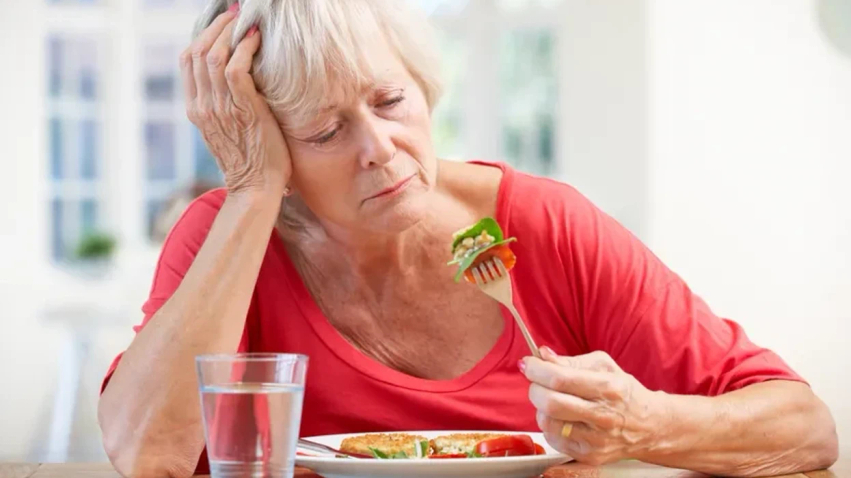
The change that starts on the plate may be related to something that is happening much deeper in the organism
One day you realize that the coffee no longer has the familiar aroma. Your favorite soup seems somewhat “empty”, the tomato is no longer as sweet as it used to be, while you start adding more salt to your food than before. Many people will think that they have simply changed foods or that this is a normal part of aging.
The truth is that the sense of taste does change over the years, but this is not the only reason why food can lose its familiar taste. Medicines taken every day, infections such as COVID-19, lack of certain vitamins and minerals, thyroid gland diseases, but also some neurological disorders also affect the sense of taste. Therefore, sudden or prolonged loss of taste should not be easily attributed to age alone.
The sense of taste is not only located on the tongue
When we say that something tastes good, we are actually talking about a complex process, in which the tongue, nose, saliva, nerves and brain participate.
The tongue has between 2,000 and 8,000 taste buds, which distinguish the five basic tastes: sweet, salty, sour, bitter and umami, i.e. the so-called “meaty” taste or rich taste, characteristic of meat, mushrooms, seasoned cheese, tomato and soup.
However, what we experience as the flavor of food is largely created thanks to the sense of smell. That’s why food almost loses its taste when our nose is blocked. The brain only creates the full sensation of taste by combining information from the nose, tongue and nervous system.
Aging does change taste, but not in the way most people think
Over the years, the number of taste buds gradually decreases, while those that remain regenerate more slowly. At the same time, the secretion of saliva also decreases, which is necessary for food molecules to be digested and reach the taste receptors.
For this reason, many elderly people especially feel salty and sweet tastes weaker, so, without realizing it, they start adding more salt or sugar to food.
However, these changes usually occur gradually. If the taste has suddenly changed, the cause should most often be looked for elsewhere.
Drugs can change the taste of food
Few people know that more than 250 drugs can affect the sense of taste. This happens most often with some antibiotics, drugs for high blood pressure, antidepressants, antihistamines, drugs for the thyroid gland, preparations for osteoporosis, but also during chemotherapy.
In some people a metallic taste appears in the mouth, while others describe that every food seems bitter or completely tasteless. The cause does not lie in the food itself, but in the fact that drugs can change the composition of saliva, affect taste receptors or act on the nervous system.
Covid changed the way we experience food
The pandemic showed many people how important taste and smell are. During infection with the SARS-CoV-2 virus, loss of smell and taste was one of the most common symptoms. In most people, these senses returned after a few weeks, but in others the changes lasted months or even longer.
Some patients also developed parosmia, a condition in which familiar smells become unpleasant. Coffee can smell of smoke, chocolate smells of chemicals, while meat can seem like it smells of spoiled food.
Lack of zinc can be one of the causes
Zinc is a mineral that has an important role in regenerating the cells responsible for the sense of taste. Its lack can lead to a weakened sense of taste, slower wound healing, hair loss and weaker immunity.
Zinc deficiency occurs more often in the elderly, in people with diseases of the digestive system, in vegetarians and in people who eat very uniformly.
However, it is important not to take supplements on your own initiative. Taking too much zinc can cause unwanted effects and disrupt the balance of other minerals in the body.
The thyroid gland also affects the taste of food
The hormones of the thyroid gland participate in many processes in the body, including the functioning of the nervous system. In people with hypothyroidism, in addition to fatigue, sleepiness, dry skin and slowed metabolism, it is not uncommon to also experience a change in the sense of taste or smell.
Although this symptom is not among the most frequent, it can be one of the first signs that it is time to check the hormones of the thyroid gland.
Sometimes the problem is in the brain, not in the tongue
Let us feel it. taste, a healthy tongue is not enough. Information must reach the brain, where it is processed. Therefore, changes in taste can sometimes accompany neurological diseases, such as Parkinson’s disease, Alzheimer’s disease, multiple sclerosis or the consequences of a stroke.
In some people, precisely the change in the sense of smell and taste can precede other symptoms, therefore it is an important diagnostic clue for the neurologist.
When is the loss of taste not harmless?
Temporary change in taste due to a cold or stuffy nose is usually no cause for concern. However, a doctor’s checkup is recommended if:
the loss of taste lasts more than two to four weeks;
• appeared suddenly and without any clear reason;
• is accompanied by loss of smell;
• you have difficulty swallowing or speaking;
• weakness of one side of the body, dizziness or other neurological symptoms are present;
• along with the change in taste, you have unexplained weight loss or decreased appetite.
The taste of food can also be an indicator of health
Although changes in taste often accompany aging, they are not something that should be automatically accepted as normal. The sense of taste depends on the health of the oral cavity, the functioning of the nose, hormones, the nervous system and many other processes in the body. Therefore, sometimes it can be the first signal that something is happening in the body that deserves attention.
If the food suddenly does not taste the same as it used to, you should not immediately think about a serious illness. But it’s worth stopping and asking yourself if your body might be trying to tell you something. Sometimes the answer is not on the plate, but in the organism.
Source: prizrenpost