Wednesday, January 7th 2026
How Saudi Arabia is waking up from a naïve policy that has trapped it
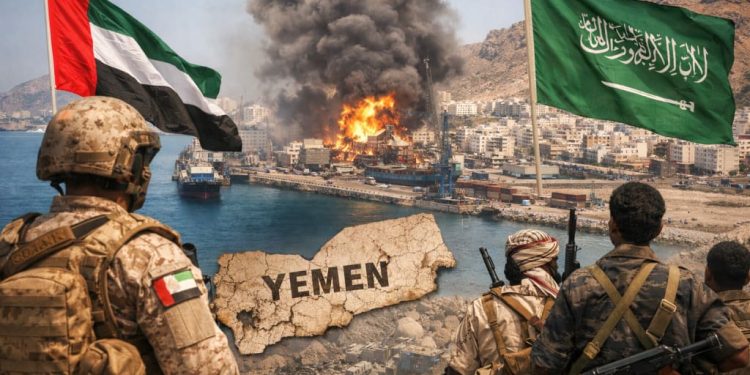
The conflict between Saudi Arabia and the United Arab Emirates over Yemen has been simmering for some time, but the emerging alliance between Israel and the Emirates and their policy of undermining the biggest traditional powers throughout the region has forced Riyadh to take a firm stand.
Former US Centcom commander James Mattis described in memorably Abu Dhabi more than a decade ago as “Little Sparta” because of its ability to punch above its weight. Shared obsessions with Tel Aviv on issues such as Iran, so-called “political Islam” and the US as a protectorate were joined by these two regional disruptors in the Abraham Accords of 2020, under the watch of the first Trump administration.
After the death of the former Emir of the United Arab Emirates, Sheikh Zayed bin Sultan Al Nahyan in 2004, the Emirates moved in a diametrically opposed direction to the approach their pan-Arab and consensual. This new path was forged by his son, Mohammed bin Zayed, who served as gray eminence during his father’s reign and de facto ruled the Emirates from 2014 until he officially assumed the presidency in 2022.
The militarism Mattis referred to was not Israel’s iron tyranny, but intervention through proxies bought by its vast oil wealth, regardless of public opinion; indeed, the politics of Emirati nationals making up only about 10 percent of the country’s population of over 11 million made domestic opposition negligible.
However, the Arab Spring uprisings alarmed the ruling family, which immediately targeted pro-Islam intellectuals associated with the Muslim Brotherhood, who had been present in the state administration since the Emirati’s independence from Britain, treating them as instigators/responsible for giving ideas to people beyond their station.
The UAE then joined forces with Saudi Arabia to fight pro-Islamic forces across the region, which were receiving various forms of support from Turkey and Qatar – from Egypt to Libya.
For the Emirates, as for Israel, the war in Gaza represented an opportunity to end the influence of Hamas. and the Muslim Brotherhood. As Anar Gargash, an adviser to the Emirati president, said in October, “maximalist positions on the Palestinian issue are no longer valid (priorities)”.
In Yemen, Saudi Arabia has invited the United Arab Emirates to take a partner role in its military intervention to oust the Houthi movement from power in Sanaa, after the Shiite group overthrew the Gulf Cooperation Council-backed Yemeni government in 2014. Concerned about the prospect of the Houthis acting as an extension of Iran on its border, Riyadh has continued to support Yemen’s Islamic al-Islah party.
Riyadh had no choice but to turn to Abu Dhabi, as Egypt, Pakistan and other countries were unwilling to provide troops for a war they suspected would end in a quagmire. Abu Dhabi agreed, but Saudi naivety about Emirati intentions was extreme.
Emirati interest was quickly demonstrated through its efforts to get southern Yemen into the hands of those willing to work for Abu Dhabi’s interests.
Thus, the Emirates supported the creation of the Giant Brigade in 2015, the Southern Transitional Council (STC) in 2017, and the National Force of Resistance immediately after that. These agreements gave the Emirates influence and control over key ports and the strategic Bab al-Mandab Strait.
During this process, the Emirates worked around the clock to strengthen Israel’s interests in Yemen, establishing military bases, radar systems and surveillance infrastructure on the strategic islands of Socotra, Perim, Abd al-Kuri and Zuqar.
Israel’s recent recognition of Somaliland is a natural consequence of what their ally, The emirate has done so through numerous road construction projects, a port in Berbera, an upgrade of Hargeisa airport and a military base in this breakaway region of Somalia, all while maintaining a formal stance of support for Mogadishu.
Abu Dhabi has similarly established its southern satrapy of Yemen as part of its official support for the republic of Yemen and its government-in-exile. The UAE’s support for at least three members of Yemen’s Presidential Administration (Aidarous al-Zubaidi, Abdulrahman al-Muharrami, Faraj al-Bahsani), two of whom are STC separatists, has effectively paralyzed that body.
How could Saudi Arabia, the traditional power in Yemen and a major political and financial backer of its government that includes the separatist STC, allow the situation to unfold? so out of control is surprising to both its Yemeni clients and regional partners.
The Gaza ceasefire in October allowed Riyadh to quietly resume talks on normalizing relations with the Houthis, with whom a peace deal was reached in 2022 but which was frozen after the attack on October 7, 2023. Disrupting those talks was a key goal of the Emirates and the gangs of their separatist STC, as the Saudi-Houthi peace deal would be followed by talks on a new Yemen that would share revenues, including oil and gas revenues from the southern fields.
The Emirates believed that Saudi Arabia would remain passive and waited for the right moment to take military control of the important Hadhramout region. However, everything was interrupted by the sudden awakening of the Saudis.
The troubled Emirates planned to cooperate with Israel to weaken the positions of Saudi Arabia and Turkey and to fragment the regional order, considering this as the best way to implement their ultimate goals, which are all in the interest of realizing Greater Israel. /square
Source: prizrenpost
Etiketa: Brief