Thursday, May 21st 2026
Military points, tolls and diplomatic agreements
The Strait of Hormuz, one of the world’s most important energy corridors, is gradually coming under increasingly tight Iranian control as war and tensions in the region have created the worst global energy crisis in recent years.
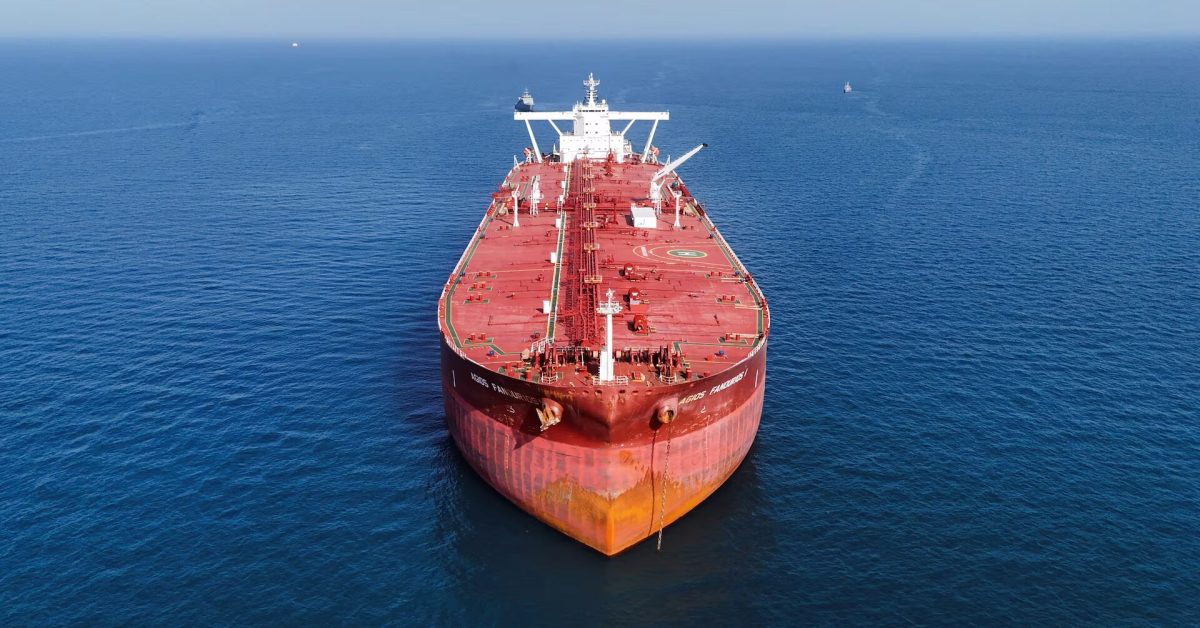
According to a Reuters investigation, Tehran has built a complex system of authorizations, military checks and diplomatic agreements for any ship seeking to pass through Hormuz. The clearest case is that of the tanker “Agios Fanourios I”, a 330-meter-long ship loaded with 2 million barrels of Iraqi oil bound for Vietnam.
The ship had been stranded off the coast of Dubai since the end of April and only on May 10 was it allowed to enter the maritime corridor controlled by Iran, after direct negotiations between Baghdad and Tehran, overseen by Iraqi Prime Minister Mohammed Shia. al-Sudani.
The crossing, which normally takes about five hours, turned into a two-day operation. While sailing near the island of Hormuz, the fast vehicles of the Iranian Revolutionary Guard stopped the tanker for inspection, after suspicions of smuggling. After several hours of inspections, the ship was cleared to proceed.
According to sources cited by Reuters, Iran already controls the de facto entry and exit of ships in the strait through a multi-tiered system. First, the political and economic connections of the ship are verified.
Priority is given to ships connected to China and Russia, then those from countries with good relations with Tehran such as India, Pakistan and Vietnam. Only then do the individual state agreements come.
At the beginning of May, according to the US military, about 1,500 ships with nearly 22,500 sailors remained stranded in the Persian Gulf due to the danger in Hormuz. The analysis of the American company “SynMax Intelligence” showed that from April 18 to May 6, only 60 ships managed to cross the strait, while before the conflict there was an average of 120 to 140 ships per day, half of them oil tankers.
Reuters journalistic investigation reveals that for many ships it is required to submit a document called “affiliation document”, which declares the owners, crew, origin of the cargo, the ship’s flag and final destination.
The Revolutionary Guard and Iranian authorities are analyzing whether there is any connection to the US or Israel. The process can take up to a week and is often accompanied by physical inspections of ships.
Two European shipping sources have stated that some companies are paying up to $150,000 to ensure smooth passage through Hormuz. Iranian officials have described this as a “security and navigation fee”, although international law does not allow payments for crossing international straits.
India, which imports about 90 percent of its oil and 50 percent of its gas needs, has established a direct coordination channel with Tehran. According to Indian officials, captains are given precise sailing coordinates and ordered to turn off their positioning transponders during the passage.
As of May 14, 13 Indian-flagged ships had passed Hormuz, while another 13 remained stranded. Ships passing through the Iranian corridor must follow checkpoints near Abu Musa, Greater Tunb and Larak islands, where Iranian armed patrols are located.
Security analysts estimate that Tehran is using a combination of military force, diplomacy and energy control to expand influence in the region and global energy markets. square
Source: prizrenpost
Etiketa: Brief