Friday, July 31st 2026
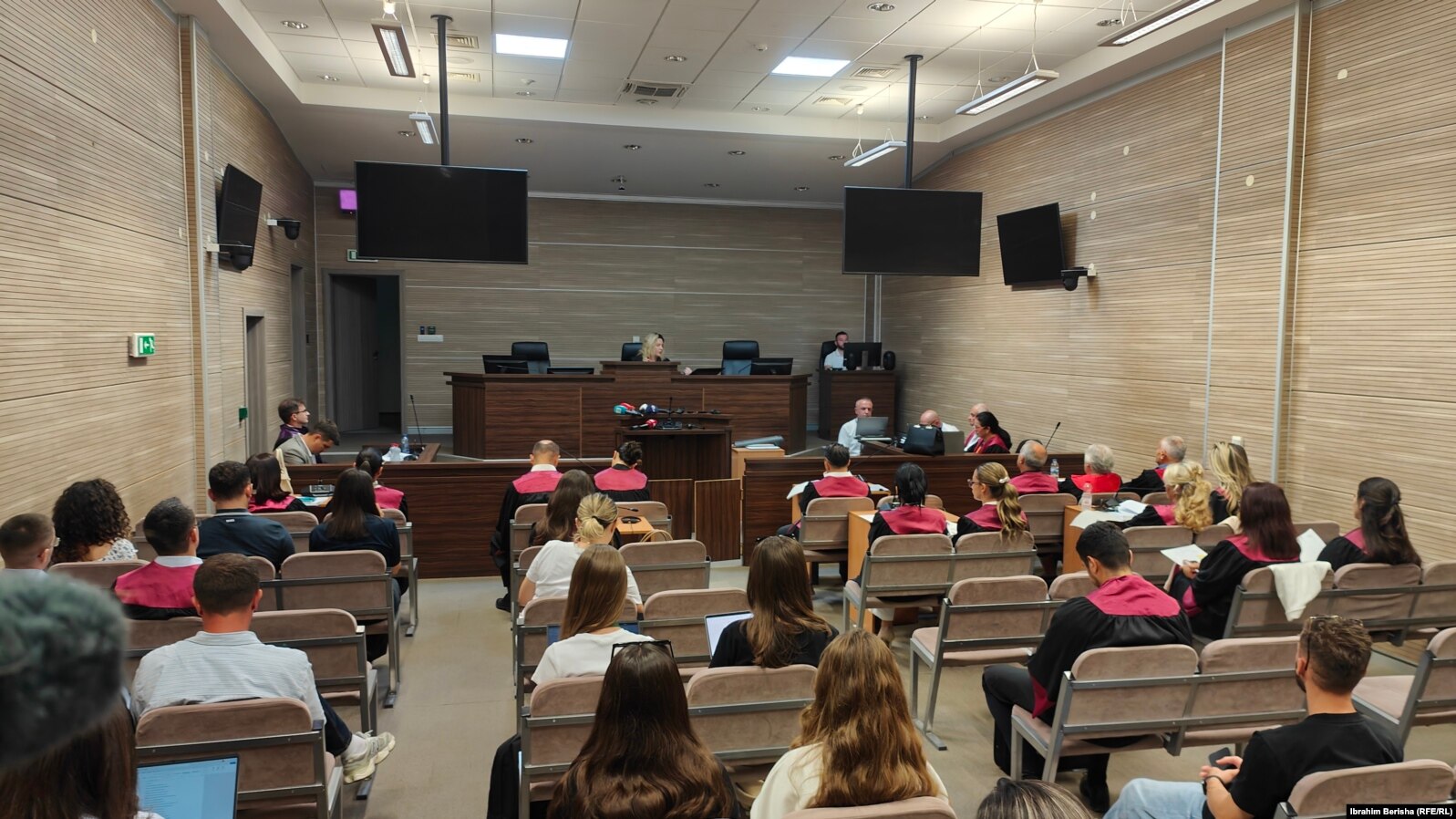
(Radio Free Europe) – A trial in absentia started on Friday in the Prishtina Court against 21 people accused of the Reçak Massacre – an event that helped prompt international intervention to end it. of the 1998-99 war in Kosovo.
Prosecutors accuse them of killing 42 civilians in Reçak of Shtime during an operation by the Serbian police forces during the 1998-…99 war.
defendants – Obrad Stevanović, Radomir Marković, Krsman Jelić, Goran Radosavljević, Živko Trajković, Bogoljub Janićević, Milan Leçić, Radomir Mitić, Dragan Gjorgović, Branko Mladenović, Dragan Jasović, Momqilo Sparavalo, Darko Amanović, Srboljub Vujnović, Bozhidar Marinković, Zoran Stanojević, Milan Josanović, Goran Petković, Dragoslav Nikolic, Edomir Aksiq and Zvonimir Janiqijević – are accused of committing war crimes against the civilian population.
They are accused of murder, torture and inhumane treatment of the civilian population, destruction of civilian property and harm to the population. Civilian.
According to the indictment, during the years 1998-1999, in the village of Reçak, they acted intentionally, jointly, individually and in the framework of command responsibility, as members of the Army. ex-Yugoslavia”.
The prosecutor’s office requested that the trial against them take place in absentia, saying that they are inaccessible to the justice bodies of Kosovo.
In the introductory speech, prosecutor Ilir Morina said that the trial should take place in absence, after all the conditions have been met. The request was accepted by the judge Violeta Namani-Hajra.
The judge emphasized that all legal actions have been taken to notify the accused and that, according to the information, they are in Serbia.
The summons, the arrest warrant, the search for the defendant’s address in Kosovo and the international arrest warrant are the legal conditions that must be fulfilled before the indictment can be filed in absentia. In 2021, a summons was sent to all the defendants through international legal aid, but no response was received.
One year later, at the request of the prosecution, the court issued arrest warrants against them.
According to Morin, from the report of police results show that none of the defendants were found at the addresses where they lived in Kosovo before the war, nor at any other address within the country. After the issuance of arrest warrants in Kosovo, international arrest warrants were also issued.
The trial against them was supposed to start on July 20, but the Basic Court in Pristina postponed it to Friday in the absence of legal conditions.
Ramë Shabani, a 60-year-old who survived the Reçak Massacre, told Radio Free Europe before the start of the trial that – even if the guilt of the accused is proven and they are sentenced – justice will not be served. verdict of justice. But, this cannot bring justice. Those 21 people, whose names have been mentioned, did not enter Kosovo anymore and we [Kosovo authorities] will never be able to catch them… Without them being in the dock, you can’t do anything, he said. him.
Judgment in absentia is possible in Kosovo after changes to the Code of Criminal Procedure, made in 2022.
However, such judgments can only be made on the condition that the prosecution and the court have exhausted all means. to ensure the presence of the accused.
However, this Code determines that persons judged in absentia have the right to an unconditional retrial, if they are arrested later.
However, this judicial process is not the only development related to Reçak massacre.
On June 12, during a joint operation of the Special Prosecutor’s Office and the Kosovo Police, as part of the war crimes investigation in the case known as Reçak II, five were arrested. persons.
The prosecutor’s office announced that those arrested are of Serbian nationality. Therefore, the police failed to arrest the sixth person, who was not found at his residence.
Those arrested are suspected to have been part of the special units of the Serbian police that took part in the January operation in Reçak.
Documentation of crimes committed William Walker, who in 1999 had served as head of the Verification Mission of the Organization for Security and Cooperation in Europe (OSCE), had done it in Reçak.
This massacre caused a strong international reaction and increased the pressure on the regime in Serbia, what happened in the talks between the representatives of the Albanians of Kosovo and the authorities of Serbia, through international mediation, at the Rambouillet Conference in France.
The failure to reach an agreement prompted NATO to bombard military and police targets of the former Yugoslavia for 78 days”.
Then, international forces entered Kosovo and the Serbian forces and administration left the country.
The Institute of War Crimes in Kosovo has documented 12,230 victims of war of 1998-’99.
Earlier in the year, the Special Prosecutor’s Office filed indictments in absentia against 21 suspects for the forced deportation of over 800,000 Albanian civilians from Kosovo during that war. /REL
Source: prizrenpost