Sunday, May 31st 2026
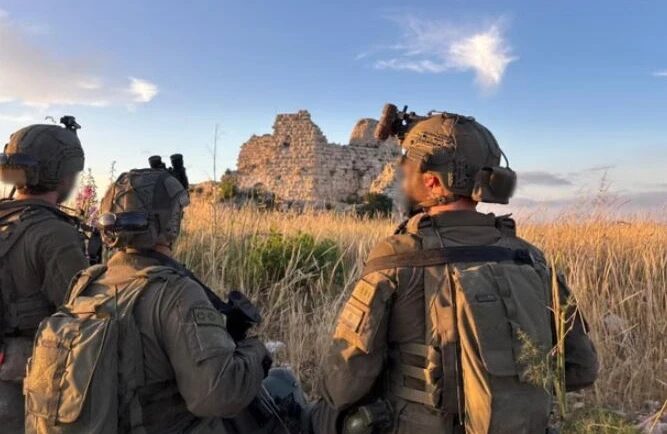
Israeli troops have taken control of Fort Beaufort, a 900-year-old fortress, as well as its surrounding strategic ridge in southern Lebanon, in a major advance against Hezbollah that took them across the Litani River, Israel’s deepest penetration into Lebanon in more than 26 years.
After days of intense fighting and airstrikes in the surrounding countryside, Israeli Defense Minister Israel Katz said the army had taken the fort, also known as Qalaat al-Shakif, which the Israel Defense Forces had used as a base during its previous occupation of southern Lebanon between 1982 and 2000.
Photos published by Katz and footage verified by the French news agency Agence France-Presse showed Israeli and Golani Brigade flags flying over Fort Beaufort as shelling was heard in surrounding hills.
In a statement, the army said it had “launched an operation in the Beaufort Ridge and Wadi al-Saluki area in southern Lebanon to destroy Hezbollah’s infrastructure and expand its control in this region”.
The Israeli army added that its forces had crossed the Litani River and taken positions from which Hezbollah had directed attacks and fired rockets at Israel.
The deadlocked negotiations between The US and Iran have created a diplomatic vacuum during which Israel has intensified its operations in Lebanon. Observers say Israeli officials and military commanders have sought to inflict as much damage as possible on Hezbollah before a possible deal between Tehran and Washington imposes new restrictions or ends the current offensive.
A cease-fire to end fighting between Israel and Iran-backed Hezbollah officially took effect on April 17, but has never been fully respected.
Israel and Hezbollah have accuse each other almost daily of ceasefire violations and justify their attacks with allegations of violations by the other side.
For many Lebanese, Nabatieh carries an importance that goes beyond its strategic value. Long regarded as a symbol of resistance, the city has repeatedly found itself on the front lines of Israeli military campaigns and remains deeply embedded in the political and historical memory of southern Lebanon.
On Saturday, Lebanese Prime Minister Nawaf Salam accused Israel of “pursuing a policy of scorched earth and collective punishment” by “destroying towns and villages and forcing their inhabitants into exile” in southern Lebanon. the country.
Salam has warned that the country is facing a “dangerous” escalation and called for “a quick and real ceasefire”.
Source: prizrenpost
Etiketa: Brief