Saturday, May 23rd 2026
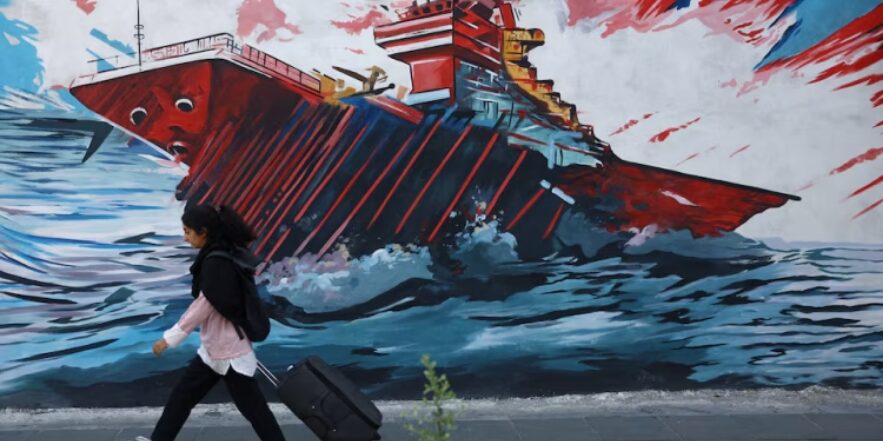
Analysts warn that the US risks coming out weaker from the confrontation with Iran
Three months after the US attacked Iran, President Donald Trump may have won most of the military battles, but the question increasingly being asked in Washington is another one: Is he losing the war?
As Iran’s control over the Strait of Hormuz continues, its nuclear program remains active and the regime in Tehran unshaken, analysts are questioning Trump’s ability to turn military successes into a clear political victory and geopolitical.
His claims of “total victory” are sounding less and less convincing, as the conflict has entered an uncertain phase amid fragile negotiations and constant threats of new US attacks.
According to experts, there is a risk that the US and its allies in the Persian Gulf will emerge weaker, while Iran – although hit hard economically and militarily – could gain more strategic influence, as it showed that it could threaten a large part of the world’s oil and gas supply.
“Three months have passed and it is looking more and more like a war that was supposed to be short, but is turning into a long-term strategic failure” – said Aaron David Miller, former American negotiator for the Middle East.
For Trump, the perception as a “loser” has great political weight. He has often used the label against opponents as he now faces a situation where the world’s most powerful military has yet to impose its goals on Iran.
Analysts believe this could make Trump less willing to compromise, especially on a deal that would look like a return to the 2015 nuclear pact, which he scrapped during his first term.
The White House insists that the military operation it was a success. Spokeswoman Olivia Wales stated that the US “has met or exceeded all military objectives”. But the war is creating political costs for Trump.
He had promised during the campaign not to involve America in unnecessary military intervention, but now faces rising fuel prices, declining popularity and pressure ahead of November’s midterm elections.
More than six weeks after the cease-fire, some analysts think Trump has only two options: accept an imperfect deal or escalate the military conflict again. risking an even longer crisis.
One of the scenarios being mentioned is the launch of limited attacks, which Trump can present as a “final victory” before withdrawing politically from the conflict. However, the American president continues to have strong supporters.
Alexander Gray, a former adviser to the Trump administration, argues that the strike against Iran’s military capabilities constitutes a “strategic success” and that the war has brought the Gulf Arab states closer to the US.
But signs of Trump’s frustration have become increasingly visible. He has lashed out at the media and critics as the conflict has dragged on for twice the six-week deadline he had predicted.
In the initial phase, US and Israeli strikes severely damaged Iran’s missile arsenal and eliminated key military figures. But Tehran responded by blocking the Strait of Hormuz and striking Israel and its Arab neighbors in the Persian Gulf.
Even the US blockade of Iranian ports failed to force Tehran to back down. The main objectives announced by Trump – halting the Iranian nuclear program, curbing Iran’s regional influence and weakening the regime – remain unachieved.
Meanwhile, the objective of stopping Iranian support for armed groups in the region has not been achieved either. Beyond the Middle East, the war has also created tensions with the US’s European allies, who have largely refused to get involved in the conflict.
According to analysts, China and Russia are learning from the weaknesses that the US has shown in the face of Iran’s asymmetric tactics and the depletion of the US arsenal.
Robert Kagan, a researcher at the Brookings Institution, argues that this war could result in a serious blow to the global prestige of USA. “There will be no return to the status quo, nor a final American triumph that will undo the damage done,” he wrote in a commentary for The Atlantic magazine. square
Source: prizrenpost
Etiketa: Brief