Thursday, April 23rd 2026
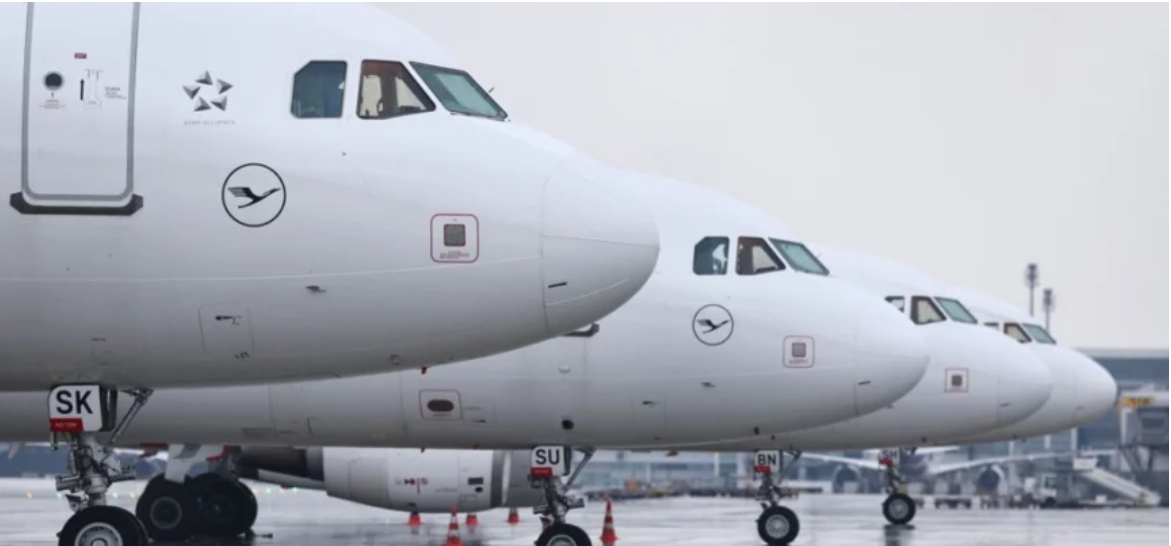
The price of jet fuel (kerosene) has risen 122 percent since the start of the war with Iran, according to London-based consulting firm Energex. First, supply problems were reported at Asian airports, and 14 days ago, there were fuel supply delays at airports in Italy.
German airline Lufthansa has closed its Cityline business and withdrawn older fuel-guzzling aircraft from service. The reason cited is expensive kerosene, but also a reaction to staff strikes. German media are reporting on the impending increase in air travel prices and the problems that may follow, especially for long-haul flights in the summer, writes DW.
Until now, half of Europe’s kerosene needs came from the Middle East. “Europe is the region with the highest dependence on imports from the Middle East”, writes the International Energy Agency (IEA). Since the start of the war with Iran, less than half that amount has arrived – meaning a quarter of Europe’s kerosene needs are no longer being met in the usual way. Saudi Arabia is diverting crude oil to the Red Sea port of Yanbu, but this is a precarious business because Iran could attack Yanbu.
However, it is not just the flow of crude oil and kerosene that is being hampered. There are also problems in the processing, storage and distribution of jet fuel for civil flights. “European authorities are giving more and more priority to the fuel supply of the military, which further complicates the situation,” writes Energex.
The Central European Pipeline System (CEPS) plays a key role in the distribution of kerosene. It connects seaports with airports and military garrisons. CEPS is a NATO military structure. Airports in Frankfurt, Amsterdam, Zurich, Brussels and Luxembourg are connected to the system.
In the current war with Iran, the US Air Force must also think about where to get fuel. “The use of CEPS will increase in order to supply American airports in Germany”, warns Energex, recalling that CEPS was temporarily closed for civilian use during the Kosovo war in 1993.
Frankfurt airport does not depend entirely on CEPS. There is also a civilian oil pipeline to the port of Rotterdam, which fills the tanks, from where a separate pipeline leads to the nearby airport. But whether it is a civilian or military oil pipeline, the main European port of Rotterdam is currently short of fuel.
In principle, there are alternatives to Middle Eastern suppliers, but switching to them is not always easy. Refineries in Asia use Russian oil, but are currently under boycott because of the war in Ukraine. Others are charging a premium for the market situation. This has led to a veritable boom for oil companies in Nigeria and the US. But these are small capacities and these resources cannot compensate for the interruption of oil from the Middle East.
German Economy Minister Katherina Reiche and other European politicians are trying to calm the situation. Europe, they say, is not dependent on imports of finished kerosene because it has refineries that can produce jet fuel from crude oil. But following a drop in demand during the coronavirus pandemic and efforts to use more green energy, refinery capacity has been reduced. Energex announced that Europe is now producing a quarter less kerosene than before the pandemic.
In addition, there is a shortage of crude oil. After all, not all refineries are technically capable of complex kerosene production. Those that can are already operating at full capacity and making huge profits.
There is no alternative to diesel jet fuel. Attempts to artificially produce kerosene with the help of green energy have so far only worked in small pilot power plants, which produce several thousand tons per year. But due to the high consumption of electricity, a ton of such fuel is still about $1,000 more expensive than fossil kerosene.
According to Energex, total reserves in Germany are sufficient for six weeks of kerosene needs. Frankfurt Airport’s fuel supplier says it can store a maximum of 186 million litres. The daily consumption of the airport is 15 million liters. The IEA expects a slight increase in global demand, while the Organization of the Petroleum Exporting Countries (OPEC) predicts a significantly higher increase in demand for jet fuel.
The war in Ukraine, and now the war with Iran, have already made air travel more expensive. Airplanes are being forced to make diversions. Due to longer flight durations and inconvenient arrivals, crews and aircraft can no longer be deployed as efficiently as before. These factors, which are already driving up costs, are now being exacerbated by rising fuel prices. Previously they accounted for 20 to 30 percent of airlines’ operating costs. With the price having risen to more than $1,800 a tonne – more than double – the old calculations are no longer valid.
Airlines are now looking to politicians to ease the burden of high kerosene prices. The German Air Transport Industry Association (BDL) is proposing a temporary suspension of the EU emissions trading system for air traffic and airport taxes. “The conflict in the Middle East is having the biggest impact on international, European and national air traffic since the coronavirus pandemic,” the association warned.
Lufthansa and Eurowings have already canceled several routes. If the Strait of Hormuz remains closed, flight schedules may be further disrupted and tickets may become more expensive. On Wednesday, the European Commission wants to present a plan to deal with the oil and kerosene crisis. /DW/
We use cookies to improve the experience and to display ads (Google AdSense).
By clicking “Accept”, you agree to the use of cookies according to
Privacy Policy
and
Cookies Policy.
You can reject non-necessary cookies by clicking “Reject”.
Source: prizrenpost