Tuesday, April 7th 2026
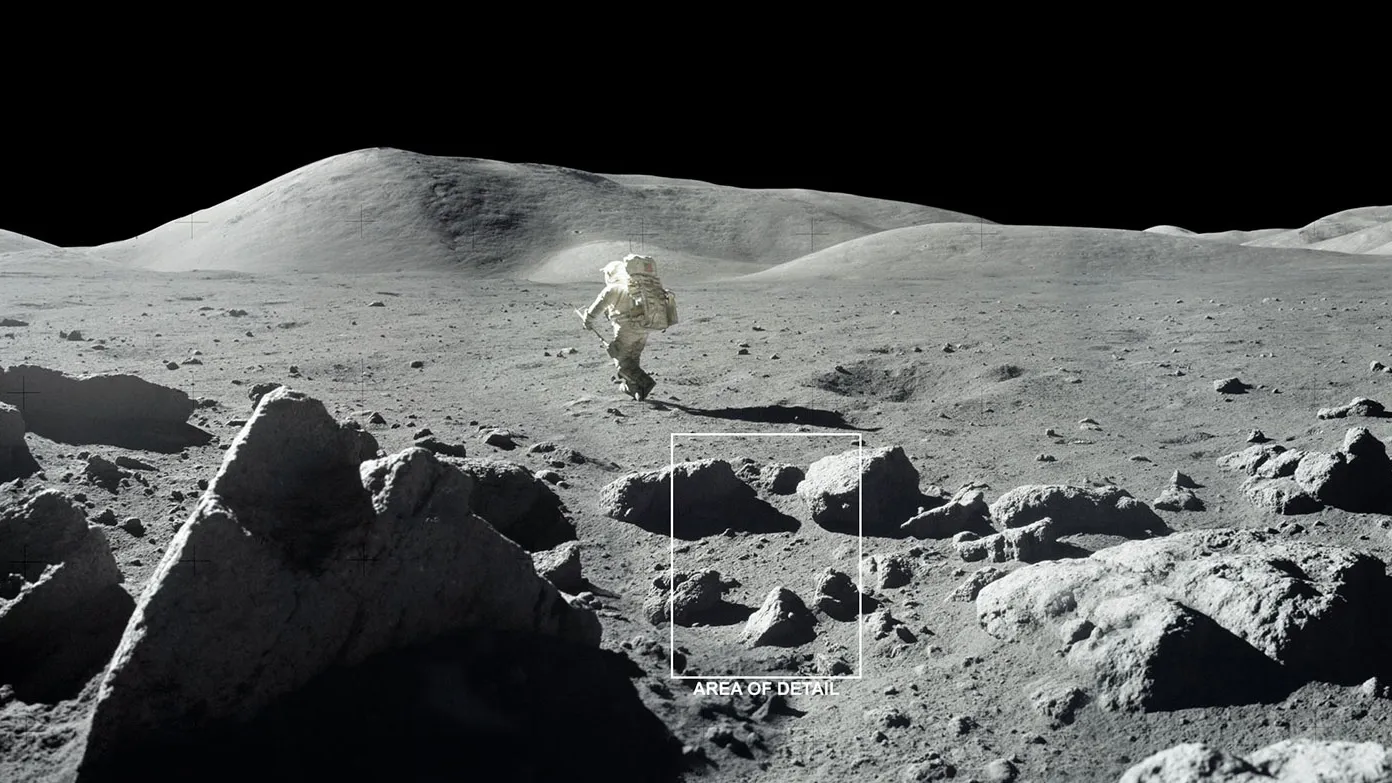
The Artemis II program is not simply about returning humans to Earth’s satellite, but solving questions that have been pending for half a century. For decades, we assumed the Moon was a dead, waterless landscape. But robotic missions have proven otherwise: this celestial body hides fundamental puzzles that may be answered within the next twenty years.
The leading theory suggests that the Moon formed 4.5 billion years ago after Earth collided with a Mars-sized planet. However, this hypothesis is based on simulations and limited samples of the Apollo missions. Artemis II aims to analyze intact rocks and mantle fragments extracted from deep craters, reconstructing the exact chronology of the ancient magma ocean.
The Moon was once believed to be completely dry. Today, it is known that the craters at the South Pole, immersed in permanent shadow, hold ice. The main question is its quantity and form. Exploration of these areas will determine whether this water can be used to produce oxygen and fuel, thus dictating the feasibility of future human bases there.
The interior structure of the Moon remains a “blind spot”. Although early missions detected lunar earthquakes, the records are limited to only one region. A persistent presence would enable a global network of seismometers to be installed, creating an accurate map of the core, mantle and residual heat distribution.
Why is the visible side of the Moon smooth and rich in basalt, while the backside is irregular and cratered? This asymmetry is one of the biggest puzzles. Through far-side expeditions and thermal analysis of samples, scientists hope to understand the gravitational effects and differential evolution of the two sides.
Rocks brought back by the Apollo missions showed signs of magnetization, which contradicts the fact that the Moon is too small and cold to carry an active magnetic field. With new samples and precise measurements in different regions, Artemis II can clarify the strength and duration of the magnetic field that once protected Earth’s satellite.
Beyond these points, the Moon today serves as a laboratory for the future. The success of this program will not only change our understanding of rocky worlds, but will mark the beginning of a new phase where man is no longer just a visitor, but an inhabitant of space. With the right tools and hands full of moonstones, we’re closer than ever to the answers we’ve sought for fifty years. /tesheshi.com/
We use cookies to improve the experience and display ads (Google AdSense).
By clicking “Accept”, you agree to the use of cookies according to
Privacy Policy
and
Cookies Policy.
You can reject non-necessary cookies by clicking “Reject”.
Source: prizrenpost