Saturday, April 25th 2026
An extraordinary human experience related to a nuclear disaster
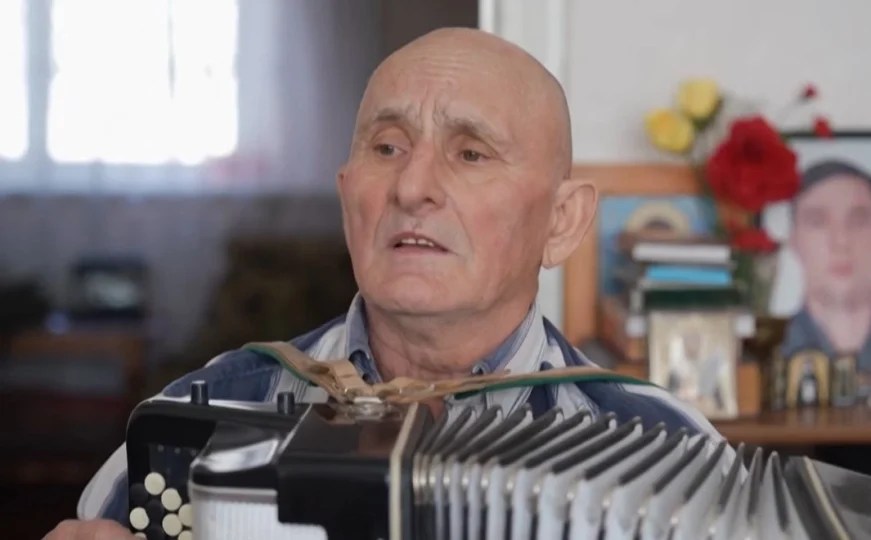
Forty years after the world’s worst nuclear accident, Petro Hurin is still struggling with the devastating health consequences of his time as a “liquidator” at Chernobyl. His health, he says, has never been the same since he was sent to clean up the area after the catastrophic explosion.
Hurin was one of hundreds of thousands of people mobilized to clean up the aftermath of the explosion at reactor number four of the Chernobyl nuclear power plant in Ukraine on April 26, 1986. The catastrophe released clouds of radioactive material that spread across much of Europe, leaving a toxic legacy.
Soon after accident, 31 plant workers and one firefighter died, mostly from acute radiation sickness. Thousands more have since died from radiation-related illnesses, including various forms of cancer, although the exact death toll and long-term health effects remain hotly debated among experts.
In June 1986, Hurin, whose company supplied excavators and construction vehicles, was sent to the Chernobyl exclusion zone. He says that of the 40 people from his company who were sent there, only five are alive today.
“No one from Chernobyl is in good health,” the 76-year-old said. “It’s a death by a thousand cuts,” Hurin told Reuters.
In an attempt to cover up the true scale of the disaster, Soviet authorities conspicuously refused to cancel the May Day parade in Kiev, about 100 kilometers to the south. The current Ukrainian government often highlights the Soviet authorities’ sloppy handling of the accident and their subsequent attempts to cover up the disaster.
Hurin recalled that some colleagues obtained medical certificates to avoid going to Chernobyl, but he felt compelled to help. “I realized that no matter how small my contribution was, I was doing my part to help contain this atomic beast,” he said.
Working grueling 12-hour shifts, Hurin drove an excavator, loading lead-mixed dry concrete — brought to the site by riverboats — into trucks. This material was then used to build a massive sarcophagus around the damaged reactor, designed to contain the deadly radiation.
“The dust was terrible,” Hurin recalled. “He would work for half an hour with a respirator and end up looking (blackened) like an onion.”
After just four days, Hurin began experiencing severe symptoms, including headaches, chest pains, bleeding and a metallic taste in his throat. Despite medical treatment, after another shift he could barely walk, fearing he had “a day or two” left to live.
“They took me to the hospital and the doctors did a blood test first,” Hurin recalled. “They punctured all my fingers and there was pale fluid, but there was no blood.”
Soviet doctors, he says, were not allowed to diagnose him with radiation sickness, but instead told him he was suffering from vegetative-vascular dystonia, a nerve disorder often attributed to stress. Before the disaster, Hurin had never received medical leave, but spent about seven months moving between hospitals for treatment, including blood transfusions.
He was later diagnosed with anemia – a condition often associated with radiation sickness – as well as angina, pancreatitis and a number of other ailments. By Ukrainian standards, Hurin lived an unusually long life; The World Health Organization reported that the average life expectancy for men in Ukraine was 66 years in 2021, a figure that has been affected by the Covid-19 pandemic.
Now retired, Hurin lives with his wife Olha in Ukraine’s central Cherkasy region. Despite ongoing health problems, he finds solace in playing the bajan, a type of accordion, and writing songs and poetry. He is also actively advocating for the provision of a special disability pension for the “liquidators” of the nuclear disaster.
However, another disaster now dominates his life: the Russian invasion of his homeland in 2022. He and Olha regularly visit the memorial in nearby Holodny Yar, dedicated to their nephew Andriy Vorobkal, a Ukrainian soldier who died three years ago in the war, aged 26. years old.
After their daughter moved to Europe, Hurin and his wife raised Andriy from the age of four. When Russia launched a full-scale invasion of Ukraine in 2022, Andrij left his job in Greece to return home.
“He left everything behind and came to defend Ukraine,” Mr. told Reuters, standing next to a memorial dedicated to his nephew. /tesheshi
We use cookies to improve the experience and to display ads (Google AdSense).
By clicking “Accept”, you agree to the use of cookies according to
Privacy Policy
and
Cookies Policy.
You can reject non-necessary cookies by clicking “Reject”.
Source: prizrenpost
Etiketa: Brief