Monday, June 1st 2026
Failure in Iran, order to another front
When an autocrat loses a war outside his sphere of interest, a good way to divert public attention is to start another in an area he considers his “backyard”.
History is full of examples: when Saddam Hussein realized that Iran was invincible, he turned to Kuwait, which he believed was a historic Iraqi province. When Slobodan Milosevic realized that he would not achieve his goals in Croatia, he turned to Bosnia and Herzegovina. Later, Kosovo.
Although the examples speak of a kinetic war, a smarter autocrat will not rush to arms.
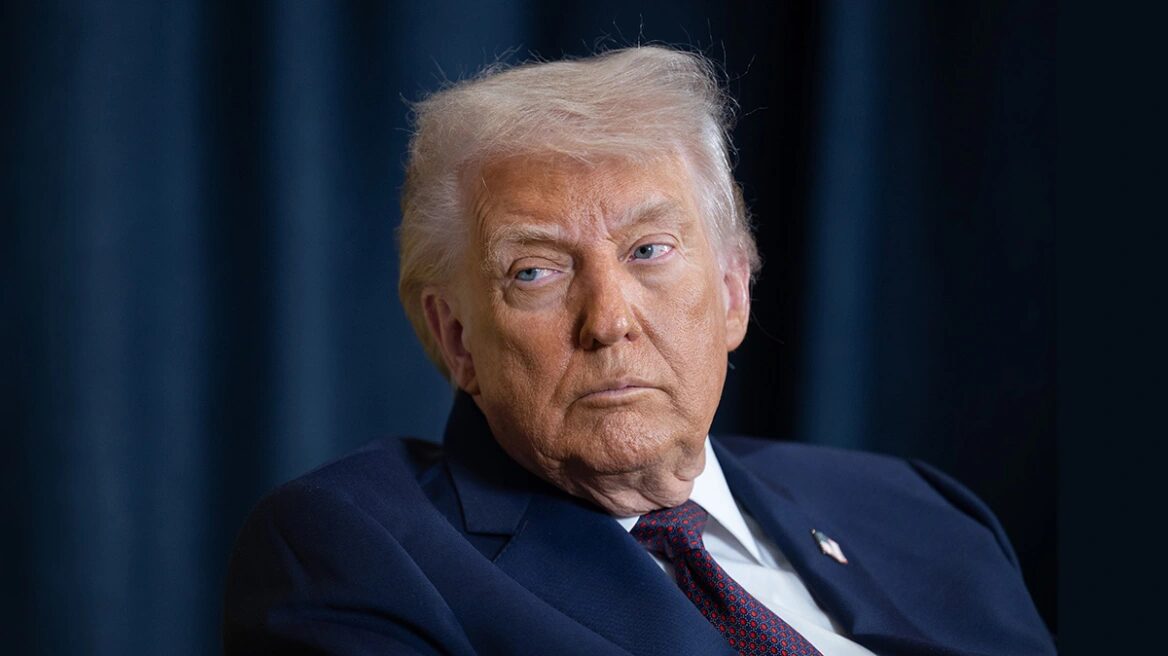
Donald Trump is not winning the aggression that he and the Israeli prime minister launched against Iran. The Venezuelan scenario he intended to replicate there, a swift military action that ousts the leader so the regime accepts American overtures – has failed spectacularly with damage on a global scale. If Venezuela could not repeat itself in Iran, it will be able to do so in its “backyard”, the Caribbean; in Cuba, Washington hopes.
The first step has been taken, on Wednesday, a lawsuit was filed against Raúl Castro, the brother of Fidel Castro, the leader of the revolution. Raúl, 94, is no longer officially in power, but he still has influence in decision-making. He is accused of shooting down two civilian planes owned by a private organization based in Florida in 1996, when four people, three American citizens, were killed. The crackdown on Cuban leaders comes after the US on Monday imposed sanctions on 11 officials, including the communications minister and several military commanders, as well as the top intelligence agency.
The case of former Venezuelan leader Nicolás Maduro was directly referenced by acting US Attorney General Todd Blanche, who said he expects Castro to appear in the US “voluntarily or otherwise”. An action that represents strong pressure on Cuba, which is in a difficult position because it has no oil. Not even food. Venezuela was a reliable supplier until Maduro fell in January. The new, officially interim leader, Delcy Eloína Rodríguez Gómez, immediately stopped the supplies. Russia managed to bring an oil tanker to the island in March, but that was too little. Power outages last about 20 hours a day.
“America will not tolerate a rogue state that is home to foreign military, intelligence and terrorist operations of a hostile nature just 90 miles from the American homeland,” Trump said on Wednesday, May 27.
Words that fit the Donroe Doctrine (a combination of the last name of US President Monroe, the doctrine’s author “America for Americans”, and Trump’s first name, Donald), which aims to achieve American dominance in the Western Hemisphere. Cuba has an important place in this plan because the US has viewed it since 1961 as China has viewed Taiwan, a renegade island. Beijing wants Taiwan to become part of China, and the US wants Havana to stop acting anti-American.
The US intelligence community has recently announced that Russia and China have high-tech intelligence facilities in Cuba to collect “signals intelligence”, SIGINT – a method of gathering intelligence by intercepting communications and electronic signals. The situation was further heated by the exclusive information from the portal Axios that Cuba has purchased unmanned aerial vehicles since 2023, in line with its limited capabilities. Its soldiers participated on the Russian side in the aggression against Ukraine and brought home the experience of modern warfare, and also monitored Iran’s defense against US-Israeli attacks, as well as offensive operations with unmanned aerial vehicles.
Iranian military instructors are said to have been in Havana in recent days, teaching the Cubans how to succeed in asymmetric defense. On May 14, John Ratcliffe, director of the CIA, arrived in Havana to warn the country’s leadership to implement economic and political reforms. And never mind attacking the US base at Guantanamo Bay, Cuba, or perhaps Florida, with drones. He also met with Raúl’s nephew, who attended all talks with US representatives, so there is speculation that Raúl Guillermo Rodríguez Castro could become “our man in Havana” for Washington.
US policy towards the island is currently a copy of the “good cop, bad cop” model. While Trump confidently says there will be no escalation because “the country is falling apart,” and Secretary of State Marco Rubio, in a message to the nation published in Spanish on Wednesday (his parents fled Cuba), says the U.S. is sending $100 million in aid to be distributed through Catholic Church channels, U.S. Southern Command reports that the aircraft carrier battle group USS Nimitz has arrived in the Caribbean.
Rubio to the people: Leaders are to blame!
Rubio stuck to the firm rhetoric that the US is offering help “not only in mitigating the current crisis, but also in building a better future.” “You don’t have electricity, fuel or food because those who control your country stole billions of dollars, none of which they thought about for the people,” he said. To a large extent true, but the US economic embargo also plays an important role in Cuba’s economic difficulties, after the collapse of the Soviet Union and could no longer help it.
Although Nimitz is close, it seems that Trump, and even Rubio, who has made the fall of the Cuban regime perhaps the central goal of his mandate, still do not prefer a military option that would probably always require dangerous ground engagement. Maybe they have realized that Cuba is not Venezuela. The chances of an attack are low, but they are being discussed.
After the defeat in Iran, Cuba’s transformation from an open adversary to a cooperative neighbor would be a major victory for Trump because no president has achieved this.
Cuba strongly condemned the US sanctions and lawsuits, as expected, but China’s reaction is relatively unexpected. Reuters reports: “China said on Thursday it strongly opposes the US’s ‘abuse of judicial measures’ and exerts pressure on Cuba. “The United States should stop using sanctions and the judicial apparatus as tools to suppress Cuba and refrain from threatening force at any time,” spokesman Guo Jiakun told reporters at a regular press conference.
Beijing does not want to lose its foothold. in the region from which it has monitored US activities, but any military aid to Cuba is out of the question because it is too far away and trying to help would risk a possible conflict with the US. In the event of military action or the fall of the regime, it will require that its personnel and facilities be protected from attacks and disturbances, just as the embassy in Belgrade was not hit by airstrikes in 1999. /tesheshi
Source: prizrenpost
Etiketa: Brief