Friday, May 29th 2026
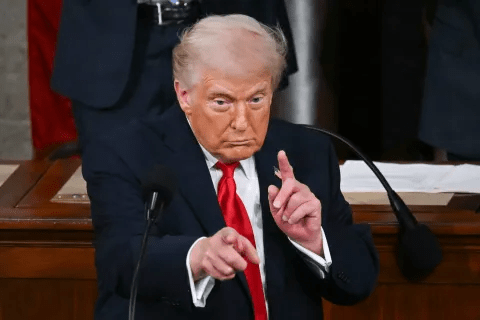
The agreement with Iran is ready, but the head of the White House wants a few days
After several weeks of tension and intense negotiations, the United States and Iran seem to be very close to an agreement that could end the latest crisis in the Persian Gulf.
According to the Italian news agency ANSA, the draft agreement has been finalized and presented to the Iranian leadership, which has given positive signals for its signing. However, US President Donald Trump has not yet given the final approval.
Diplomatic sources cited by Axios indicate that the agreement has been reached since Tuesday, but Trump has asked for “a few more days” to reflect before the final decision.
There is concern in Tehran that the US president may change his position at the last moment, due to his unpredictable style in foreign policy.
To advance the diplomatic process, Foreign Minister of Pakistan, Ishaq Dar, is expected to hold meetings in Washington with the US Secretary of State, Marco Rubio. However, the situation on the ground remains very tense.
On the night between Wednesday and Thursday, US forces shot down Iranian drones in the Strait of Hormuz and hit a military target in Bandar Abbas, southern Iran. In response, Iran’s Revolutionary Guards said it had attacked a US base in the region, believed to be in Kuwait. CENTCOM described the incident as “a serious violation of the ceasefire”.
The draft agreement provides for a 60-day extension of the ceasefire, during which time negotiations on Iran’s nuclear program will begin. One of the most delicate points remains enriched uranium, which Washington seeks to place under American control for destruction.
On the other hand, Iran commits not to develop nuclear weapons and to accept the supervision of the International Atomic Energy Agency.
A key part of the agreement is the reopening of the Strait of Hormuz, the most important sea route for global oil exports. Tehran will have to clear the area of mines within 30 days, while the US will gradually ease the blockade against Iranian ports.
24 billion dollars of frozen Iranian assets and the possibility of the gradual lifting of US sanctions against Tehran remain at stake. Meanwhile, Israel is pursuing a more aggressive line.
Prime Minister Benjamin Netanyahu has expanded the offensive against Hezbollah in Lebanon, resuming bombing of the southern suburbs of Beirut. The attacks have caused civilian casualties, while tensions are also rising in Gaza, where Netanyahu declared that Israel intends to expand territorial control in the Palestinian enclave.
In this fragile climate, Trump’s decision may determine not only the fate of the agreement with Iran, but also the stability of the entire region. square
Source: prizrenpost
Etiketa: Brief