Wednesday, April 1st 2026
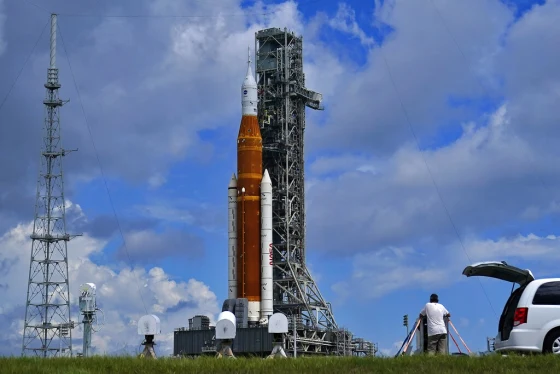
On December 19, 1972, the Apollo 17 mission crashed into the Pacific Ocean, marking the last time man set foot on the Moon. Today, half a century later, NASA is preparing for the Artemis II mission.
The question that naturally arises is: Why did it take so long? The answer lies not in technology, but in politics and finance. The Apollo program was born out of Cold War competition. President Kennedy set the goal as a geopolitical challenge, and his successor, Lyndon B. Johnson, ensured its fulfillment.
However, the high cost of the Vietnam War and internal reforms reduced NASA’s budget as early as 1966. Apollo ended in 1972 not because it failed, but because it had fulfilled its political mission: defeating the Soviet Union in the race space.
After Apollo, the US lost its appetite for deep space exploration. President Nixon directed NASA to build the Space Shuttle, conceived as a reusable vehicle for routine access to low Earth orbit.
This focus was reinforced in the 1990s with the construction of the International Space Station (ISS). Although the ISS became a symbol of scientific cooperation, it absorbed massive financial resources that could have otherwise been used to return to the Moon or go to Mars.
Over the decades, several presidents tried to return the focus to the Moon, but failed. George H.W. Bush proposed the SEI, but the hundreds of billions of dollars in costs led to its cancellation. Meanwhile, George W. Bush’s Constellation program was canceled by Barack Obama in 2010 due to a lack of funding from Congress.
This cycle highlighted a structural problem: lunar programs require a multi-decade commitment, but they must compete each year with spending on defense, health, and changes in political leadership.
The Artemis program seems to have escaped this cycle of failures as NASA is partnering with private companies (like SpaceX). and is creating an international coalition through the Artemis Agreements, sharing costs and risks.
The purpose of Artemis is not just a “visit” to Earth’s satellite, but to establish a permanent presence to learn how to live on another world, in preparation for a man’s trip to Mars.
The 50-year gap is a reminder of how difficult it is for modern democracies to sustain such massive investments without pressure from immediate geopolitical. The success of Artemis will depend on the long-term alignment of economic, scientific and political interests. /tesheshi.com/
We use cookies to improve the experience and to display ads (Google AdSense).
By clicking “Accept”, you agree to the use of cookies according to
Privacy Policy
and
Cookies Policy.
You can reject non-necessary cookies by clicking “Reject”.
Source: prizrenpost