Sunday, May 31st 2026
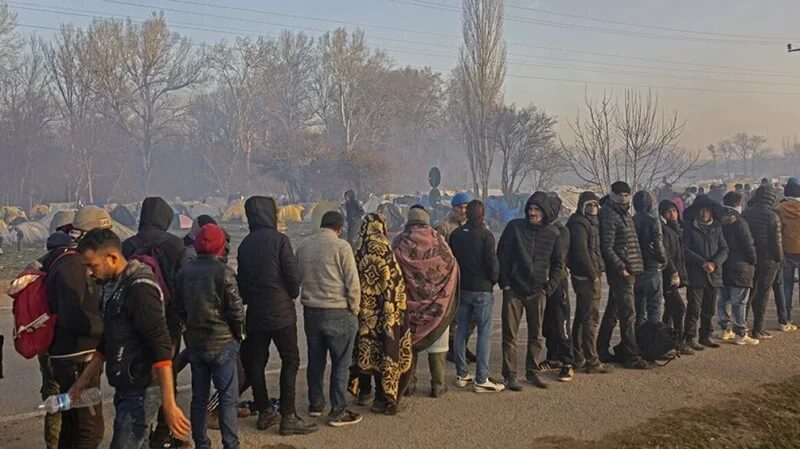
The new European Pact on Migration and Asylum will gradually enter into force on June 12, bringing significant changes to the way the European Union will manage the arrivals of migrants and refugees.
The new framework aims to strengthen control at the EU’s external borders, speed up asylum procedures and create a more coordinated system between member states.
The main pillars of the pact are push controls. binding of all persons who enter the territory of the European Union irregularly and the faster examination of asylum requests through border procedures with clearly defined deadlines.
The Greek government considers the pact as a stronger and more functional response to the challenges of migration. The Greek Minister of Migration and Asylum, Thanos Plevris, has stated that the new framework is a necessary tool for protecting European borders and strengthening return procedures for those who do not benefit from international protection.
He also warned that if migratory pressure continues to increase, the Greek authorities are ready to take even tougher measures. Referring to the increase in arrivals in Crete, where about 600 migrants were registered in just one day, Plevris declared that the government will not allow the repetition of situations similar to the migratory crisis of 2015.
One of the most important elements of the pact is the mandatory preliminary control at the borders. All irregularly entering migrants and refugees will be subject to identity verification, health screening, security assessment and biometric data collection before being considered officially registered on European territory.
A key role will be played by the new Eurodac system, which is being significantly expanded. The system will enable the wider collection of biometric data and the more accurate monitoring of migrant movements within the European Union.
The director of the Greek Asylum Service and chairman of the board of the EUAA, Marios Kaleas, estimates that Greece is today in a better position compared to previous years to implement the new mechanism.
According to him, the country has moved from a fragmented model of managing migratory flows. in a more organized system of reception, identification and control. However, he admits that the full implementation of the mechanism requires additional personnel, modern information systems and close cooperation between national institutions and European agencies.
Another important change is related to asylum procedures. The pact aims to reduce the long delays that have characterized the European system for years. Applications that are considered clearly unfounded will be processed more quickly and will be completed within 12 weeks.
In many cases, applicants will remain in controlled centers near the borders until the process is completed. People who are likely to benefit from asylum will be transferred to open structures, while those who do not meet the criteria can remain in closed centers until their return. Kaleas emphasizes that the philosophy of the new system is to eliminate uncertainty, both for migrants and for states that face great pressure on their borders. However, he underlines that speed should not damage the quality of decision-making.
“A functional asylum system must be both fast, fair and safe from a legal point of view”, he stated, adding that each request should continue to be examined individually and in accordance with international law.
The pact has also caused debate at the European level. Human rights organizations have expressed concern that short deadlines could lead to hasty or standardized rejections of asylum claims. On the other hand, the European authorities argue that the current system has produced great delays and damaged the reliability of the asylum procedures.
The new Eurodac, which is considered the digital heart of the new European migration system, also brings important changes. Through it, the European Union aims to have a clearer picture of who enters its territory, where they register and how they then move within the member states.
However, the expansion of the use of biometric data has raised concerns about the protection of privacy. The authorities emphasize that access to these data will be limited and controlled in accordance with European legislation for the protection of personal data.
Despite the reforms, the issue of burden distribution among member states remains open. According to Kalea, frontline countries such as Greece, Italy, Spain, Malta and Cyprus will continue to face the greatest pressure due to their geographical position.
He emphasizes that the success of the pact will depend on the willingness of other European Union countries to contribute with resettlement of migrants, financial support and operational assistance.
According to him, the new pact does not immediately solve all the problems of the European migration system, but creates a more stable and predictable framework than the one that has existed until now, representing an important step towards a more coordinated European policy on migration and the asylum.
Source: prizrenpost
Etiketa: Brief