Sunday, May 31st 2026
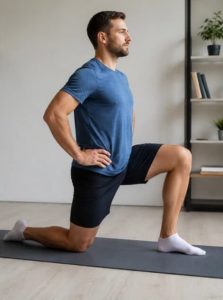
Physiotherapists say that stretching the hip flexor muscles can relieve tension, improve mobility and help support the body better
After a long day spent sitting, the body often reacts with stiffness in the back, hips and lower body. One of the stretches that physical therapists recommend most often is the stretch of the hip flexor muscles, because these muscles are most affected by prolonged sitting in a chair.
The hip flexor muscles connect the lower back to the hips and participate in daily movements such as walking, lifting, standing and climbing stairs. When these muscles become shortened or stiff, they can affect the position of the pelvis and spine, causing discomfort and restriction of movement.
Prolonged sitting can push the pelvis forward and increase pressure on the lower back. Therefore, regular stretching helps to restore muscle elasticity, reduce tension and improve body posture, writes Eatingwell, Telegraph reports.
How do you stretch the hip flexor muscles?
Sit in a semi-kneeling position: one knee on the floor, while the other leg is forward, with the sole placed on the ground. The body should stay straight, while you can keep your hands on your hips.
Then gently pull your pelvis back, without arching your lower back. Slowly shift your body weight forward until you feel a stretch in the front of your trailing hip.
Hold this position for 20 to 40 seconds, breathing slowly. Then repeat on the other side.
The important thing is that the stretch is pleasant, not painful. Do not push your body hard and do not bend too far forward.
In addition to this stretch, physiotherapists also recommend stretching the posterior thigh muscles, rotating the upper back and stretching the gluteal muscles, known as the “quad” exercise. These movements can help improve hip mobility and reduce tension in the lower back.
In most cases, this stretch is safe if done slowly and without overdoing it. However, people who have severe hip pain, back pain, or a recent injury should consult a doctor or physical therapist before incorporating it into their daily routine.
If pain or discomfort persists for more than 30 to 60 minutes after stretching, this may be a sign that the exercise has been overdone.
Source: prizrenpost