Sunday, March 15th 2026
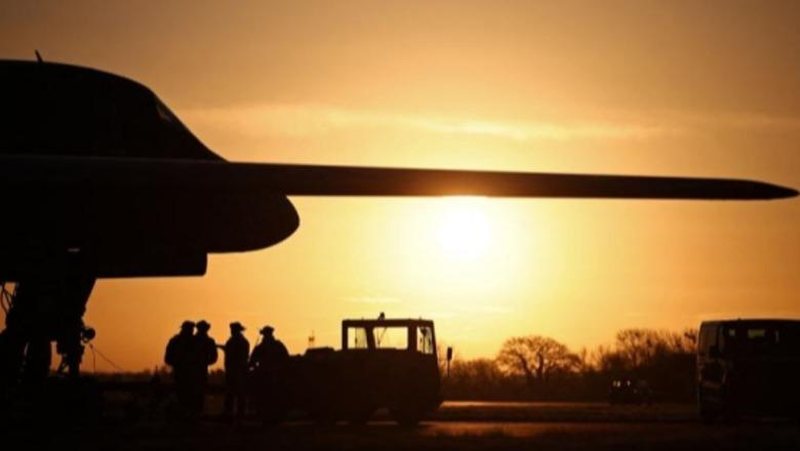
The U.S. military’s Central Command is asking the Pentagon for resources to cover at least 100 days of war in the Middle East, a much longer period than previously publicly discussed.
The request was made by Centcom, the Florida-based command that covers the entire Middle East region. The generals running the Epic Fury operation require more soldiers, more vehicles and additional equipment. This means that the US Department of Defense must add tens of billions of dollars more than the 11.3 billion that were spent in the first six days of the operation alone.
This development seems to give a clearer idea among the various statements made by President Donald Trump. According to US military leaders, after the strong resistance of the Ayatollahs’ regime has been tested, the conflict may continue for at least another three months. This is much more than the forecast of four to six weeks that had been publicly mentioned by the president.
This also explains the decision of the US Secretary of Defense, Pete Hegseth, to accept the first important request from Centcom for reinforcements.
A flotilla of three ships, led by the amphibious assault ship “Tripoli”, will leave the Japanese base of Sasebo towards Iran. There are about 5,000 soldiers on board, including 2,500 marines who were stationed in Okinawa until now. The forces will also be accompanied by a squadron of several dozen F-35 fighter jets, among the most advanced in use by American aviation.
The presence of marine troops has led some American analysts to hypothesize a possible operation on the island of Kharg, which was earlier hit by American bombing. It is not excluded that the American administration will also think about a permanent control of this small island in the Persian Gulf, about 22 square kilometers at the entrance of the Strait of Hormuz.
Kharg is a key point for Iran, because important oil infrastructures are located there and about 80-90 percent of the oil that the country exports passes from there. Such an operation would have major geopolitical consequences, since a large part of this oil is bought by China.
In the background, the Gulf countries are trying to avoid the escalation of the conflict. Saudi Arabia, the United Arab Emirates, Qatar, Kuwait, Bahrain and Oman have met several times in the Gulf Cooperation Council and agreed on a common line: to defend their territory from Iranian missiles and drones, but without planning counterattacks against Tehran.
The Sunni monarchies fear that a direct confrontation with Iran would have serious consequences for the Middle East, Europe, Asia and even the United States itself. However, they are putting pressure on Washington to restore the safety of tanker navigation in the Strait of Hormuz as soon as possible.
According to a Gulf diplomat, the issue is not only oil. The main question is whether Tehran will be allowed to use maritime traffic as a means of pressure on the rest of the world.
Meanwhile, there are also attempts at diplomatic channels. Turkey appears to be more active in this regard, and President Recep Tayyip Erdogan’s diplomats have already held meetings with representatives of Tehran to test the possibility of a dialogue with the new Iranian leadership, Mojtaba Khamenei. /CorrieredellaSera/Tema
We use cookies to improve the experience and to display ads (Google AdSense).
By clicking “Accept”, you agree to the use of cookies according to
Privacy Policy
and
Cookies Policy.
You can reject non-necessary cookies by clicking “Reject”.
Source: prizrenpost
Etiketa: Brief