Saturday, June 20th 2026
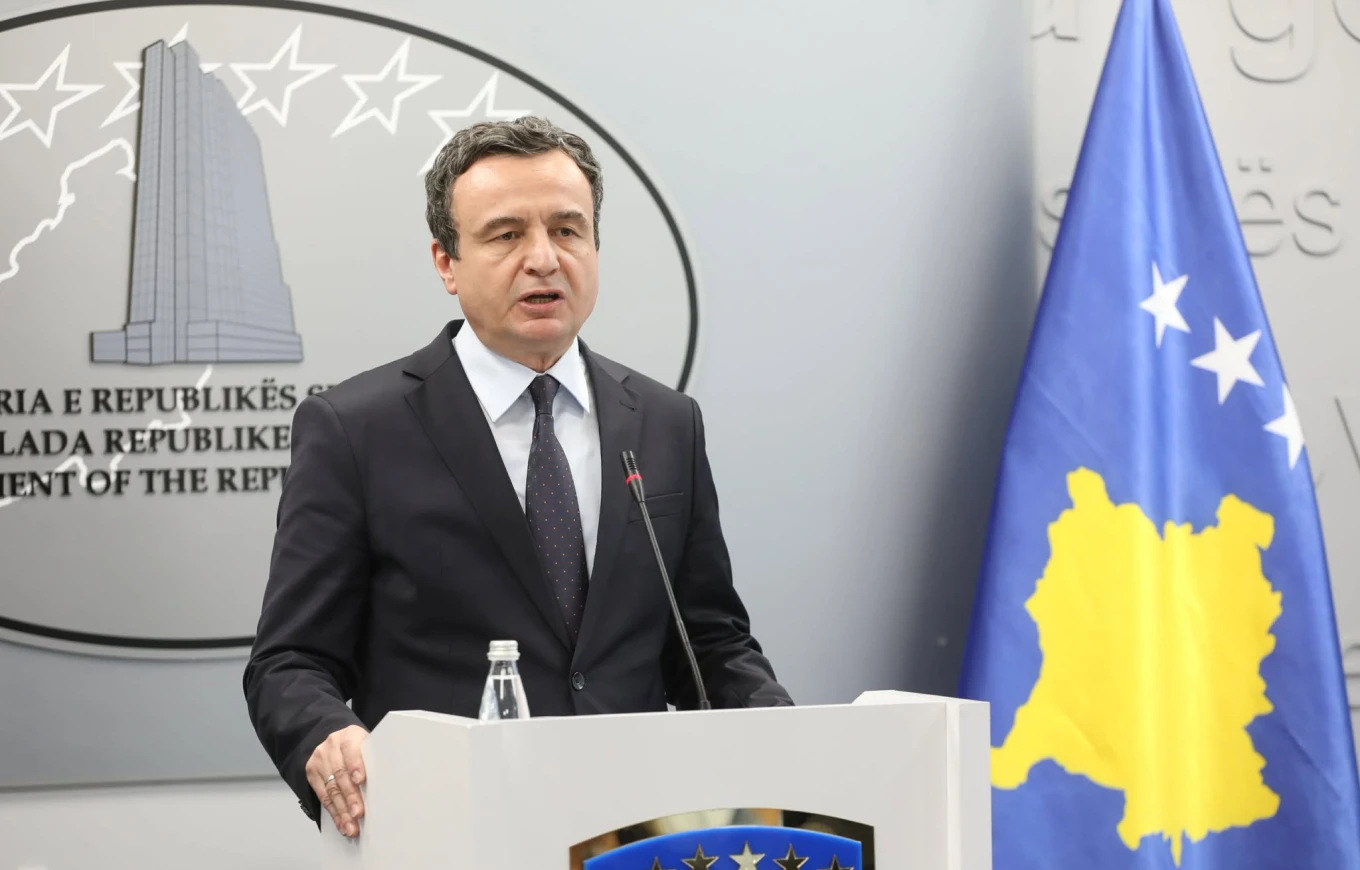
Acting Prime Minister Albin Kurti, on the occasion of May 1, has assessed the lack of trade union organization in the private sector as the main issue for workers’ rights in Kosovo. In this regard, he has said that society must be engaged.
“For the rights of workers in the Republic of Kosovo, the main lack is that of trade union organization in the private sector. Here, our entire society must be committed to a new level of the status and condition of our workers”, wrote Kurti in a status on Facebook.
He called for the 13th salary to be distributed in the private sector as well
“We set the salary 13th for public sector workers. For the first time after the declaration of Kosovo’s independence, the state concretely recognized the continuous contribution of its employees. We made and continue to call on the private sector to follow this example, because fair compensation and increased care for workers should not be the privilege of the public sector only,” Kurti wrote. workers, as he has said, not only with words, but with approved laws, implemented budgets and concrete decisions.
“The standard must continue to rise. The work to build a state that treats workers as the foundation of everything, continues”, Kurti wrote.
He said that according to international trade union reports, workers’ rights have been significantly affected around the world during 2025.
“In many countries, including those developed, workers’ rights are on the rise, including through digital platforms, which reduce work to precarious wages and with disciplinary measures that are imposed without transparency and without real protection for workers. Meanwhile, automation is eliminating entire categories of work, without always offering retraining opportunities or support for those affected,” he wrote Kurti.
According to him, this is the global reality where even Kosovo cannot be an exception.
“Our workers live and work in this context, and our decisions in the government should be understood in this light. When we took office, the minimum wage in Kosovo was 170 euros. It had not changed for thirteen years. For a whole generation entering the labor market, this was the legal minimum for their work. We changed this. We adopted the Law on Wage Minimum and we raised it to 425 euros, directly affecting about 150,000 workers, most of them in the private sector. From July 1, it increases to 500 euros (regardless of what happened with the Assembly),” he wrote.
Source: prizrenpost