Monday, May 11th 2026
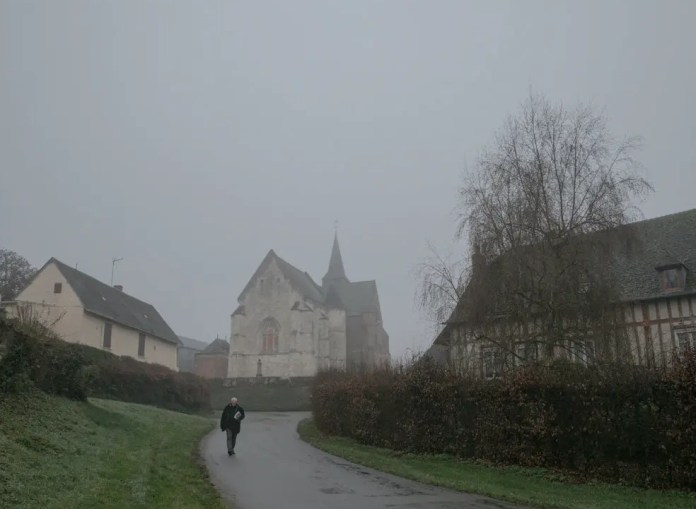
The people of Burelles had converted their church into a kind of fortress several centuries ago, equipping it with a defensive wall, a safe room and narrow turrets for archers, in order to protect them from the marauding troops that once roamed the area. However, all those safeguards put in place over the centuries failed to stop a pair of thieves who robbed the Roman Catholic church sometime before seven o’clock in the evening on a Sunday in July last.
They destroyed the donation box, broke the wooden door of the sacristy and took with them the communion plates, two small vessels used during baptisms, as well as an ornate bronze frame, known as a monstrance, which is used to display bread during communion ceremonies.
These were just three of 29 churches across northern France that, according to a court ruling, were targeted last summer by Raphael Hourdeaux, 35, and, in almost all but one case, by his romantic partner, Tony Paupiere, 30. The couple, who admitted most of the charges against them, had even entered the same church twice, five weeks apart.
This unusual series of robberies, which lasted about three months, added to the sense of alarm in France, where the belief was spreading that the country may no longer be able to protect its cultural heritage. The events took place at a time when there have been repeated cases of lack of security in museums, churches and art galleries — both in Paris and in other cities or in remote rural areas.
The most daring robbery happened last October, when another group of thieves managed to enter the Louvre Museum during the day and make off with the royal crown jewels, worth more than 100 million dollars.
In cases of Earlier this fall, thieves stole porcelain plates worth $11 million from a museum in Limoges, the region known as the heart of French porcelain production. Meanwhile, three men were found guilty of robbing around 40 churches in less than four months in the southwest of the country. Also, other thieves broke into a small museum in the south of France, stealing approximately 100 crosses.
In general, these thefts have fueled much debate about inadequate budgets and outdated security infrastructure. Looting in remote rural churches has also touched an old wound of what the French call “Deep France” – lonely areas of the countryside where residents feel forgotten by society, by the state and by modern times.
The church of Saint Martin in Burelles has become even more important to the village’s identity as the only inn closed and the last cafe ceased to function. Resident volunteers constantly look after the church, enabling it to stay open longer than most other churches in the area, while the village also regularly hosts concerts inside.
“The church is the heart of the village. It’s our pride,” said Damien Yverneau, the village’s mayor. “We have nothing left but her”.
Then he added: “Young people leave to continue their studies and never come back”.
To prevent thefts in churches, the police increased patrols in the area. However, since the region around the Aisne alone numbers around 800 churches, there is a clear limit to how much territory can be effectively covered and controlled.
Most of these churches are opened very rarely, usually only for funerals or baptisms. Regular Masses are usually held only a few times a year, as it is often the case that one priest oversees up to 50 churches simultaneously.
After a particularly busy Sunday in August, when four churches reported robberies on the same day, the investigation was entrusted to a specialized investigative police unit.
Using the geolocation of mobile phones, investigators were able to trace the movements of Hourdeaux and Paupiere. After that, the police began to keep them under constant surveillance.
The method used by thieves was often shocking in its simplicity. After choosing the church they intended to rob, they would usually first check online to see if it was closed and then use a metal crowbar to force their way in, prosecutors said during the trial.
According to prosecutors, the couple also organized weekend trips to combine with the robberies. In one case, they had driven in their 2008 Peugeot to a spa near a church they had targeted.
According to the indictment, the pair had sold some of the stolen objects to a local antiques dealer, who later pleaded guilty to possession and dealing in stolen goods. Some other objects they had melted down and sold as metal to a buyer in Paris.
However, many other items they had kept for themselves.
Last October, about 30 police officers raided the couple’s home and discovered that the men had used some of the stolen liturgical objects as decorations in the apartment, while other items had been hidden in closets and in plastic bags.
Investigators were sent photos of 46 recovered objects to mayors and priests who had reported looting at churches.
But because very few churches kept detailed inventories of their property, most were unable to prove they were the rightful owners of the recovered objects, said Colonel Stephane Aurousseau, who led the police investigation.
The NYT team attended the trial. the two men’s half-day trial in December, which took place in a courthouse located inside a medieval palace in the nearby city of Laon.
“It shows a complete lack of respect,” said Yverneau, 56, the mayor of Burelles, referring to the two men’s absence from the courtroom. “You can do unthinkable things, but you have to take responsibility for them,” he continued, adding: “It’s complete cowardice.”
According to defense lawyers and those representing the victims, the two men had sent a letter of apology, but several mayors and priests said they had never seen that letter.
During a brief telephone interview, Hourdeaux said media coverage of the case had ruined their lives and that he doubted how important the stolen objects had been to the local communities, given that very few people later managed to identify them. In a second phone conversation, he threatened to file a defamation lawsuit if his name – which had meanwhile been widely reported in France – or comments he had made earlier were published.
Caroline Biencourt, a representative of the local diocese, spoke through tears in the courtroom, saying churches represented one of the few places of spiritual reflection and artistic beauty in areas far from museums and cultural institutions. “Anyone can push the door open and find themselves in front of a work by Rubens or a small statue that has received the countless prayers of people,” she said. “These objects belonged to everyone and we will never have them again”.
In September, the court is expected to consider how much compensation should be awarded to the communities that were robbed.
Yverneau says that Burelles is owed 7,700 euros, about 9 thousand dollars, a part of which he plans to use for the installation of security cameras. However, this sum did not assuage his frustrations, as neither he nor Jean-Michel Vignez, head of the church’s volunteer association, could identify any of the missing village objects among the 46 artifacts the police had recovered.
“Will we ever really be compensated for this?” Vignez asked. “This is priceless. It has a purely symbolic value. I can go on the Internet and find similar objects, but they will never be the ones that belonged to Burelles.”
Some of the recovered objects have already been returned to churches that managed to prove their ownership. Other objects have been handed over by police to local Catholic authorities, who will bless them and then distribute them to looted churches during a “handover ceremony,” Biencourt said. The churches won’t necessarily get the exact objects they lost, but the hope is that this gesture will offer at least some comfort.
In another twist that many saw as a kind of irony of justice, the court ruled that the couple’s car should be turned over to the police. Among other functions, it will be used to patrol villages such as Burelles. /Time
We use cookies to improve the experience and to display ads (Google AdSense).
By clicking “Accept”, you agree to the use of cookies according to
Privacy Policy
and
Cookies Policy.
You can reject non-necessary cookies by clicking “Reject”.
Source: prizrenpost
Etiketa: Brief