Saturday, April 25th 2026
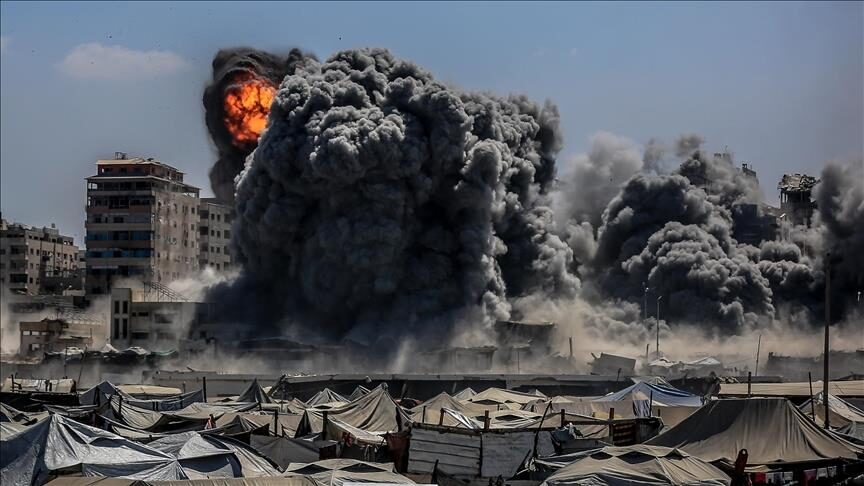
Despite diplomatic efforts and plans for reconstruction, Gaza remains largely in ruins, while political deadlock, security demands and access restrictions from Israel continue to delay recovery.
After Israel’s brutal war in Gaza and the large-scale destruction it left behind, reconstruction remains stalled despite new diplomatic efforts and new proposals. International actors talk about plans, funding and logistics, but little has changed on the ground.
More than two million Palestinians remain displaced, infrastructure lies in ruins and thousands of wounded face severe restrictions on movement and medical treatment.
A new push to advance the Gaza peace plan has brought cautious optimism, with mediators talking of serious discussions and possible breakthroughs within weeks. US President Donald Trump’s Peace Board envoy, Nickolay Mladenov, has said progress is possible, but warned that momentum could quickly fade without an urgent deal. The “Peace Board” is a US-backed body officially established in January 2026 to oversee a ceasefire and reconstruction plan for Gaza.
While proposals for reconstruction and aid mechanisms are being discussed, the reality on the ground remains largely unchanged.
One of the main pillars of the peace plan, announced by Trump in September 2025, was the formation of a The National Committee to Administer Gaza. This committee includes technocrats and experts to oversee governance and reconstruction. Members of the committee are currently in Cairo, holding talks with mediators and regional actors.
Israeli restrictions have blocked this Palestinian committee’s access to war-torn Gaza, preventing it from functioning effectively. The lack of a recognized governing structure has created a vacuum, slowing aid coordination, delaying infrastructure projects and complicating decisions about future governance.
Officials say the lack of a unified authority is hampering efforts to manage funds, oversee reconstruction and ensure accountability.
The ongoing talks in Cairo are highly complex, reflecting the fundamental political challenges of the peace plan. Discussions center on the disarmament of Hamas, Israel’s withdrawal timelines and the future governance of Gaza. While mediators say there have been “serious discussions”, progress remains slow due to competing demands.
Disarming the Palestinian resistance group Hamas remains a key point of contention, while questions about who will govern Gaza and how remain unanswered. The group has stated that the discussion of its disarmament before Israel fully implements the first phase of the US-brokered ceasefire is an attempt to continue what it calls genocide against the Palestinian people.
Negotiators are trying to finalize an implementation plan that will cover access to aid, control on the ground and long-term political arrangements. There are also efforts to increase the flow of humanitarian aid through checkpoints such as Rafah and increase the number of aid trucks entering Gaza.
Envoys acknowledge that trust-building and incremental steps are still needed before a comprehensive agreement can be reached.
Is Israel undermining peace efforts again?
Israeli violations on the ground complicate the peace process as the Israeli military expands the areas. under its control inside Gaza, moving what negotiators call the “yellow line” deeper into the territory.
These moves have raised questions about whether the conditions for a full withdrawal, a key element of the peace plan, are being met. At the same time, restrictions on aid and movement continue to limit humanitarian access, further undermining trust between the parties.
Just on Tuesday morning, an Israeli attack killed three Palestinians in Khan Younis, south of Gaza. Despite an October 10 ceasefire, Gaza continues to face daily violence from the Israeli army.
Earlier, Israeli Defense Minister Israel Katz insisted that Israel will not move “one millimeter” from the “yellow line” in Gaza until Hamas disarms.
The plan is structured in phases, where after the attacks stop, it is envisaged to expand access to aid, the gradual reopening of border points and improving medical access. However, ongoing Israeli attacks and restrictions on aid and border crossings have limited these steps.
Continuous violations and uncertainty over security arrangements make it difficult to create stable conditions for successful negotiations. Without a clear and lasting commitment to reduce tensions, any new development risks taking the talks even further away from a solution.
Reconstruction remains one of the most urgent, but also the most uncertain, aspects of the plan. With an estimate of $71 billion for the reconstruction of Gaza, proposals are being considered to manage logistics, aid flows and infrastructure projects.
Discussions have also included partnerships with global companies to oversee supply chains and potentially develop new ports and trade zones. However, these ideas remain largely in the planning stage.
Without an agreement on security, governance and access, large-scale reconstruction cannot begin, leaving the population of Gaza in limbo, while diplomatic efforts are still not translating into real change on the ground.
For now, the Gaza peace plan remains between ambition and reality. As talks continue and proposals evolve, the key test will be whether political agreements can be reached quickly enough to maintain momentum and whether they will finally deliver concrete results for Palestinians on the ground.
We use cookies to improve the experience and display ads (Google AdSense).
By clicking “Accept”, you agree to the use of cookies according to
Privacy Policy
and
Cookies Policy.
You can reject non-necessary cookies by clicking “Reject”.
Source: prizrenpost
Etiketa: Brief